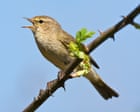
You sit on your porch with a morning coffee, fire up a free smartphone app, and hold it toward the trees. Within seconds, a yellow highlight flashes on your screen. A chiffchaff. Then a blackcap. You didn't see them, but your phone heard them.
For years, millions of people used the Merlin Bird ID app just to scratch a personal itch of curiosity. It was a neat parlor trick powered by machine learning. But a massive structural shift is turning your casual backyard audio clips into raw fuel for global conservation. Building on this topic, you can find more in: Why Nasa Is Gambling 30 Million Dollars On A Used Space Tug.
The Cornell Lab of Ornithology is tightening the pipeline between Merlin and eBird, its massive global biodiversity database that holds over 2 billion avian observation records. Soon, the acoustic detections you capture through Merlin will feed directly into eBird's data stream.
This changes everything for wildlife tracking. Instead of relying solely on experienced ornithologists logging manual checklists, the global scientific community is about to inherit an automated, crowdsourced auditory map of the planet's bird populations. Experts at Ars Technica have provided expertise on this trend.
The Shift From Casual Id to Real Hard Science
Let's look at the sheer scale of what's happening. In the UK alone, the British Trust for Ornithology notes that the total bird population plummeted by more than 70 million over the last half-century. Tracking that kind of catastrophic decline requires an absurd amount of local data. Scientists can't be everywhere at once.
But regular people are everywhere. In May 2026, nearly 2 million folks in the UK used Merlin to scan their local patches.
Up until recently, Merlin and eBird lived in slightly different houses. Merlin was your friendly training guide; eBird was the strict ledger where serious birders logged precise, manual lists. If you wanted to contribute to science, you had to jump through hoops to transfer your data or maintain separate checklists.
By building a direct bridge that allows Merlin audio recordings to flow into eBird systems, Cornell is transforming accidental hobbyists into critical field researchers. The app reads audio frequencies, transforms them into visual spectrograms, and matches the shapes to specific species. It currently recognises 2,066 species across the US, Canada, Europe, India, and Latin America. Now, those digital matches will automatically help map where species are moving, how climate change alters migration patterns, and where habitats are collapsing.
The Big Data Dilemma that Experts Worry About
Not everyone in the scientific community is celebrating without reservations. There's a glaring issue with crowd-sourced acoustic data.
The machine doesn't always get it right.
Merlin is brilliant, but it can be fooled. It doesn't understand context or habitat. If a blue jay mimics a hawk, or a common bird makes an odd regional "catcall," the algorithm can trip up. Because of these digital hiccups, the European Bird Census Council explicitly advises against using Merlin for official breeding bird surveys. They've even established a dedicated monitoring group just to figure out how to align and clean up acoustic data across Europe.
Some traditionalists worry that flooding scientific databases with automated audio guesses will corrupt the integrity of the data. If an app incorrectly logs a rare, highly endangered bird in a patch of woods where it couldn't possibly survive, it skews the mapping tools used for ecological management.
But project leaders like Jessie Barry from the Cornell Lab aren't backing down. The strategy is simple: more data beats less data, because you can always write better algorithms to filter out the noise. Research teams are already building automated validation tools to catch and flag obvious anomalies before they mess up the broader models.
How to Make Your Phone Data Actually Useful to Scientists
If you want your morning birding routine to actually mean something to global conservation projects, you can't just mindlessly record audio and close the app. You need to follow a few basic rules to ensure your data passes the sniff test.
- Isolate the sound: Don't try to record a faint robin call while standing right next to a roaring highway or a humming air conditioner. Clearer audio means a more reliable data point.
- Verify with your own eyes when possible: If Merlin flags a bird that seems completely out of place for your area or the current season, don't just blindly save it. Try to catch a visual glimpse. Cross-reference it with the app’s built-in regional field guide to see if it’s a "likely" resident.
- Set your location precisely: Accurate mapping is useless if your phone's GPS is pinned to the wrong town. Take a second to verify the location map before confirming a sighting.
The reality of conservation in 2026 is that we are losing species faster than traditional field budgets can track them. Turning your phone into a decentralized wildlife listening post isn't just a fun weekend hobby anymore. It's the only way we can build an environmental early warning system big enough to matter.