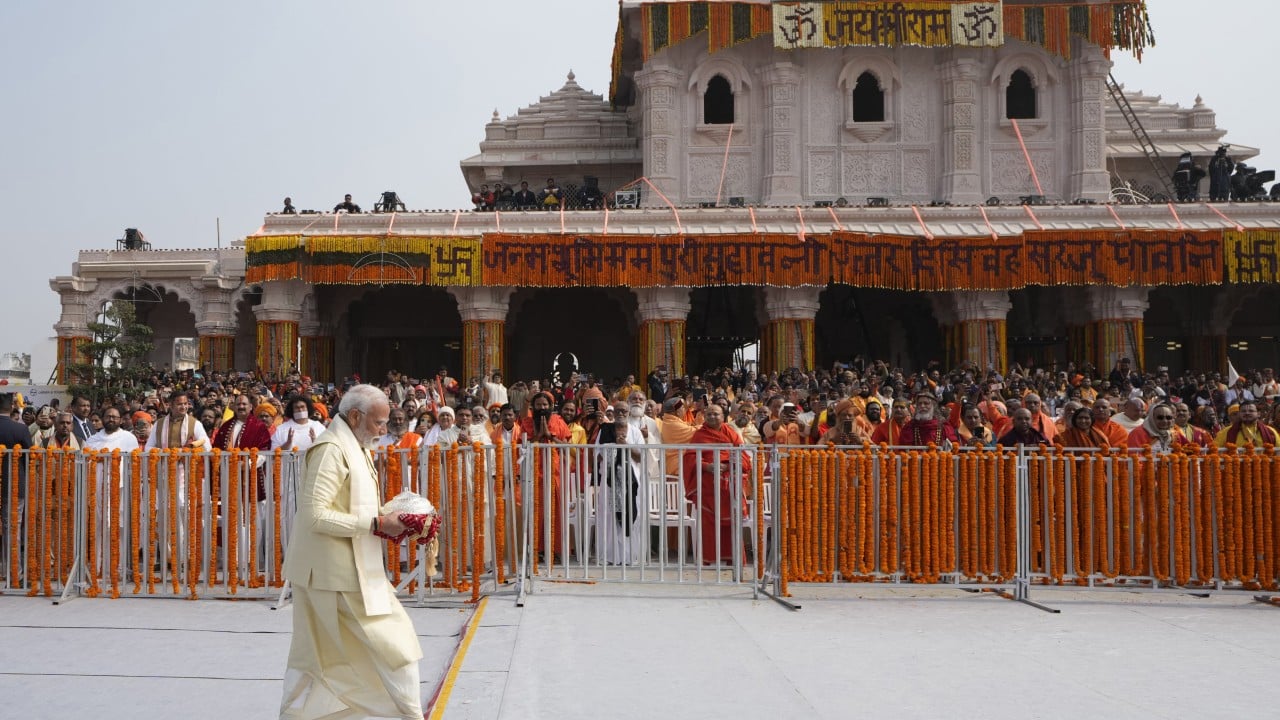
Faith and finance are a volatile mix in Indian politics. The ongoing controversy surrounding the alleged theft and embezzlement of donations at the Ayodhya Ram Mandir has blown up into a massive political storm. It's putting the Bharatiya Janata Party (BJP) on the defensive in its most crucial political backyard of Uttar Pradesh.
What started as an internal murmur has rapidly spiraled into a high-stakes investigation. A Special Investigation Team (SIT) has already flagged massive procedural lapses. Eight people associated with the temple's cash-counting operations have been arrested, and top officials of the Shri Ram Janmabhoomi Teerth Kshetra Trust are facing heavy scrutiny.
For a political party that built its core identity around the construction of this historic temple, allegations of stolen offerings aren't just a regulatory headache. They hit at the heart of the party's ideological and electoral foundation.
The Cracks in the Sanctuary
In mid-June, the Uttar Pradesh government quietly set up a three-member SIT after the temple trust itself admitted to major discrepancies in its accounts. For weeks, opposition leaders like Samajwadi Party chief Akhilesh Yadav alleged that something was deeply wrong with how the millions of small donations from devotees were being handled. The trust initially pushed back, claiming internal audits showed nothing out of the ordinary.
Then the dam broke.
On June 25, law enforcement registered a First Information Report (FIR) based on the SIT’s preliminary findings. Eight people were swiftly locked up in judicial custody. Investigators recovered nearly ₹80 lakh in cash, along with quantities of foreign currency, from the homes of the accused. The arrested individuals weren't random outsiders; they were part of the core team responsible for counting the daily cash and valuables showered upon the deity by millions of ordinary citizens.
The SIT's findings point to a complete breakdown of basic security. The temple had a clear Standard Operating Procedure (SOP) on paper. Staff counting the cash were supposed to wear pocketless clothing. Frisking was mandatory upon entering and exiting the counting rooms. Private security guards from the Sainik Security Services (SIS) were meant to monitor every move.
The SIT revealed that almost none of these rules were actually enforced. Instead, the staff operated with zero accountability, pocketing bundles of cash over an extended period. To make matters worse, one of the main accused, Subhash Srivastava, was reportedly appointed to his post based on the direct recommendation of a top trust official.
Trust Deficit and High-Profile Resignations
The political fallout has been swift and brutal. Champat Rai, the high-profile general secretary of the Shri Ram Janmabhoomi Teerth Kshetra Trust and a veteran figure in the temple movement, resigned from his position on "moral grounds." Trustee Anil Mishra followed him out the door.
While Uttar Pradesh BJP chief Pankaj Chaudhary insists the state government won't spare anyone found responsible, the damage to public perception is done. The opposition isn't letting up. Congress leaders have taken to the streets, demanding a Supreme Court-monitored Central Bureau of Investigation (CBI) probe and the complete dissolution of the existing trust. They argue that an SIT composed of state administrative officers cannot impartially investigate high-ranking religious and political elites.
The timing couldn't be worse for the ruling dispensation. Secular critics have always targeted the party over the commercialization of faith, but this scandal cuts differently. It alienates the actual devotees—the everyday people who sent hard-earned money in envelopes to help build the temple. When people realize their religious offerings were allegedly siphoned off to buy private real estate and luxury vehicles, the anger becomes deeply personal.
A High-Stakes Political Tug-of-War
Uttar Pradesh Chief Minister Yogi Adityanath is trying to control the narrative by turning the fire back on his rivals. During a public rally in Rampur, he slammed the Congress and the Samajwadi Party for their "newfound" devotion, reminding voters that previous non-BJP governments in the state actively suppressed the Ram Mandir movement.
The strategy is obvious: frame the opposition's outrage as a calculated attack on Hinduism rather than a legitimate critique of financial mismanagement. But that defense wears thin when the state's own police force is the one making the arrests and recovering stashes of stolen cash.
This isn't a minor corporate fraud case. The Ayodhya temple is the crown jewel of modern Indian political symbolism. The grand consecration ceremony attended by Prime Minister Narendra Modi was designed to solidify a legacy. Now, the management of that very legacy is being questioned.
What Happens Next
The narrative is moving too fast for standard political spin. If you want to understand where this controversy goes from here, keep a close eye on these specific developments.
- The SIT Final Report: The preliminary report exposed basic security lapses, but the upcoming final report will reveal if the fraud extends beyond the counting room to senior administrative tiers.
- The Demand for a Central Probe: Watch the Supreme Court's handling of the petitions demanding an independent, court-monitored CBI investigation. A transition from a state-level SIT to a central agency will significantly increase the political pressure on the ruling administration.
- Trust Reorganization: Pay attention to who replaces the resigned officials. The opposition is pushing for the inclusion of traditional religious authorities like the Shankaracharyas and local Ayodhya seers to restore institutional credibility. The composition of the new leadership will show how much control the government is willing to concede.