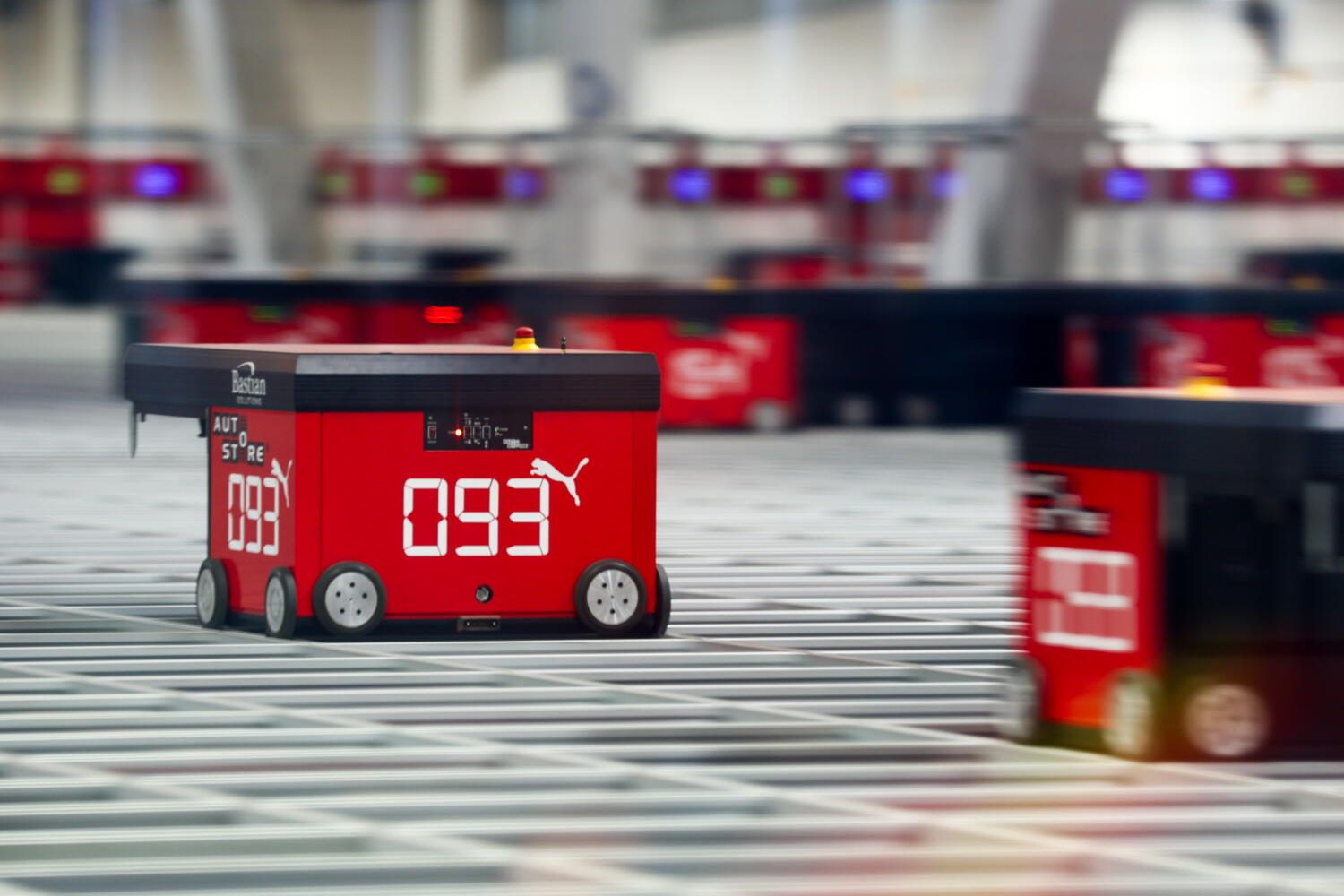
You order a pair of sneakers online, and days later, they arrive at your door. You rarely think about the chaotic scramble happening behind the scenes. Right now, Los Angeles distribution centers are facing a massive surge. Millions of sportswear items need sorting, packing, and shipping before the holidays. Human workers alone can't keep up with the sheer volume.
Enter the automated workforce. Puma and other major brands are leaning heavily on fleets of autonomous rolling robots across Southern California facilities. These machines aren't just a sci-fi novelty anymore. They are the backbone of modern supply chains, keeping delivery windows intact while traditional labor markets sweat through peak season. Expanding on this theme, you can find more in: What Openai Accusing Apple Of Stealing Trade Secrets Really Means For Tech.
The Reality of Robot-Driven Logistics
People picture shiny humanoids walking down aisles, but real warehouse automation looks completely different. It's industrial, fast, and entirely functional. Small, low-slung autonomous mobile robots zip across grid tracks, lifting inventory pods and hauling them directly to human station workers.
Instead of workers walking miles every day to pick items off dusty shelves, the inventory comes to them. This shift changes everything about warehouse efficiency. Experts at Wired have shared their thoughts on this situation.
- Speed: Picking rates jump by hundreds of percent compared to manual retrieval.
- Accuracy: Automated scanning cuts mis-ships down to near zero.
- Safety: Heavy lifting and repetitive strain injuries drop significantly.
Brands like Puma don't adopt this tech just to look cool. Margins are razor-thin, and consumer expectations for two-day or same-day shipping are brutal. If a distribution hub slows down for even a few hours during peak shopping weeks, millions of dollars vanish. Autonomous fleets solve that bottleneck.
What LA Hubs Teach Us About the Future of Work
Los Angeles has become an unexpected testing ground for commercial robotics. Between sidewalk delivery bots rolling through neighborhoods and heavy-duty automated guided vehicles operating inside massive fulfillment centers near the ports, the region runs on automation.
Critics worry about jobs. It's a fair concern. When machines take over repetitive sorting and hauling tasks, the nature of warehouse work shifts entirely. Facilities now need technicians, fleet managers, and software monitors instead of just manual pickers. Companies argue that automation keeps local distribution competitive, preventing operations from moving elsewhere. Still, the transition is bumpy for the workforce on the ground.
Surviving the Holiday Rush
If you're wondering why your packages keep showing up on time despite historic shipping volumes, thank the algorithms and electric motors whirring away in places like Bloomington and Torrance. These rolling units don't take coffee breaks, they don't get tired, and they certainly don't care about traffic on the 405.
Automation is no longer coming. It's already here, sorting your sneakers and keeping the supply chain from breaking under its own weight.