For years, Australia stood as a lone fortress. While the deadly H5N1 bird flu strain tore through wildlife populations across the Northern Hemisphere, Europe, and the Americas, the island continent remained the last major landmass free of the virus.
That geographical defense shield has officially cracked.
Authorities have confirmed that local transmission of the highly virulent H5N1 strain is now happening on Australian soil. With total detections climbing—including cases in greater crested terns on the Limestone Coast and Kangaroo Island—biosecurity experts are sounding alarms. This isn't just a minor agricultural headache. It's a full-scale ecological crisis unfolding in real time.
The Reality of Local Transmission
When the first infected brown skua washed up in Western Australia's Cape Le Grand National Park, officials hoped it was an isolated incident brought by a stray migratory bird. They were wrong. The virus has jumped into local resident bird populations, marking the transition from sporadic external arrivals to active local circulation.
Greater crested terns and other colonial nesting seabirds are acting as stepping stones for the pathogen. Because these birds congregate in massive flocks and dense breeding colonies, they create a biological highway for the virus. Once a single flock catches it, containment becomes virtually impossible.
Global precedent paints a terrifying picture of what comes next. Overseas, the H5N1 strain has killed millions of wild birds and tens of thousands of mammals. South America saw roughly 30,000 sea lion pups die in a six-month window after the virus crossed from avian species into marine mammals. On sub-Antarctic Heard Island, over 13,000 elephant seal pups perished in a single breeding season.
Which Australian Species Are at the Greatest Risk?
Australia holds a high concentration of endemic species found nowhere else on earth. That uniqueness is now a massive vulnerability.
Federal risk assessments have flagged more than 150 native bird species and over 10 mammal species as being at very high risk of major population decline or extinction if the virus takes hold.
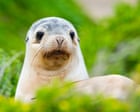
- The Australian Sea Lion: Concentrated heavily in South Australia, populations are already down by roughly 60% over four decades, sitting at around 12,000 individuals. Rookeries like Seal Bay on Kangaroo Island put these endangered mammals right on the frontline.
- Rare Birds: Iconic and vulnerable species—such as the red goshawk, the shy albatross, the plains-wanderer, and the black swan—face catastrophic threats if the virus sweeps through inland wetlands and coastal habitats.
Conservation groups point out that local wildlife is already stressed by habitat loss and climate pressures. Adding a hyper-lethal pathogen into that mix could push teetering species past the point of no return.
What This Means for Your Groceries and Farms
Beyond the environmental disaster, the commercial fallout could hit everyday wallets hard.
Australia's multi-billion-dollar poultry and egg industries have maintained strict biosecurity lockdowns, and zero commercial farms have recorded H5 detections so far. But farmers are sweating. Overseas outbreaks have forced the culling of roughly 140 million farmed birds since early last year, triggering massive supply shocks.
Look at the United States. A severe H5N1 wave triggered a 220% spike in egg prices during early 2025. Industry bodies in Western Australia have already warned that if the virus breaches commercial sheds, local egg prices could skyrocket past ten dollars a carton.
Poultry products and eggs on supermarket shelves remain safe to eat right now, and strict biosecurity protocols across major producers are keeping commercial flocks separated from wild vectors. Backyard chicken owners, however, represent a much harder-to-control variable. They lack the high-tech biosecurity barriers of massive commercial operations.
Should Humans Panic About Health Risks?
The short answer is no. Public health authorities emphasize that the current risk to human health remains low.
H5N1 is fundamentally an animal virus. It doesn't easily spread between humans. Most human cases globally have occurred in people who had intense, direct physical contact with sick or dead infected animals, such as poultry workers or handlers.
Symptoms in humans typically include conjunctivitis (severe eye redness), fever, body aches, and respiratory distress. While historical fatality rates for humans contracting the virus from animals have hovered around fifty percent, newer strains monitored globally show lower overall mortality among treated patients, though caution remains paramount.
How Authorities Plan to Handle the Unstoppable
Can Australia stop the spread? Realistically, no.
Once a pathogen of this scale enters wild bird migratory loops, eradication from natural ecosystems becomes impossible. Wildlife managers can't vaccinate wild populations en masse or quarantine the entire coastline.
Instead, government agencies and scientific bodies are focusing entirely on intense surveillance. Tracking infection clusters early helps agricultural authorities lock down surrounding regions and gives conservationists time to protect captive or isolated breeding populations of critically endangered animals before the virus arrives at their doorstep.
If you spot dead or distressed seabirds on a beach or near wetlands, keep your distance, keep pets away, and report the sighting immediately to local agricultural or environmental departments. Do not touch them.
The fortress is breached. How the nation navigates the coming months will define the future of Australia's unique natural heritage.