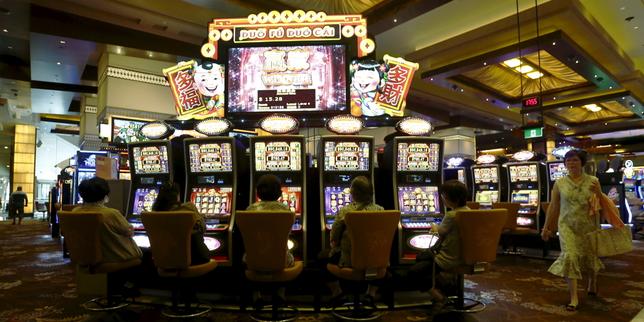
Walk into almost any local pub or community club in New South Wales, and you'll hear the same hypnotic soundtrack. It's a rhythmic, synthesized symphony of chimes, ascending electronic scales, and the simulated clatter of rolling coins.
These are the poker machines, or "pokies" as locals call them. They are Australia's electronic bandits, and they are bleeding the country dry.
Right now, Australia is facing a gambling crisis that outpaces every other nation on Earth. The latest numbers are terrifying. Australians are losing a staggering A$31.5 billion annually to gambling, and a massive chunk of that cash vanishes straight into electronic gaming machines sitting in suburban venues. This isn't a problem confined to flashy casinos. It's happening in working-class neighborhoods, right next to the family bistro.
The real tragedy behind the numbers is how predictable this crisis has become. Despite a severe cost-of-living squeeze hitting household budgets across the country, pokies revenue isn't shrinking. It's growing.
The Shocking Math of Suburban Losses
If you want to understand the scale of the problem, look at New South Wales. The state holds roughly half of all the poker machines in Australia. It has become the epicenter of global per-capita gambling losses.
Data compiled by the faith-based non-profit Wesley Mission shows that gamblers in New South Wales alone lost nearly $9.3 billion on poker machines in 2025. That was a record breaker. This year, the trajectory looks even worse, with advocates projecting losses to blast past the $10 billion mark.
Think about that for a second. It's almost triple the annual budget allocated for constructing and upgrading hospitals across the entire state. Every single hour of every single day, more than $1 million is sucked out of people's pockets and into these machines.
The geography of these losses tells an ugly story about exploitation. The money isn't coming from affluent coastal suburbs. It's being drained directly from communities that can least afford it. In working-class areas like Fairfield in Sydney's west, the average annual loss hovers above $3,255 per person. That statistic counts every single resident, including children and people who never touch a machine. The actual losses for active players are astronomical.
Other high-loss zones tell the same story:
- Canterbury-Bankstown
- Cumberland
- Blacktown
These are the regions bearing the brunt of the damage. This is money that should be paying off mortgages, covering skyrocketing rents, buying groceries, or paying for school uniforms. Instead, it vanishes into a digital black hole.
Why the Government Is Hooked on the Juice
You might wonder why a public health crisis of this magnitude is allowed to continue. The answer is simple and cynical. State governments are just as addicted to the revenue as the problem gamblers are to the machines.
Look at the latest state budget dropped by the Chris Minns Labor government in New South Wales. Anti-gambling advocates are calling it a flat-out betrayal. The budget forecasts that annual state revenue from all gambling taxes will leap from $3.8 billion to a massive $4.7 billion over the next few years.
Specifically, the tax take from poker machines in pubs and hotels is predicted to climb by 7.5% annually. By 2029-30, the government expects to pocket $2.2 billion a year from pokies alone, up from $1.6 billion today.
Politicians love to talk about industry reform when they are chasing votes. Before the 2023 election, Premier Chris Minns promised to clean up the sector. He pledged to reduce machine caps and run a mandatory cashless gaming trial to stop money laundering and curb problem gambling.
What actually happened? Policy paralysis.
The government has sat on dozens of recommendations made by its own Independent Panel for Gaming Reform. The momentum has stalled because the political influence of powerful club and hotel lobby groups is incredibly fierce. Pubs and clubs have optimized their floors to become clinical, hyper-efficient cash-extraction zones. They cross-subsidize cheaper meals and community football teams with the financial ruin of local families. It's an ethical nightmare wrapped in a community-friendly package.
The Toxic Late-Night Trap
The mechanics of a poker machine are engineered to bypass human logic. They use high-frequency sound loops, bright visual rewards, and "losses disguised as wins," where the machine celebrates a $2 payout on a $5 bet with flashing lights and triumphant music.
The danger multiplies exponentially after midnight. Research from the NSW Office of Responsible Gambling highlights a direct link between late-night play and severe psychological harm.
The statistics show a clear, escalating risk profile:
- Play between 8:00 AM and 10:00 PM carries a problem gambling rate of roughly 3.1%.
- Play between 10:00 PM and midnight sees that risk more than double to 7.3%.
- Play between midnight and 2:00 AM pushes the rate up to 12.1%.
- Play between 2:00 AM and 8:00 AM sees the problem gambling rate skyrocket to a brutal 22.6%.
When people are tired, lonely, or under the influence of alcohol in the early hours of the morning, their executive functioning drops. The machine's predatory design takes complete control.
While the government recently revoked some decades-old exemptions to enforce a mandatory shutdown between 4:00 AM and 10:00 AM for hundreds of venues, advocates argue it's a drop in the ocean. Groups like the Alliance for Gambling Reform and the NSW Greens are pushing for a mandatory statewide shutdown of all gaming machines between midnight and 10:00 AM.
Even the Australian Christian Lobby has teamed up with the Greens on this issue. It's a bizarre political alliance that shows just how desperate the community is for real action.
Real Steps to Protect Yourself and Your Community
Relying on state politicians to solve this crisis is a losing bet. They are too reliant on the tax billions to implement the sweeping reforms the country actually needs, like a mandatory, enforceable cashless gambling card with strict spending limits.
If you or someone you know is caught in the pokies trap, you have to take immediate, practical control of the situation.
Enact Self-Exclusion Immediately
Don't rely on willpower. Willpower fails at 1:00 AM. Every state has a formal self-exclusion program. In New South Wales, you can use the ClubSAFE or BetSafe programs to legally ban yourself from specific venues or entire areas. Once you sign the deed, staff are legally required to remove you if you enter the gaming lounge, and facial recognition technology in many modern venues will flag your presence instantly.
Re-Route Your Financial Architecture
Pokies are a cash-and-card game. Cut off the supply lines. You can request your bank to place a permanent block on gambling transactions on your debit and credit cards. Keep your primary bank accounts separate from any card you carry to a social venue. If you don't have quick access to cash or digital transfers, the friction will stall the impulsive urge to chase losses.
Support Grassroots Campaigning
The only thing politicians fear more than losing tax revenue is losing their seats. Support organizations like the Alliance for Gambling Reform. Push local representatives to support cross-factional motions to slash machine numbers. A current push within the Labor left aims to commit the party to cutting 45,000 machines over the next decade. That won't happen without immense, unyielding pressure from regular citizens.
The pokies aren't a harmless hobby, and they aren't an accidental tax. They are a highly sophisticated, state-sanctioned wealth transfer system that takes money from vulnerable communities and hands it to billionaire venue owners and state treasuries. It's time to stop looking at the flashing lights and start seeing the wreckage.

/origin-imgresizer.eurosport.com/2025/08/08/image-eae19531-0fdd-43a9-915e-596214d9dbc5-85-2560-1440.jpeg)