Australia has an obsession with finding the next sporting superstar before they even hit puberty. If a nine-year-old shows a bit of promise on a soccer pitch or a running track, we fast-track them. We drop them into expensive, hyper-competitive junior academies. We give them the best coaches, the cleanest pitches, and a mountain of expectations. We rank them, score them, and weed out the kids who do not look like future champions yet.
It feels professional. It feels efficient. It is also completely wrong.
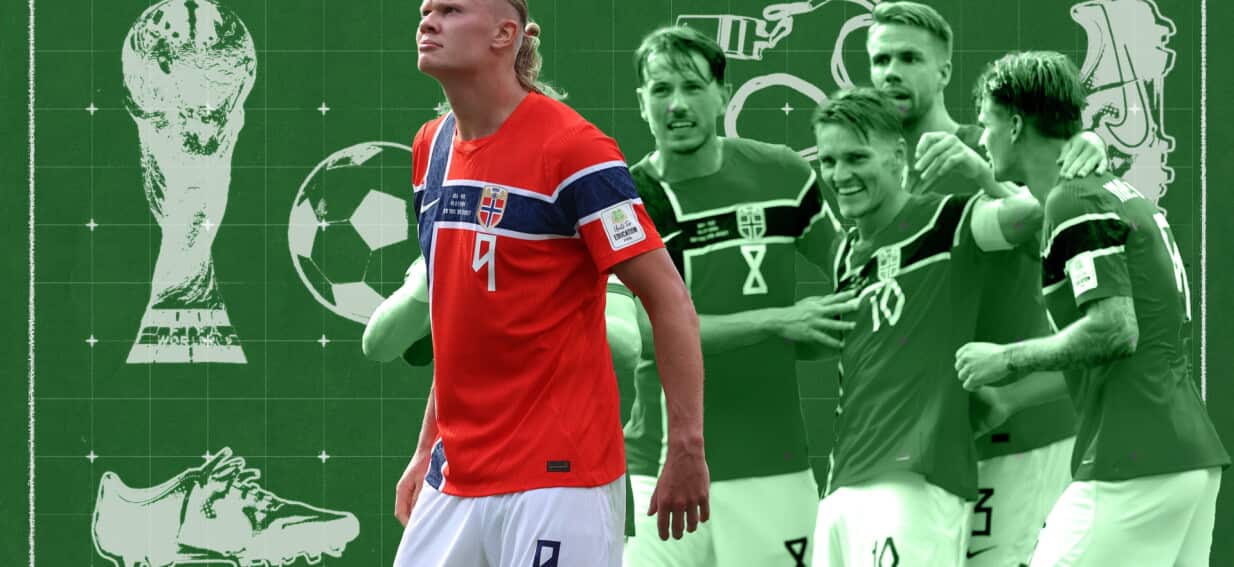
Look at Norway. With a population of just 5.6 million people, roughly the same size as Melbourne, they are completely outclassing the rest of the world. At the 2026 FIFA World Cup, Norway did the unthinkable by knocking out Brazil in the Round of 16, thanks to two late goals from Erling Haaland. Earlier in the year at the Milano Cortina Winter Olympics, they topped the table with 41 medals, including 18 golds. That is the highest number ever won by a single nation.
They do all this while ignoring every single rule Australians think is essential for building elite athletes. Norway does not have elite youth academies for nine-year-olds. They do not publish league tables for kids under 13. They do not track official match scores, and they do not rank children.
The data shows our system is failing the masses. According to recent figures, barely 38% of Australian children aged 0-14 participate in an organized sport outside of school once a week. In Norway, that number is a staggering 93%. By treating youth sports as an elite sorting mechanism rather than a community playground, Australia is burning out its best talents and driving everyone else away.
The Myth of the Elite Nine Year Old
Australian clubs love selection trials. We segregate children based on talent before their bodies have even begun to mature. This structure assumes you can look at a fourth grader and predict their adult athletic ceiling.
Science says you can't.
Ryan Worn, a sports science expert at Federation University, points out that early selection is a massive trap. Growth spurts completely alter height, weight, bone density, and strength. The kid who is the fastest or strongest at age eight is rarely the fastest or strongest at age eighteen. Usually, the early standouts are just older or more physically mature for their age cohort.
When Australian academies select these early bloomers, they offer them top-tier resources while leaving the rest behind. The late bloomers get discouraged and quit. Then, when the early bloomers eventually lose their physical advantage during puberty, they lack the resilience or technical foundation to adapt. Everyone loses.
Norway operates on a completely different theory. They do not try to guess who will be great. Instead, their strategy is simple: keep as many kids playing for as long as possible. If you keep the talent pool massive until late adolescence, the real champions will emerge naturally when it actually matters.
How Erling Haaland Was Really Made
The football world looks at Erling Haaland as a freak of nature, a modern predator engineered in a laboratory. The truth is much more ordinary, and it destroys the typical academy narrative.
Haaland did not grow up in an elite Premier League academy or a high-pressure European residency program. He played for his local grassroots club, Bryne FK, until he turned professional.
His youth group consisted of 40 kids born in 1999. There were 39 boys and one girl. At age nine, they trained exactly once a week. Let that sink in. The most dangerous striker on earth was doing one formal training session a week as a kid.
The secret was not the intensity of the coaching. It was the freedom of the environment. The small town of Bryne built an indoor soccer dome, and they left it unlocked. Haaland and his friends spent thousands of hours playing unstructured, self-directed pickup games. They played during school breaks, on weekends, and late into the evening.
There were no cuts in that group. Nobody was told they were not good enough. Because the club refused to select an elite squad and discard the rest, not a single player dropped out of that cohort before the age of 16. Out of those 40 local kids, six went on to become professional footballers.
That does not happen in Australia. In our system, that group of 40 would have been sliced down to an "A-team" and a "B-team" by age nine. The coach would have focused entirely on the top five players to win a weekend junior trophy. The other 35 would have grown bored, felt rejected, and quit to play video games.
The Legal Right to Not Keep Score
You cannot understand Norwegian sport without understanding Idrettsglede, which translates to the joy of sport for all. This is not just a feel-good slogan. It is literally enshrined in Norwegian law.
The country operates under a strict framework called the Children’s Rights in Sports. First introduced in 1976 and updated heavily over the years, this document protects children from adult ambition. Under these rules, children have a legal right to participate in sports without pressure or exploitation.
The strict rules include:
- No public league tables before the age of 13.
- No national championships for children.
- No individual national rankings.
- Strict limits on travel teams and regional competitions.
If a club or a coach publishes youth tournament standings online, they can face heavy financial fines. The goal is to completely remove the parental and coaching anxiety that poisons youth sports. When there are no league tables, coaches do not care about winning an under-10 match. They care about making sure every single kid has fun and returns next week.
Matti Clements, the director of the Australian Institute of Sport, saw this system firsthand during a visit to Norway. She noted that Australian youth sport has twisted into a pure pathway to elite success. Parents push kids into sports because they want them to get an Olympic medal or a professional contract. Norway does it because they see sport as an essential pillar of community belonging. Ironically, by focusing entirely on the health and joy of the collective, they produce far better elite athletes than we do.
The Toxic Cost of the Australian System
Let's talk about the financial barrier. In Australia, if you want your child to play in a high-level junior football or basketball league, it will cost you thousands of dollars a year. Parents pay for academy fees, mandatory gear, private coaching, and interstate travel.
This creates an economic filter. We aren't selecting the best athletes; we're selecting the athletes whose parents can afford the fees.
Norway keeps things cheap. Annual participation fees rarely cross a few hundred dollars. The coaches are almost always local volunteers and parents who are trained through cheap, standardized national programs. They don't look for professional coaches for nine-year-olds because a nine-year-old doesn't need a tactical guru. They need an adult who makes the session fun.
Tiger Woods is a statistical anomaly. For every child who was pushed intensely from age three and succeeded, there are thousands who suffered severe psychological burnout, chronic injuries, and a permanent hatred for physical activity. Australia's system operates on this scarcity model, burning through children like fuel just to find one or two survivors.
Actionable Steps to Fix Australian Sport
We cannot copy the Norwegian culture overnight, but Australian local clubs, parents, and state sporting associations can implement these immediate structural changes.
Stop Early Specialization
Do not let your ten-year-old play just one sport all year round. Children who play multiple sports develop better fundamental motor skills, broader athleticism, and experience fewer overuse injuries. Haaland played handball, athletics, and cross-country skiing alongside football. Encourage kids to sample everything.
Ban Regional Rep Teams Under Age 12
State sporting bodies need to eliminate elite travel squads for young children. Keep kids playing locally with their school friends. This keeps costs down for families, prevents parental obsession, and ensures that children are playing because they love the game, not because they are being flown across the country for a weekend tournament.
Delay Tactical Coaching
Young children do not need complex tactical setups or position-specific training. Haaland did not start position-specific training until he was 15. Prioritize individual skill development, small-sided games, and free play. The focus must be on maximizing the number of times a child touches the ball or engages with the sport, not on teaching them a rigid defensive structure.
Measure Success by Retention, Not Trophies
Reward youth coaches based on how many of their players sign up again next season. If a coach wins a state championship but half the roster quits the following year due to burnout or lack of game time, that coach has failed. The ultimate goal of youth sport is to build healthy adults who love physical activity for life.
The results from Europe prove that reducing pressure does not reduce performance. If Australia wants to create athletes capable of dominating the global stage, we need to stop treating our children like miniature professionals. We need to tear down the elite academies, throw away the junior leaderboards, and give the game back to the kids.