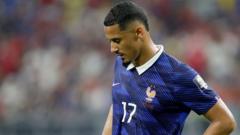
Arsenal fans can breathe a temporary sigh of relief, even if the headline news sounds grim on the surface. William Saliba is out for an extended period after suffering a serious back injury during France's World Cup semi-final against Spain in Arlington. However, specialist assessments in London confirmed that the French center-back will avoid surgery.
That distinction matters. A lot.
Initial reports out of France suggested Saliba faced four to five months on the sidelines following an invasive operation. Instead, Arsenal's medical team opted for a non-surgical, conservatively managed rehabilitation program. He will still miss the start of the 2026/27 Premier League campaign and early Champions League group fixtures, but avoiding the knife changes everything for his long-term career trajectory.
Here is what the update really means for Mikel Arteta's squad, how France pushed their defensive star past his physical limits, and how Arsenal can navigate his absence without sacrificing their title defense.
The Truth About William Saliba's Back Injury and Avoiding Surgery
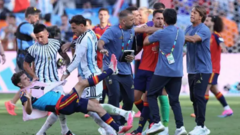
Saliba lasted just 30 minutes in France's 2-0 World Cup semi-final loss to Spain before collapsing onto the turf. French outlets reported that Saliba turned to his central defense partner Dayot Upamecano and bluntly admitted his back felt dead. French manager Didier Deschamps later confirmed that the pain had become unbearable.
The issue did not happen out of nowhere.
Saliba played through lower back discomfort for months. He gritted his teeth through the tense final weeks of Arsenal's Premier League title run in April and May, managing a delicate workload alongside club physios. When he joined up with the national team for the World Cup in June, France modified his training schedule between group matches against Senegal, Iraq, and Norway to keep him on the pitch.
It was a risky balancing act. Spinal issues in elite athletes rarely fix themselves when subjected to ninety minutes of high-intensity sprinting, jumping, and physical duels twice a week.
When Saliba finally broke down against Spain, panic spread through North London. Back surgery for a 25-year-old central defender carries massive career risks. Spinal fusion or microdiscectomy procedures often strip away lumbar flexibility, requiring long rehab periods and unpredictable recovery curves.
By choosing a managed, non-surgical recovery program, Arsenal's medical department is choosing long-term structural health over a rushed, aggressive fix. Conservative management focuses on targeted lumbar core stabilization, reducing local inflammation, and gradually rebuilding mechanical tolerance. It takes time, but it protects the athlete's body for the next decade.
How France Pushed Saliba Beyond His Physical Limits
National team coaches operate under a totally different set of incentives than club managers. Didier Deschamps needed his best defender on the field to win a World Cup. Mikel Arteta needs his foundation piece healthy for the next five years.
That tension exploded in Texas.
Saliba started six consecutive matches for Les Bleus in the tournament. Despite requiring pain-killing injections and modified sessions, he logged 90 minutes in intense knockout ties against Sweden, Paraguay, and Morocco. By the time France kicked off against Spain, the fuse was completely burned down.
Arsenal supporters have good reason to feel frustrated with France's physical management of the player. Running a player with an active lumbar issue into the ground during a summer tournament in extreme heat created an avoidable crisis.
Now Arsenal pay the tax. Saliba will miss pre-season tours, the Community Shield clash against Manchester City, and the opening two months of the domestic season.
How Mikel Arteta Can Restructure Arsenal's Defense Without Saliba
Losing a world-class center-back would crush most sides. Arsenal, though, built genuine squad depth over the last two transfer windows specifically to handle a crisis like this.
Arteta isn't staring into the abyss like he was in the spring of 2023. Back then, Saliba's back injury against Sporting CP crippled Arsenal's defensive structure, forcing Rob Holding into the starting XI during a agonizing title collapse. Today, the roster looks vastly superior.
Cristhian Mosquera and Gabriel Magalhães as the Primary Partnership
Cristhian Mosquera is the immediate, logical choice to step into the right-sided center-back position alongside Gabriel Magalhães.
The 22-year-old Spaniard was outstanding during his 29 appearances in all competitions last season. Mosquera possesses the raw recovery speed and composure on the ball required to play in Arteta's ultra-high defensive line. When Saliba missed four weeks with an ankle problem in March, Mosquera stepped in against Everton and Bayer Leverkusen without the defense missing a beat.
Pairing Mosquera with Gabriel gives Arsenal a physically dominant duo capable of winning aerial duels and locking down space in transition. Mosquera averages 3.2 clearances and 1.8 tackles per 90 minutes, numbers that match Saliba's defensive output closely.
Ben White's Timely Return to First-Team Training
The silver lining in Arsenal's official medical update was hidden in the footnotes. Ben White has officially returned to full pre-season training.
White missed the final weeks of last season and England's World Cup campaign after undergoing minor knee surgery to clean up joint damage sustained against West Ham in May. His availability gives Arteta massive tactical leverage.
White played center-back for Brighton and Leeds before migrating to right-back under Arteta. If Arteta wants an experienced, tactical reader of the game alongside Gabriel, White can slide inside seamlessly. That move would allow Jurrien Timber to start at right-back, maintaining Arsenal's inverted build-up structure.
Tactical Flexibility with Calafiori and Hincapié
Arsenal also hold versatile left-footed options in Riccardo Calafiori and Piero Hincapié.
While both players prefer operating on the left side of defense, Arteta experimented with a three-at-the-back fluid hybrid during the Champions League knockout stages last term. Hincapié registered 18 starts at center-back last year, showing elite line-breaking passing capability.
If Arteta decides to lock down games against high-pressing opposition, shifting to a back three featuring Gabriel, Mosquera, and Calafiori provides an impenetrable physical wall.
Lessons Arsenal Must Learn from the 2023 Title Race Collapse
Arsenal fans remember April 2023 all too well. Saliba picked up a back injury against Sporting CP, missed eleven league games, and Arsenal watched an eight-point lead over Manchester City evaporate.
The national conversation back then was that Arsenal were a one-man team defensively. Critics claimed Arteta's tactical system relied too heavily on Saliba's ability to extinguish fires single-handedly in 50-yard space behind the midfield.
That narrative is officially dead in 2026.
Arsenal won the Premier League title last season because they learned how to rotate and adapt. They won gritty matches without Odegaard, survived long spells without Merino, and managed games effectively when Saliba rested.
The key difference now is tactical maturity. Arsenal do not panic when missing key names because their defensive shape is systemic, not purely individual. The team allowed the fewest expected goals per 90 minutes in Europe last season, regardless of who slotted into the back four.
Concrete Next Steps for Arsenal Before the Season Opener
With Saliba sidelined for the immediate future, Arsenal's recruitment team and coaching staff must execute three key operational steps before the transfer window shuts.
First, lock down Saliba's rehabilitation protocol with precise, non-negotiable milestones. Arsenal cannot afford a repeat of his 2023 recovery timeline, which was plagued by shifting return dates and persistent inflammation. The medical team must resist any urge to rush him back for big fixtures in September against Chelsea or Spurs. Give him full clearance only when his core stability metrics reach 100%.
Second, pause any prospective loan moves for young defensive backup. Keeping squad players integrated gives Arteta insurance against secondary injuries to Gabriel or Mosquera during the grueling autumn schedule.
Third, settle on the starting defensive unit during the remaining pre-season friendlies. Arteta must give Mosquera and Gabriel maximum minutes together over the next three weeks. Building positional chemistry, communication habits, and set-piece positioning between those two is critical before game week one.
Saliba's absence is an inconvenient hurdle, but it is far from a disaster. Arsenal have the depth, the system, and the medical plan to hold the line until their French talisman returns to full fitness.