{
  "component": "Bento",
  "props": {
    "use_case": "soccer-match",
    "cards": "lmss"
  },
  "children": [
    {
      "component": "SportScoreCard",
      "props": {
        "heading": "FIFA World Cup 2026™",
        "subheading": "July 15, 2026",
        "team_details": [
          {
            "component": "TeamDetail",
            "props": {
              "logo_image": {
                "component": "Image",
                "props": {
                  "src": "https://ssl.gstatic.com/onebox/media/sports/logos/optimized/DTqIL8Ba3KIuxGkpXw5ayA_500x500.png"
                }
              },
              "name": "England",
              "score": "1",
              "is_winner": false
            }
          },
          {
            "component": "TeamDetail",
            "props": {
              "logo_image": {
                "component": "Image",
                "props": {
                  "src": "https://ssl.gstatic.com/onebox/media/sports/logos/optimized/1xBWyjjkA6vEWopPK3lIPA_500x500.png"
                }
              },
              "name": "Argentina",
              "score": "2",
              "is_winner": true
            }
          }
        ],
        "footer": "Mercedes-Benz Stadium - Atlanta",
        "corner_label": "FT"
      },
      "actions": {
        "open_url": "https://www.sbs.com.au/news/article/fifa-world-cup-2026-argentina-faces-fifa-fine-after-players-celebrate-england-win-with-falklands-banner/zfssifaxy"
      }
    },
    {
      "component": "BentoCard",
      "props": {
        "size": "m",
        "heading": "Falklands Banner",
        "subheading": "Players face potential FIFA action for showing political messages on pitch",
        "bgImageUrl": {
          "component": "Image",
          "props": {
            "src": "https://encrypted-tbn2.gstatic.com/licensed-image?q=tbn:ANd9GcRm0jpgqM61R52olgMTb1nBqbd1siSCzRXwDpvc7h1e6rKghzz4XztLIC5gz27cEc1VyyQfLyZsg1NXQmg"
          }
        },
        "ext": {
          "controversy": "Las Malvinas son Argentinas"
        }
      },
      "actions": {
        "open_url": "https://www.sbs.com.au/news/article/fifa-world-cup-2026-argentina-faces-fifa-fine-after-players-celebrate-england-win-with-falklands-banner/zfssifaxy"
      }
    },
    {
      "component": "BentoCard",
      "props": {
        "size": "s",
        "heading": "2-1 Victory",
        "subheading": "Late goals from Fernandez and Martinez seal the final spot",
        "bgImageUrl": {
          "component": "Image",
          "props": {
            "src": "https://encrypted-tbn0.gstatic.com/licensed-image?q=tbn:ANd9GcRum0BLTB7IA949LO_FRSEwU8Jy2Y6PLlDUMpOT1jTf5IX3QlQG8-qOozCSmJxeqb4VwrLtOf2cPRrhLso"
          }
        },
        "ext": {
          "result": "Argentina advance to final"
        }
      },
      "actions": {
        "open_url": "https://www.sbs.com.au/news/article/fifa-world-cup-2026-argentina-faces-fifa-fine-after-players-celebrate-england-win-with-falklands-banner/zfssifaxy"
      }
    },
    {
      "component": "BentoCard",
      "props": {
        "size": "s",
        "heading": "1982 War",
        "subheading": "Decades of geopolitical tension over the islands"
      },
      "actions": {
        "open_url": "https://www.sbs.com.au/news/article/fifa-world-cup-2026-argentina-faces-fifa-fine-after-players-celebrate-england-win-with-falklands-banner/zfssifaxy"
      }
    }
  ]
}
Football is never just a game. If you ever needed proof of that, look no further than what happened in Atlanta.
On Wednesday night, the Mercedes-Benz Stadium hosted a sporting masterpiece that quickly devolved into a massive geopolitical incident. Argentina had just fought back to beat England 2-1 in a relentless World Cup semifinal. It was a match packed with late drama, tactical masterclasses, and pure, raw emotion. But the real talking point didn’t happen during the ninety minutes. It happened right after the final whistle.
Several Argentinian players, including midfielder Giovani Lo Celso and defender Nicolas Otamendi, paraded a banner across the pitch. The sign read "Las Malvinas son Argentinas". Translated, that means "The Falklands are Argentine."
This single banner instantly reignited a decades-old conflict. It put the tournament’s reigning champions on a direct collision course with FIFA’s strict disciplinary committee. Let's break down exactly what went down on the pitch, why this simple banner carries so much historical weight, and what sort of punishment Argentina faces as they prepare for the final against Spain.
How the Chaos Unfolded on the Pitch
The match itself was an absolute classic. Under the guidance of Thomas Tuchel, England had taken a hard-earned lead in the 55th minute. Anthony Gordon turned home a sharp cross from Morgan Rogers to send English fans into absolute ecstasy. For a long stretch of the second half, it looked like England’s defensive block would hold out.
Then Lionel Scaloni’s side turned on the style.
In the 85th minute, Chelsea’s Enzo Fernandez struck a brilliant long-range equalizer that breathed new life into the Albiceleste. Just as the match looked destined for extra time, magic struck. Deep into stoppage time, Lionel Messi provided an inch-perfect assist to Lautaro Martinez, who rose to power home a header in the 92nd minute. 2-1 Argentina. The stadium exploded.
When the final whistle blew, the pitch turned into a pressure cooker. Jude Bellingham got into a heated confrontation with Argentina’s Valentin Barco. Tempers were flaring. Amid the wild celebrations, some Argentinian players grabbed a banner from the stands.
Lo Celso and Otamendi held the sign high, flashing it directly to the cameras and the crowd. Lo Celso later draped it on the grass as the team celebrated. To the players, it was an expression of national pride. To the English players, fans, and football's governing body, it was an overt political provocation on the biggest stage in sport.
The Blood and History Behind Four Words
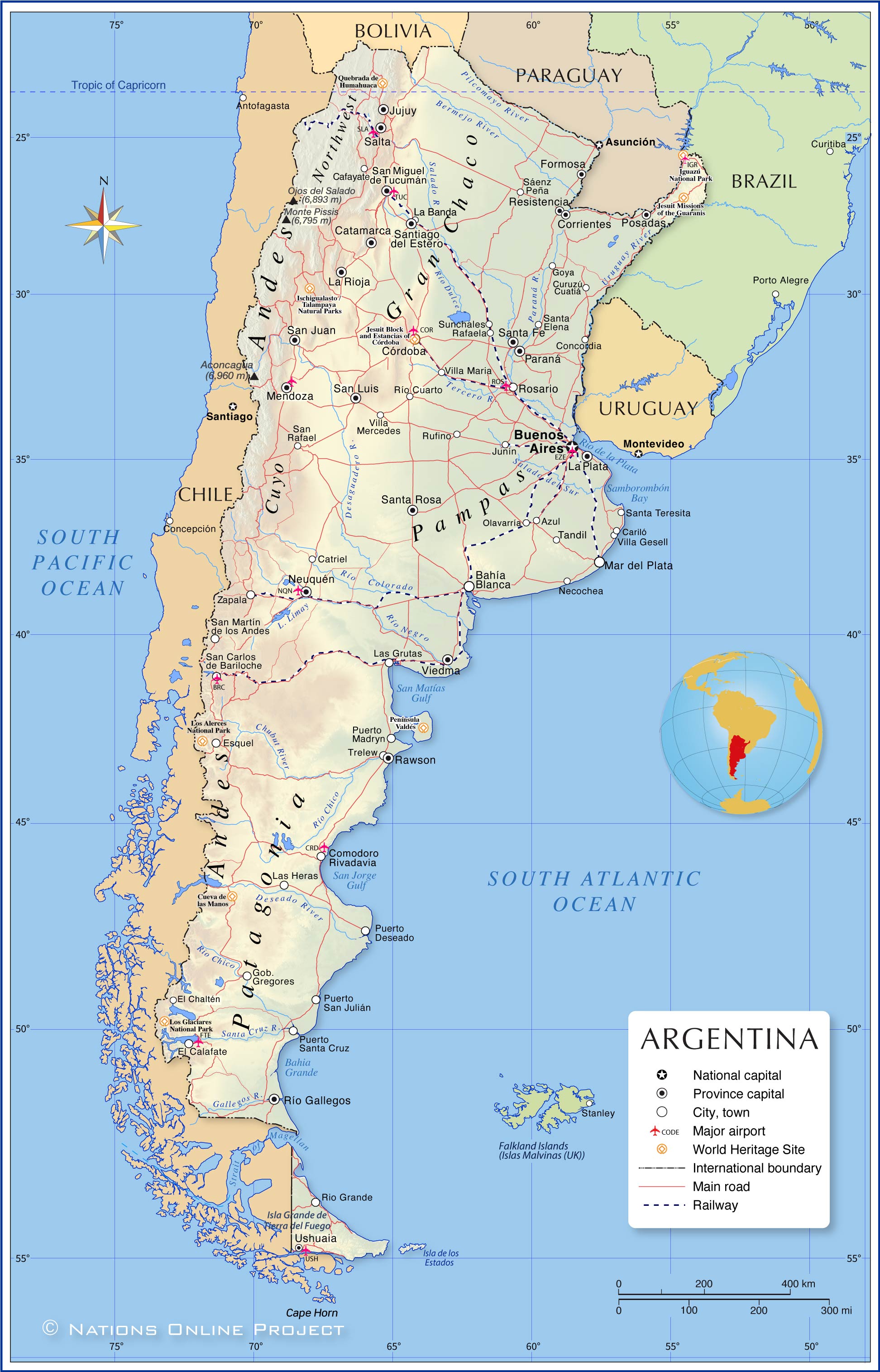
You can’t understand why this banner caused such a massive uproar without understanding the history. The Falkland Islands sit about 300 miles off the southern coast of Argentina. They are a British Overseas Territory, but Argentina has laid claim to them for nearly two centuries.
The dispute boiled over in April 1982. Argentina's military dictatorship invaded the islands. Britain responded by sending a massive naval task force across the Atlantic to reclaim the territory. The ensuing 74-day war was brutal. It ended in an Argentine surrender, but the cost was high.
- 649 Argentine military personnel lost their lives.
- 255 British servicemen were killed.
- Three islanders died during the conflict.
The islands returned to British rule. In a 2013 referendum, 99.8% of the local population voted to remain a British territory. Yet, successive Argentinian governments have kept the claim alive. In Argentina, the Malvinas are taught in schools as stolen national territory.
This profound cultural wound bleeds directly into sports. Before this very semifinal, midfielder Rodrigo De Paul openly admitted that matches against England transcend the boundaries of sport. When Diego Maradona scored his legendary "Hand of God" and "Goal of the Century" in 1986, he famously wrote in his autobiography that the victory was revenge for the fallen boys of the Malvinas. The current crop of players grew up on those stories. They feel the history just as deeply.
What FIFA’s Rulebook Actually Says
FIFA has a zero-tolerance policy when it comes to bringing politics onto the field of play. The Stadium Code of Conduct is incredibly clear on this point. It explicitly bans any banners, flags, apparel, or promotional material that contain political, offensive, or discriminatory messages.
The rules don't care if the players feel their message is patriotic. If it touches on a sensitive sovereign dispute, it is political.
By parading that banner, the Argentinian players violated these codes. It wasn't just fans in the stands making a statement; these were the actual athletes on the pitch utilizing the official broadcast to make a political claim. This leaves the Argentinian Football Association (AFA) exposed to immediate disciplinary proceedings.
What Kind of Punishment is Argentina Looking At
The big question on everyone's mind is simple. Will Argentina's players be banned from the World Cup final against Spain?
The short answer is no. You don't need to worry about Lionel Messi or Lautaro Martinez sitting out the final because of this. FIFA has faced similar incidents in the past, and history shows us exactly how they handle them.
In 2014, before a friendly match against Slovenia, the Argentinian squad lined up behind a giant banner with the exact same slogan. FIFA investigated the incident and handed the AFA a fine of 30,000 Swiss francs (roughly £20,000 at the time). They ruled that the team had violated regulations surrounding political statements and team misconduct.
While the World Cup semifinal is a much larger stage, the punishment is highly likely to follow a similar path. The most realistic outcome is a substantial financial penalty levied against the Argentine Football Association. FIFA will talk tough, release a stern statement reinforcing their commitment to neutral sports spaces, and issue a fine. The players themselves will almost certainly be cleared to play in the final.
Why We Should Stop Demanding Sterile Football
Many pundits and officials are calling for harsh suspensions to "teach Argentina a lesson." They want a sport entirely stripped of political friction.
That is incredibly unrealistic.
You cannot separate football from the societies that produce it. Players are not robots programmed solely to run, pass, and kick. They are products of their homes, raised on national narratives, family histories, and collective trauma. Expecting an Argentinian player to beat England in a World Cup semifinal and completely forget about the Falklands is to misunderstand the very nature of identity in South America.
The rivalry is heated, bitter, and beautifully complex. Trying to sanitize it with sterile administrative rules is a losing battle. Yes, FIFA must enforce its rules and issue a fine to maintain order. But expecting the passion of this historic rivalry to stay confined within the lines of the pitch is dreaming. The banner was provocative, but it is exactly the kind of high-stakes emotion that makes the World Cup the most captivating spectacle on earth.
Argentina now goes on to face Spain for the ultimate prize. The drama is far from over.