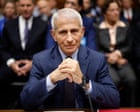
The cycle never truly stops in Washington. Dr. Anthony Fauci is back in the hot seat on Capitol Hill, facing another fierce grilling from Senate Republicans led by Senator Rand Paul. If you feel like you have seen this movie before, you are not wrong. Years after stepping down from his long tenure leading the National Institute of Allergy and Infectious Diseases, the 85-year-old scientist remains the ultimate lightning rod for pandemic politics.
This time, the stakes are fueled by more than just recycled talking points. Days before the hearing, Senator Paul released over 1,000 pages of Fauci's personal pandemic journals. These private notes have blown the doors wide open on internal government friction, early scientific uncertainty, and Fauci's blistering private assessments of Donald Trump.
What the Diary Files Actually Reveal
For months, critics wanted proof that government scientists hid early doubts about how the Covid-19 pandemic started. The newly surfaced records provide a window into those chaotic initial weeks in early 2020. In entries from January of that year, Fauci jotted down that a wet market in Wuhan served as an "amplifier" rather than the absolute ground zero source, noting that the virus jumped from animals somewhere down the line.
Critics seized on these early fragments to claim public deception. They argue that while Fauci publicly downplayed the lab leak hypothesis as an unlikely fringe theory, his private notes showed a messier picture of evolving consensus.
Yet, scientists and defenders push back hard against that narrative. Keeping a running log of changing hypotheses is standard practice when studying a novel pathogen. When data shifts, conclusions shift. But in the hyper-partisan arena of modern congressional oversight, nuance gets crushed by soundbites.
The Trump Friction Factor
The journals do not just cover virology. They also map out a deteriorating professional relationship with the White House. Fauci recorded sharp, unfiltered frustrations with Donald Trump during the height of the crisis, calling briefings rambling and describing private clashes over public health messaging.
These personal entries offer rare insight into the tightrope walk public health officials performed while trying to manage a global health emergency under a hostile executive lens. You can read the tension on nearly every page where policy met raw politics.
The Core Debate That Won't Die
At the heart of today's hearing sits the enduring question of virus origins and taxpayer-funded research. Republicans argue that federal grants funneled through agencies like the NIH helped sponsor risky gain-of-function experiments overseas, creating a pathway for the pandemic.
Independent virologists and infectious disease experts maintain that natural spillover remains the most scientifically sound explanation, pointing to animal-to-human transmission patterns seen in past outbreaks. Intelligence agencies remain split, with some leaning toward a lab incident while others express low confidence.
Fauci has repeatedly denied lying to Congress or covering up any data. His supporters, including an open letter signed by more than 150 prominent scientists and physicians, characterize the ongoing congressional probes as a targeted campaign of harassment meant to score political points rather than uncover objective truth.
Where Things Stand Now
Congressional investigations into pandemic origins will not vanish anytime soon. The release of private journals ensures that the clash between legislative oversight and public health legacy will echo through upcoming election cycles.
Keep an eye on how federal funding rules for high-risk biological research shift over the next year. The fallout from these hearings directly shapes what kind of scientific research the United States will finance moving forward.