We used to think prehistoric trade networks were simple, local, or confined to nearby regions. New archaeological evidence from south-western Spain completely shatters that assumption. Researchers examining the Las Minillas site near Granja de Torrehermosa in Badajoz have uncovered the largest securely dated Late Bronze Age copper mine ever excavated in Iberia.
What makes this discovery startling isn't just the sheer scale of the extraction or the hundreds of stone hammers left behind. It's the chemical fingerprint. Advanced lead isotope and trace element analysis reveal that copper pulled from this remote Spanish earth ended up in Scandinavia over three thousand years ago.
The Scale of Las Minillas
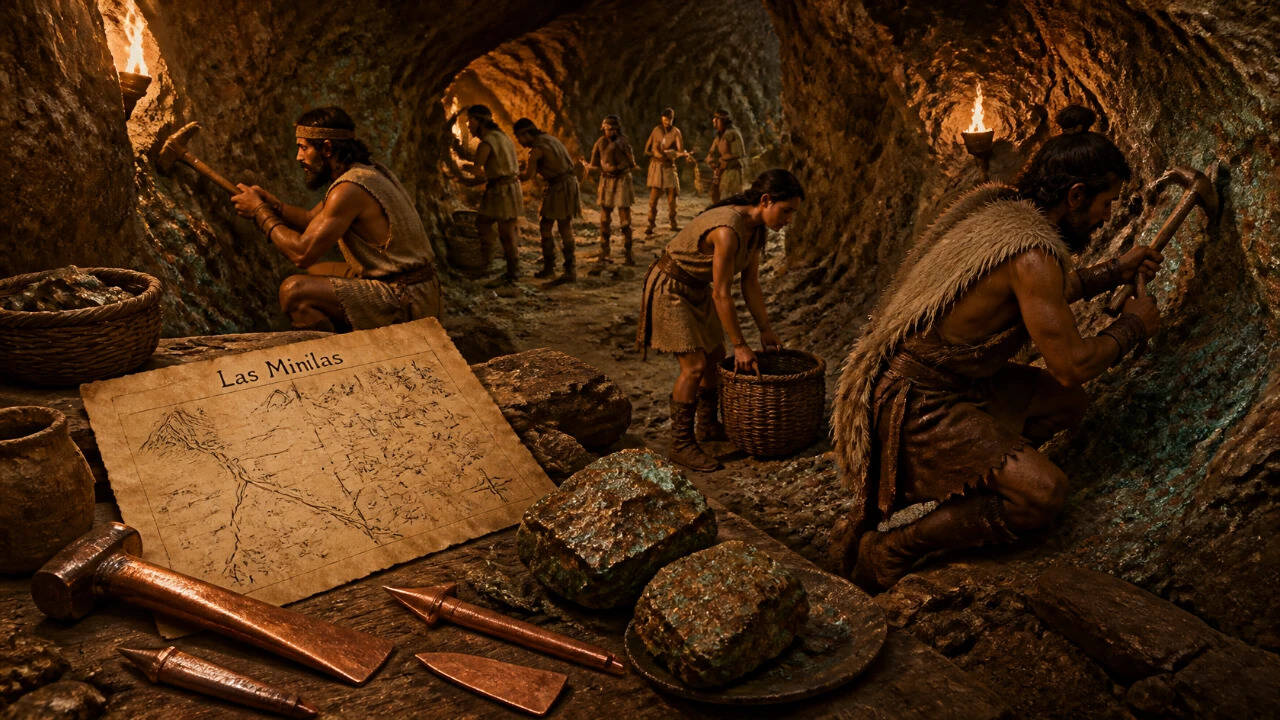
Let's look at what was actually happening on the ground between 1350 and 750 BC. Miners didn't just casually scrape the surface. They dug massive trenches up to 8.2 meters deep and four meters wide, following copper-bearing veins with intense precision.
The physical evidence left behind tells a grueling story. Archaeologists recovered 892 stone tools, including 735 grooved stone hammers used for smashing ore-bearing rock. They found charcoal deposits indicating the widespread use of fire-setting—a brutal technique where workers heated rock with blazing fires and doused it with water to fracture the stubborn stone. Copper droplets, scattered slag, and the remnants of a smelting furnace prove that processing happened right there at the site.
Estimates of total copper output at Las Minillas range from a conservative 49 tonnes to an optimistic 738 tonnes. That's industrial-scale production for the Late Bronze Age. Yet, for a long time, historians overlooked the Iberian Peninsula when mapping major European metal supply hubs, focusing instead on Alpine deposits or the British Isles. Las Minillas changes that equation overnight.
Connecting Spain to Scandinavia
How do we know Spanish copper traveled all the way to the Nordic countries? Scientists matched the chemical signatures.
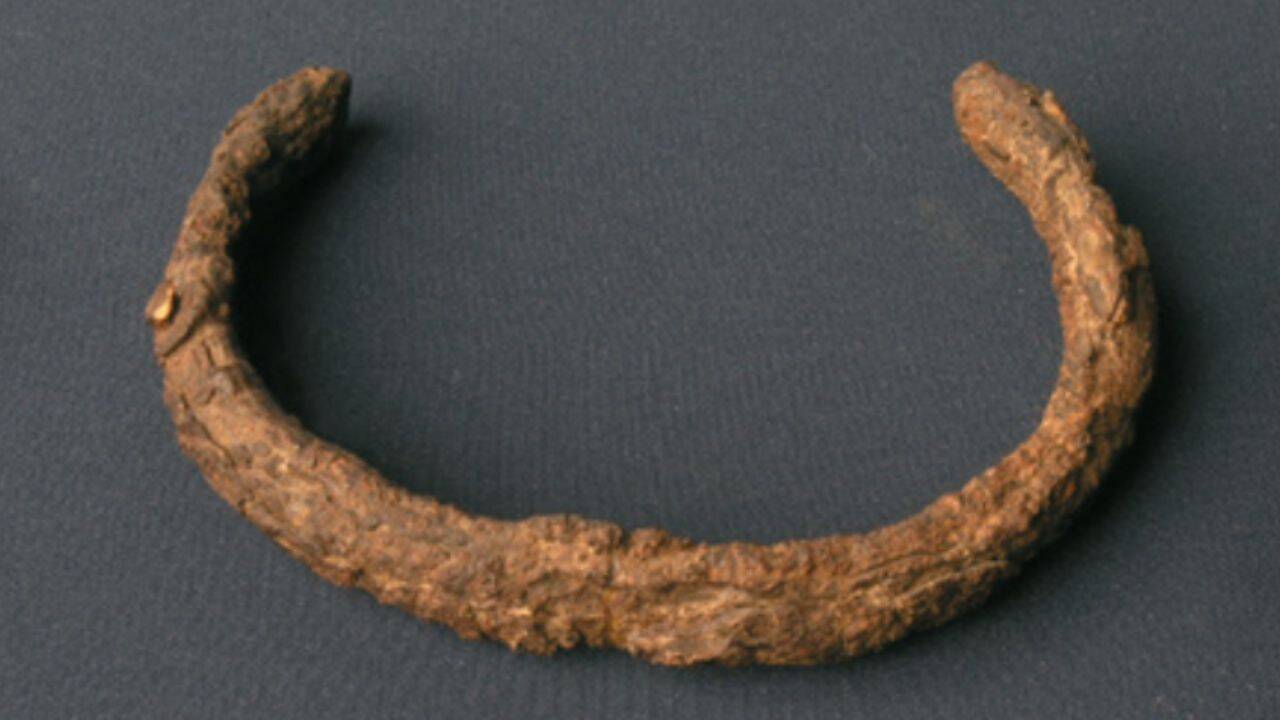
Researchers analyzed ore, slag, and metal droplets from Las Minillas, comparing their lead isotope ratios, silver concentrations, antimony levels, and nickel signatures against more than 300 Late Bronze Age bronze artifacts recovered across Scandinavia. Out of those hundreds of objects, 11 distinct items showed exact chemical matches with the Spanish mine.
Timing makes this connection even more compelling. Seven of the matching Scandinavian objects date to Period V of the Nordic Bronze Age, roughly 900 to 700 BC. That lines up directly with the final, most intensive phases of extraction at Las Minillas. Two other objects date slightly later, from Period VII, showing that supply lines or recycled metals persisted even after active mining at the site wound down.
Rethinking Prehistoric Logistics
We're not talking about a casual coastal journey or simple neighbor-to-neighbor barter. Transporting metal thousands of miles across land and sea during the Bronze Age required sophisticated trade networks, immense coordination, and high-value commodities moving across vast distances.
Prehistoric European communities weren't isolated tribes living in local bubbles. They were plugged into continent-spanning commercial routes long before the Roman Empire ever laid down a road. Southern Iberia acted as a major economic powerhouse, feeding raw metal into a sprawling European supply chain that stretched all the way to the freezing shores of Scandinavia.
Stop thinking of ancient history as disconnected local villages. The earth holds receipts proving our ancestors traded on a continental scale, turning rough stones from Spanish hills into gleaming bronze treasures thousands of miles away.