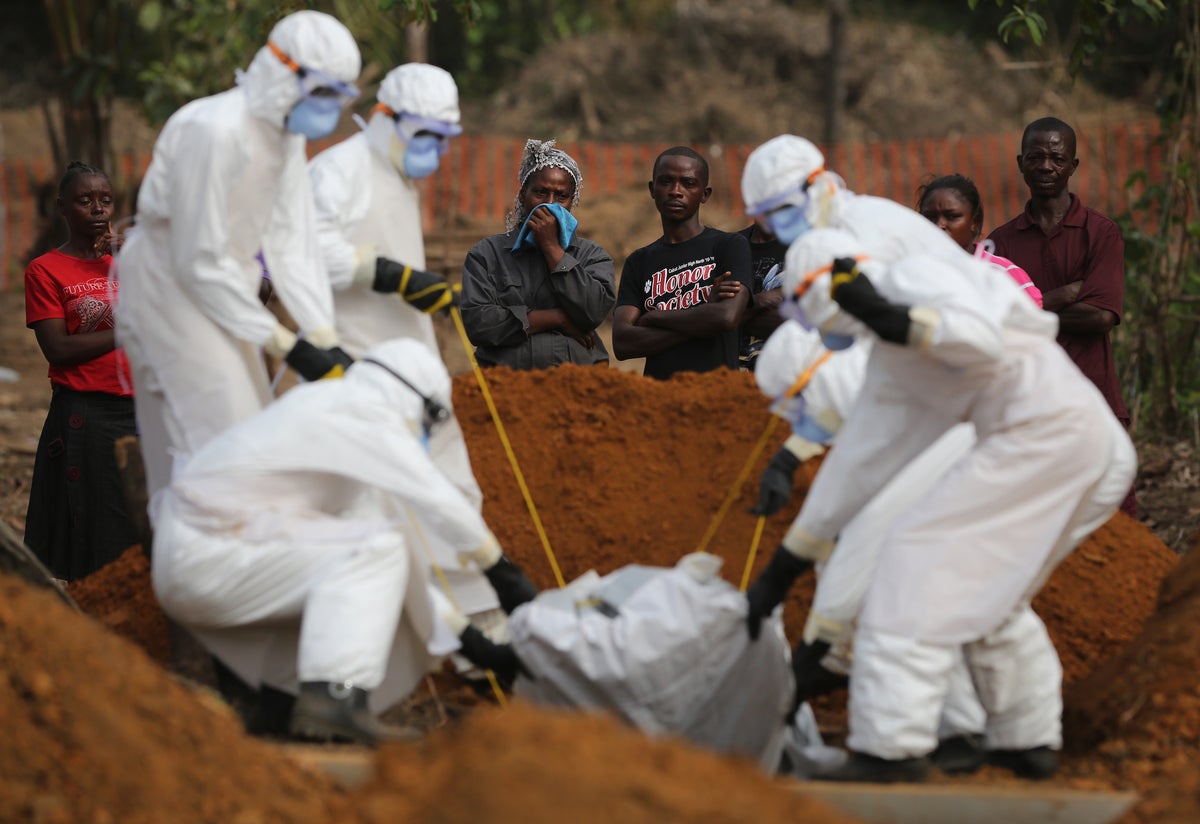
Viruses don't care about border walls or national budgets. When an aggressive Ebola outbreak flares up in the Democratic Republic of the Congo, an outbreak that experts call one of the most dangerous in history, it isn't just an isolated tragedy thousands of miles away. It's a ticking clock for global security.
Last year, the Trump administration dismantled the U.S. Agency for International Development (USAID) and slashed vital global health infrastructure as part of an aggressive cost-cutting strategy. Fast forward to today, and the real-world consequences are impossible to ignore. Frontline health workers in central Africa are operating without basic protective gear, and disease surveillance has stalled.
Americans are noticing, and they want a course correction.
A comprehensive poll from Echelon Insights and the Rockefeller Foundation reveals a massive shift in public opinion. A staggering 75% of Americans now back restoring U.S. aid specifically to contain the surging Ebola crisis. People realize that cutting these programs didn't just save a few bucks; it actively dismantled the early warning systems keeping us safe from global pandemics.
The Shocking Real Cost of the USAID Raze
When Washington shuttered USAID, it fired over 10,000 personnel and canceled thousands of grants. U.S. foreign aid outlays plunged from $72 billion to $47 billion in fiscal year 2025. It sounded like a massive budget victory on paper, but the reality on the ground is terrifying.
According to a study published in The Lancet, these abrupt reductions could trigger over 14 million preventable deaths by 2030 due to disease and malnutrition. In the DRC and neighboring Uganda, the immediate impact is devastating. Nicholas Enrich, a former global health administrator at USAID, pointed out that the single most vital asset in an outbreak is speed. Without U.S.-funded tracking networks, we lost that speed.
Former CDC medical officer Daniel Bausch outlined a grim picture of the brain drain. Professionals trained for years in epidemiological surveillance are out of work. Some are driving taxis in Kinshasa or selling fruit. When an outbreak hits, you can't just snap your fingers and bring that expertise back overnight.
What the Public Gets Wrong About Foreign Aid
Most people completely misunderstand how much money the U.S. actually spends overseas. The Echelon Insights survey showed that over a third of Americans believed foreign aid consumed a massive 20% of the entire federal budget.
The real number before the 2025 cuts? Just 1%.
When everyday citizens learn the facts, their perspective changes instantly. Once voters realized how small the actual spending was—and what it actually bought—overall support for foreign assistance jumped from 54% to 70%.
Even more surprising is the shift among the most ardent "America First" supporters. The data shows a massive 27-point swing toward supporting aid among voters who primary back Donald Trump once they see the human cost and the practical security benefits. In fact, 52% of these Trump-aligned voters now favor restoring aid to fight the Ebola outbreak. They don't view it as global charity; they view it as self-defense.
Disease Prevention as National Security
Americans across all political parties don't just tolerate global health programs; they actively demand them. The poll shows 90% of respondents support funding overseas disease prevention. It's the highest-rated category in the entire survey, drawing 85% support from Republicans and 94% from Democrats.
People are smart enough to recognize that fixing an outbreak at its source is much cheaper and safer than trying to contain it once it lands on a domestic flight. Eighty percent of voters prefer to reform and strengthen aid with strict safeguards rather than scrapping the programs entirely. Only a tiny 12% minority think we should cut foreign aid across the board regardless of what happens next.
Faced with growing public pressure and a worsening crisis, the administration is playing defense. The White House is currently asking Congress for $1.4 billion in emergency funds to counter the spread of Ebola. It's a frantic attempt to patch a dam that didn't need to break in the first place.
Practical Next Steps for Global Health Advocacy
If you want to see actual change and prevent the current outbreak from spiraling completely out of control, you can't just look at poll numbers and hope for the best.
- Demand Accountability for Strategic Funding: Contact your congressional representatives to support the pending $1.4 billion emergency funding bill, but insist that the funds bypass broken Bureaucracy and go directly to trusted frontline non-profits like the International Rescue Committee (IRC) or Partners In Health.
- Support Localized Health Infrastructure: Donate directly to international humanitarian agencies working in the DRC and Uganda. They need money right now for basic protective equipment, fuel for transport, and communication tools to track positive cases.
- Counter Misinformation with Raw Math: Share the actual data regarding the federal budget. Point out that global health takes up a minuscule fraction of domestic spending but offers massive returns on national biosecurity.
Let's stop pretending that isolation protects us from biology. The public has spoken, and it's time to build back the defenses we broke.