Honestly, some tragedies hit a nerve because they simply should not have happened. The news coming out of Algiers on July 16, 2026, is exactly that kind of heartbreak. When a fire ripped through a state-run home for children in the capital's suburb of Mohammadia, it didn't just take lives—it exposed a system that continues to let down those who have the least protection.
At least 11 people, including children with special needs, are dead. Nineteen more are injured, some fighting for their lives with horrific burns.
This is not just a tragic accident. It is a loud, flashing red light warning us about the state of public infrastructure, the vulnerability of marginalized kids, and the sheer lack of preparedness in institutional care facilities. I want to look closely at what happened, why it happened, and what needs to change right now if we want to make sure this never happens again.
Making Sense of the Algeria Orphanage Fire
To understand the scale of what went wrong, we have to look at the timeline.
It was roughly 3:30 AM local time on Thursday, July 16, 2026. Most of the residents at the Fondation de l’Enfance Assistée (the Childhood Relief Institution) in Mohammadia were fast asleep. The facility operates as a state-run sanctuary, housing orphans, abandoned minors, and young people with severe physical and cognitive disabilities.
When the fire broke out in one of the main dormitories, panic ensued. For children with special needs, escaping a smoke-filled room in the pitch black is not just difficult—it is nearly impossible without immediate, highly coordinated assistance.
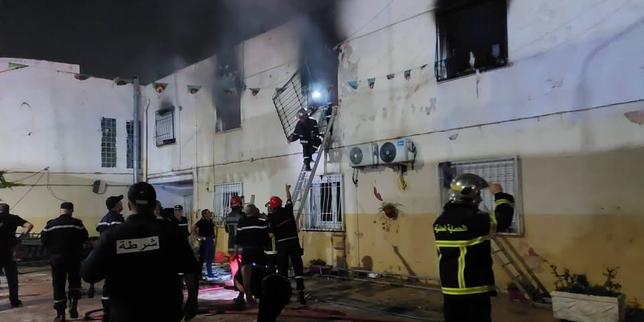
Civil Protection teams rushed to the scene. The images they released later are hard to look at. Firefighters were navigating through choking black smoke, dragging hoses down tight, dark corridors to pull kids out.
By the time the flames were contained, the toll was devastating. Eleven people did not make it out alive. Of the 19 injured, ten are suffering from severe burns, two are in critical condition with respiratory distress from smoke inhalation, and seven are being treated for intense psychological trauma. First responders managed to evacuate five other residents with special needs.
Think about those numbers. Half of the survivors are physically scarred; the rest are mentally shattered. It is a complete catastrophe.
Who Protects the Kids Who Cannot Help Themselves
The hardest pill to swallow in this disaster is the profile of the victims. We are talking about children who relied entirely on the state for their survival, shelter, and daily care.
When you run a facility for children with special needs, your safety protocols cannot look like those of a standard office building. You cannot just hang a couple of fire extinguishers on the wall and call it a day. Children with cognitive or physical limitations cannot always read exit signs, open heavy fire doors, or even scream for help.
This means the facility required a higher ratio of nighttime staff, active monitoring systems, and highly specific evacuation plans. Yet, the fire started at 3:30 AM and quickly became a death trap.
Where were the night shift workers? Did they have fire drill training? Were there functioning smoke detectors wired to an alarm system that actually woke people up?
These are not trivial questions. They are the core of the upcoming investigation. Prime Minister Sifi Ghrieb visited the Zeralda Burns Hospital and the Mustapha Pacha University Hospital to check on the survivors. He promised full state support and psychological care. That is the correct political response, but empty condolences do not bring back dead children. Real accountability does.
A Broken Track Record of Safety in Public Facilities
If this were an isolated incident, we could chalk it up to a freak accident. But Algeria has a history here.
Let us look back to September 2019. A massive fire swept through a maternity ward in the eastern city of El Oued. Eight newborn babies died in that fire. The outrage was immense. There were promises of structural audits, safety overhauls, and better equipment across all state-run medical and care institutions.
Fast forward to 2026, and we are looking at almost the exact same headline, just in a different city with different helpless victims.
When public facilities are not regularly audited, safety standards slip. Fire doors get propped open. Extinguishers go past their expiration dates. Electrical wiring—often the culprit in these sudden nighttime fires—is left uninspected for years.
It is easy to blame a lack of resources, but that excuse wears thin. Algeria is a nation with resources. The issue is prioritization. Budgets get funneled into flashy public works, while the quiet, unglamorous work of maintaining social care centers, orphanages, and hospitals gets pushed to the bottom of the pile.
When Extreme Heat Meets Neglected Infrastructure
You cannot talk about this fire without talking about the climate reality in North Africa right now.
Algeria is currently sweltering under a massive summer heatwave. In the 24 hours surrounding this tragedy, the Civil Protection service responded to well over 100 forest, agricultural, and scrubland fires across the country. The air is hot, the ground is dry, and the power grids are pushed to their absolute limits as everyone cranks up the air conditioning.
This extreme weather puts an incredible amount of stress on electrical infrastructure. Older buildings with outdated wiring simply cannot handle the load. Power surges, overheating appliances, and short circuits become incredibly common.
While officials have not formally linked the Mohammadia orphanage fire to the heatwave, the timing is hard to ignore. When the outside temperature rises, the margin for error inside these facilities drops to zero. If your electrical system is already fragile, summer is when it will fail.
Real Steps Toward Real Reform
We need to stop waiting for tragedies to happen before we fix what is broken. If Algeria wants to honor the eleven lives lost in Mohammadia, the government needs to take immediate, concrete steps.
First, there must be an independent, transparent investigation into the cause of this fire. The public needs to know if the building complied with safety regulations, if the alarms worked, and if the staff-to-resident ratio during the night shift was sufficient.
Second, the government must mandate an immediate, nationwide safety audit of every single state-run residential care facility, orphanage, and hospital. This cannot be a paperwork exercise. Inspectors need to physically check wiring, emergency exits, alarm systems, and evacuation routes. Any facility that fails must be closed or renovated immediately.
Third, staff training must be revolutionized. Working in a facility for children with special needs requires specialized crisis training. Staff must be drilled on how to evacuate non-verbal or physically disabled residents in total darkness.
These steps are not complicated, but they require political will. The kids who died in Mohammadia had no lobbyist, no political power, and no voice. They relied on the state to keep them safe while they slept. The state failed them. Now, the only thing left to do is make sure it never fails them again.
:max_bytes(150000):strip_icc()/xochimilco_getty-56a3ea613df78cf7727fdcc0.jpg)