Albania just signed a deal to purchase six Turkish Boran 105mm air-transportable light towed howitzers along with a fresh stash of ammunition. The state-owned Turkish defense firm Mechanical and Chemical Industry Corporation, known globally as MKE, dropped the announcement right before the 2026 NATO summit in Ankara.
This isn't a massive, multi-billion-dollar armored division overhaul. It doesn't need to be. It tells us a lot about how smaller NATO members are rethinking territory defense without draining their treasuries.
For Albania, this purchase solves a glaring capability gap. The country has spent years trying to phase out ancient, manual Soviet and Chinese artillery pieces that belong in a museum. They needed something light, fast, and completely compliant with NATO standards. They found their answer in Ankara, bypassing the usual American or British suppliers.
The Reality Behind the Boran Artillery Deal
Let's look at the hard facts. Albania is getting six units of the MKE Boran system. The contract also includes an undisclosed volume of 105mm shells. While critics might argue that six guns won't tip the scales in a major continental war, that argument misses the point entirely. This purchase is about building a highly mobile, reactive rapid-deployment capability.
Albania isn't the first Balkan nation to go this route. North Macedonia bought 18 of these exact same howitzers. Bangladesh picked them up too. This makes Albania the third international customer for the Boran and the second within NATO's European flank.
The timing of the announcement wasn't accidental. Ringing in a fresh defense contract right before a major NATO summit sends a message. It shows that Turkey is willing and able to equip its regional allies quickly, using financial frameworks that make sense for developing economies. This specific deal builds directly on an amended Financial Assistance Protocol that Albania and Turkey signed back in July 2025, which explicitly set aside resources to help the Albanian Armed Forces acquire modern 105mm artillery systems.
Breaking Down the Boran Specs
Why are small militaries obsessed with this specific gun? It comes down to weight and speed.
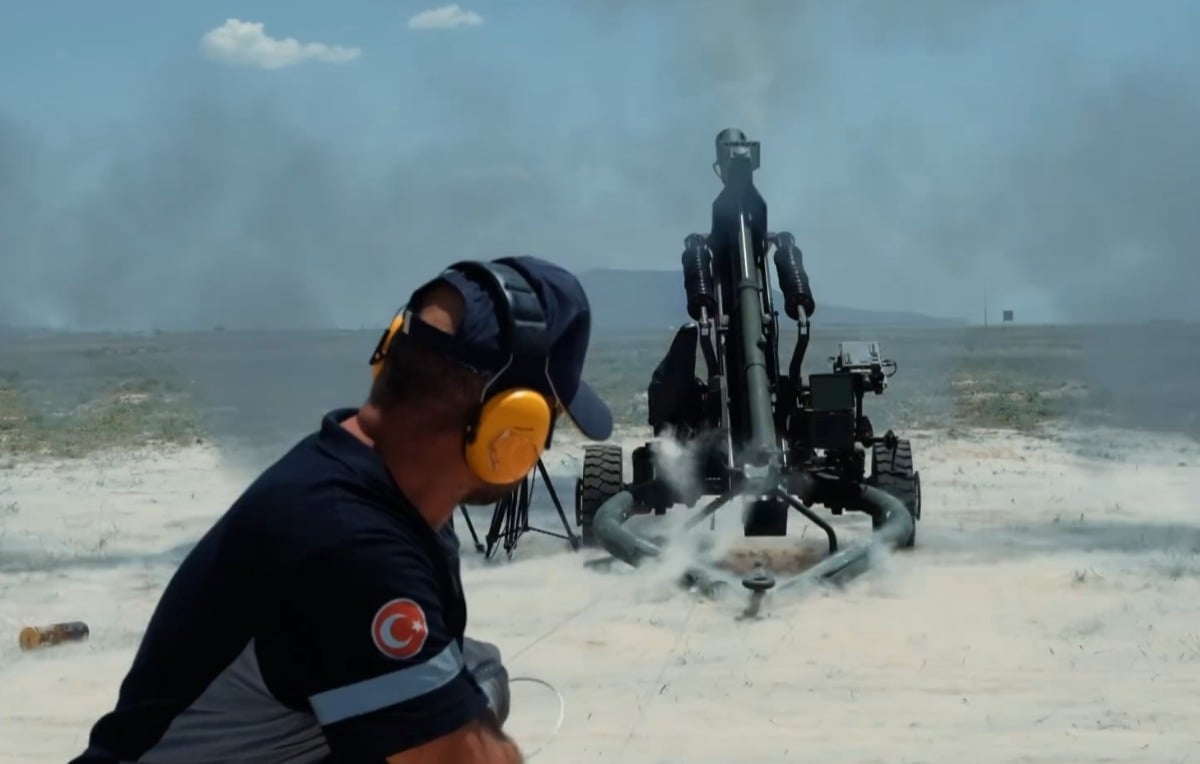
The Boran weighs roughly 1,745 kilograms. That includes the entire digital fire control suite. Compare that to older conventional artillery pieces that require heavy trucks and clear roads just to get into position. The Boran is light enough to be slung under a Sikorsky S-70 Black Hawk or a CH-47 Chinook helicopter. It can be dropped onto a mountain ridge, a remote valley, or an island within minutes.
Once it hits the dirt, the crew can get it ready to fire in less than 60 seconds. Speed saves lives. In modern warfare, sticking around in one place after firing is a death sentence. Counter-battery radar can track an outgoing shell and pinpoint the source almost instantly. A gun crew has to shoot and move. The Boran allows exactly that.
Then there is the rate of fire. Under normal conditions, a crew can pump out six rounds per minute. But if things go completely sideways, the gun has an intense burst capacity. During field trials, it set a record by firing 12 accurate rounds in just 33 seconds. That is an incredible amount of steel to put downrange in half a minute from a single light barrel.
- Caliber: 105 mm / 30-caliber barrel
- Total Weight: 1,745 kg (including electronics)
- Crew Requirement: 5 personnel
- Maximum Range: 17 kilometers with standard high-explosive ammo
- Deployment Time: Under 1 minute
- Operating Temperatures: -32°C to +44°C
The brains of the operation come from Aselsan, another major player in the Turkish defense sector. They built the Volkan fire control system integrated into the gun. This package uses GPS-supported navigation and a panoramic sight. The gun calculates its own position on the fly. The crew doesn't have to spend ten minutes doing manual survey calculations with map stencils and aiming stakes. They drop the spades, enter the coordinates into the terminal, and start firing.
Turkey Is Cornering the Balkan Defense Market
Western European and American defense contractors are busy building massive, incredibly expensive platforms. They want to sell heavy tracked self-propelled howitzers or advanced rocket systems that cost tens of millions of dollars per unit. That works fine for large, wealthy nations. It fails smaller states.
Militaries in the Balkans often operate on shoestring budgets. They want reliable, no-nonsense hardware that doesn't require a master's degree in software engineering to fix in the field. Turkey figured this out. MKE and Aselsan are offering competitive pricing and flexible financial terms.
Look at how North Macedonia financed their Boran purchase. Turkey stepped in with a Military Financial Cooperation Agreement to cover a massive chunk of the bill. By using these state-backed credit lines and assistance protocols, Turkey isn't just selling weapons. It is building long-term dependency for maintenance, parts, and training.
This strategy is paying off handsomely. Turkey's defense exports have skyrocketed. They are winning contracts in Malaysia, negotiating in the Philippines, and locking down the European underbelly. It is smart diplomacy masked as industrial manufacturing.
Why Towed Light Artillery Matters in 2026
You might think towed artillery is obsolete. The war videos flooding social media show heavy tracked armor and killer drones. It seems like everything needs to be armored and self-propelled. But that view ignores geography.
Albania is a mountainous country. Heavy tracked vehicles are slow, loud, and restricted to valleys or established roads. Bridges in rural areas can't always handle a 50-ton armored vehicle. If a conflict breaks out, those roads get choked or blown up instantly.
Light towed artillery offers flexibility that heavy armor can't match. A five-man crew can hide a Boran under a camouflage net in a thick forest. They can tow it behind a standard tactical utility vehicle or fly it directly over a mountain peak. It gives infantry units organic, long-range firepower that can operate in terrain where tanks get stuck.
It is also about cost-to-benefit ratios. Maintaining a fleet of heavy tracked vehicles requires a massive logistical tail. You need specialized mechanics, heavy recovery vehicles, and thousands of gallons of fuel. A light towed gun needs basic truck maintenance and a handful of well-trained soldiers. For a military focused on territorial defense and NATO interoperability, it is a pragmatic compromise.
What This Means for Albania's Future Forces
Albania's military modernization has been a slow climb. For decades, their warehouses were filled with old equipment left over from the Cold War. Trying to integrate those old pieces into NATO exercises was a nightmare. They used different ammunition calibers, lacked digital communications, and couldn't share targeting data with allies.
Buying the Boran fixes these problems. The 105mm caliber is a standard NATO round, meaning Albania can easily draw from allied stockpiles during joint operations. The Aselsan digital fire control system can link up with modern battlefield management networks. When an Albanian forward observer identifies a target, the data can flow straight to the Boran's computer terminal without lag.
The next steps for the Albanian Land Forces will involve intensive personnel training. Shifting from old-school manual artillery to a digitized, rapid-fire platform requires a change in mindset. Crew members must learn to trust digital positioning systems while mastering the rapid-fire mechanics of the gun. Expect to see these six new howitzers pop up in regional NATO exercises within the next twelve months as Albania shows off its upgraded capabilities.