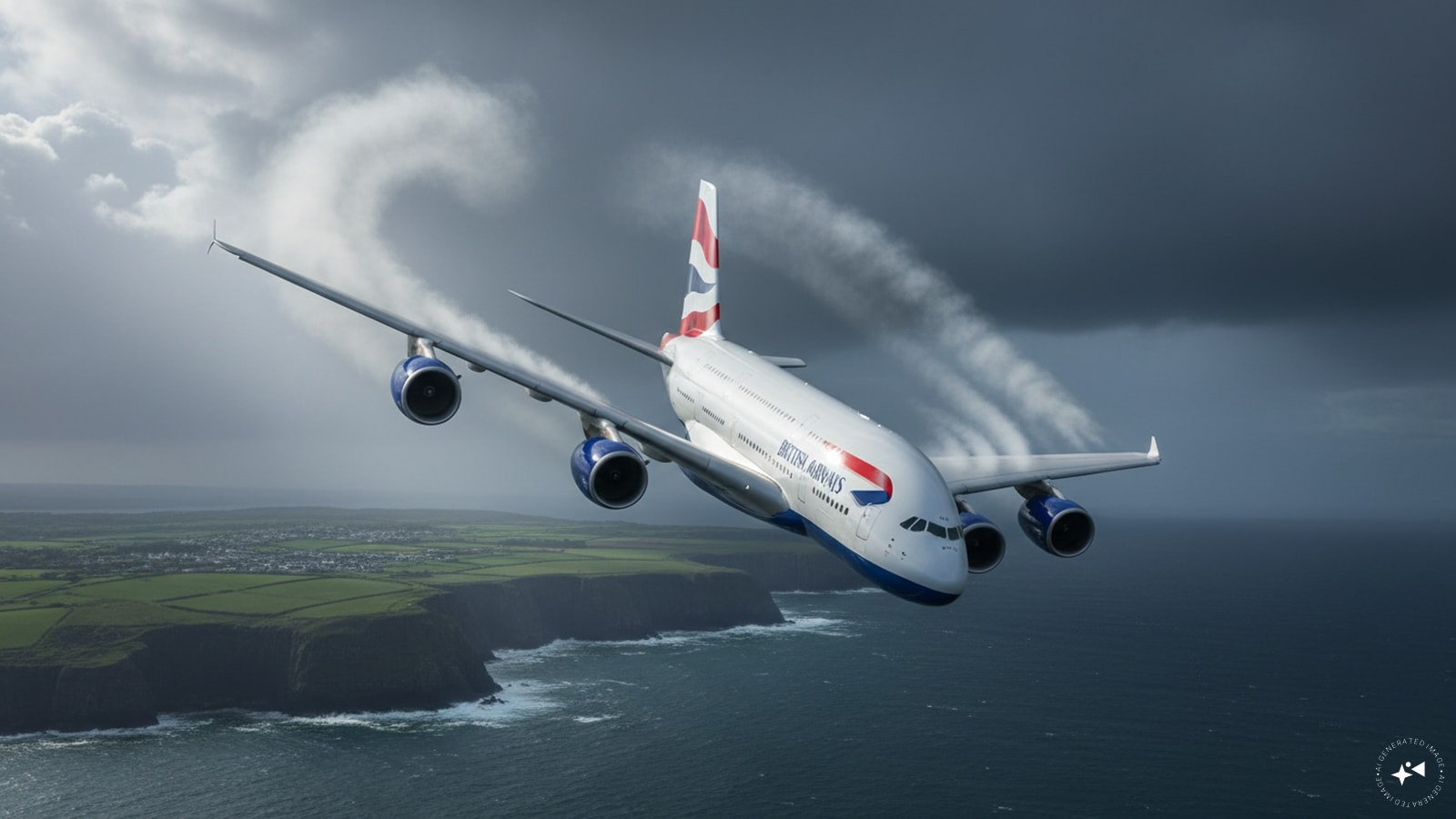
You’re thousands of feet above the Atlantic, settling in for a long-haul flight, when the cabin suddenly pitches downward and plunges nearly 28,000 feet in minutes. That is precisely what panicked passengers on British Airways flight BA295 experienced when the London-to-Chicago service made an abrupt U-turn over Ireland.
When a massive aircraft drops from a comfortable cruising altitude of 37,000 feet down to 9,000 feet, social media starts spinning wild theories. Let's look at the facts of what happened, how commercial aviation handles sudden operational issues, and why these dramatic descents happen in the first place.
Inside the Incident On British Airways Flight BA295
Flight BA295 departed London Heathrow Airport bound for Chicago O'Hare. Roughly an hour into the journey, while tracking over Irish airspace, flight-tracking data captured a sharp, rapid descent. The Boeing 777-200ER dropped about 28,000 feet within minutes, leveling out near 9,000 feet before initiating a return path toward the UK.
A drop of that magnitude naturally triggers immediate concern. Aviation watchdogs and tracking platforms quickly flagged the emergency declaration. While airlines and official bodies often take time to release a comprehensive post-incident report, the flight path itself tells a clear story of an operational anomaly requiring an immediate change of plans.
Instead of continuing its transatlantic trek to Illinois, the crew turned back toward London, entering holding patterns to manage weight before landing safely.
Why Do Planes Make Sudden Rapid Descents
When you hear about a plane dropping tens of thousands of feet in a short window, your mind probably jumps straight to catastrophic failure. Reality is usually more systematic. Aviation protocols dictate specific emergency maneuvers for various mid-air complications.
The most common reason for a rapid, controlled descent to around 10,000 feet is a suspected cabin pressurization issue. If the fuselage loses pressure at high altitudes, oxygen masks drop automatically. Pilots must instantly bring the aircraft down to a breathable altitude where supplemental oxygen is no longer required for survival.
Other potential triggers for sudden diversions include severe technical glitches, smoke indications in the cockpit or cargo hold, or specific urgent medical situations onboard. While the precise cause behind BA295 remains under investigation by safety authorities, a rapid descent is standard procedure when safety margins at high cruise altitudes cannot be maintained.
What Passengers Experience During a Rapid Drop
If you've never been on a flight that drops quickly, it feels nothing like a normal landing. The nose pitches down sharply, engines idle back or adjust aggressively, and you feel a distinct sensation of weightlessness or heavy negative G-forces depending on the descent rate.
Cabin crew training kicks in immediately during these scenarios. Flight attendants are drilled to secure the cabin, verify that oxygen systems function properly, and prepare passengers for a return to origin. It's intense, stressful, and terrifying for anyone on board, but it showcases the strict adherence to safety margins that keeps commercial aviation statistically the safest mode of travel on earth.
The Reality Behind Transatlantic Diverts and Fuel Dumping
Once a long-haul flight turns around, it rarely lands right away. Fully fueled aircraft heading across the ocean carry massive weight loads designed for thousands of miles of flight. Landing at maximum takeoff weight can stress the landing gear and structural components beyond safe operational limits.
This is why aircraft often circle over designated areas, such as the English Channel in this specific British Airways case, to burn off or dump excess fuel. Burning fuel brings the aircraft down to its maximum allowable landing weight, ensuring a stable, controlled touchdown back at Heathrow.
Aviation safety depends on redundant systems and cautious decision-making. When a crew declares an emergency over Ireland and heads home, they aren't panicking—they are following a playbook written by decades of aviation lessons. Check your airline's specific passenger rights policies if your journey gets disrupted, and always listen closely to flight crew instructions if an unexpected diversion ever comes your way.