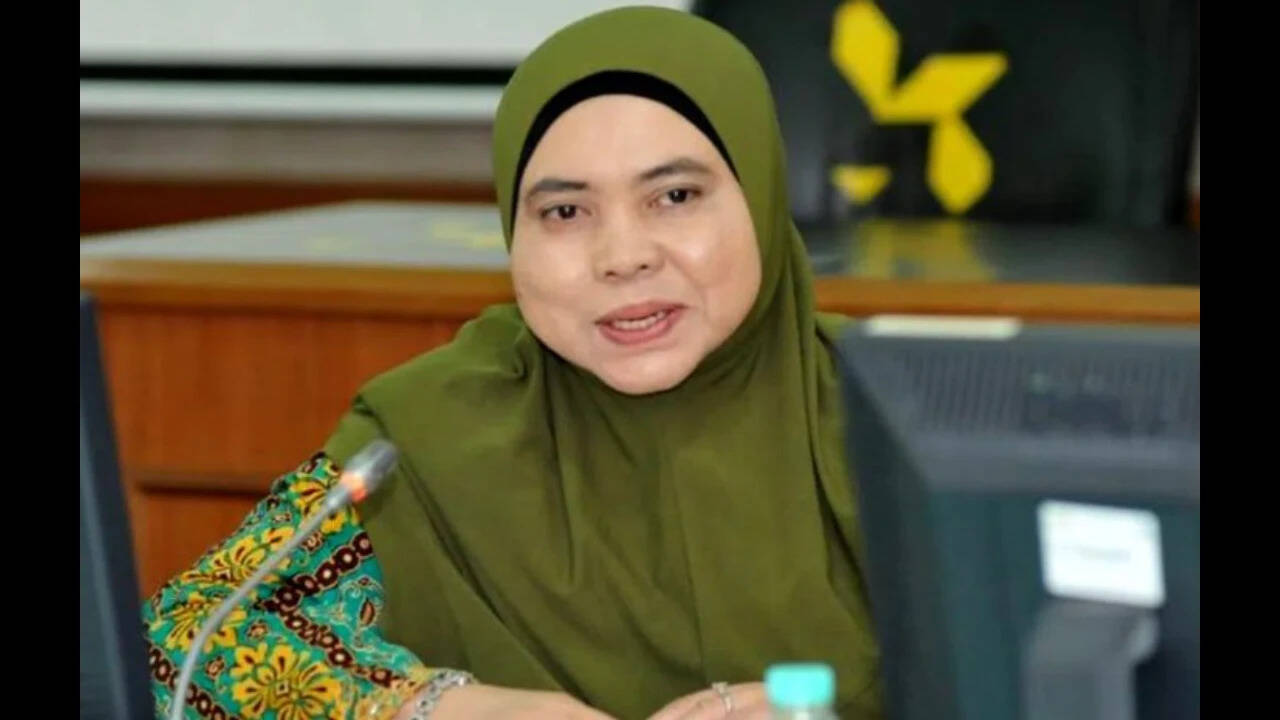
When a university professor starts arguing that historical figures possessed superhuman flight capabilities or that ancient empires picked up their core trades from local civilizations without a shred of empirical proof, things usually end badly for their tenure. The International Islamic University Malaysia (IIUM) officially severed all ties with Dr. Solehah Yaacob, a former linguistics professor whose unconventional historical theories went viral.
The fallout centers around a series of sweeping, unverified assertions that stretched credulity past its breaking point. Most notably, she claimed that ancient Romans traveled to or learned advanced maritime shipbuilding from Malay seafarers. If that sounds wildly disconnected from established historical records, her other theories went even further into the realm of fiction. She asserted that ancient Malays could actually fly and even taught the Chinese the art of "flying kung fu". Other lectures suggested that rich iron ore deposits in Kedah originated from ancient meteor showers rather than standard geological weathering, and that Malay civilization predated Mesopotamia.
Higher education institutions live or die by their adherence to rigorous evidence, peer review, and academic honesty. When an institutional representative trades empirical methodology for unbridled nationalist myth-making, the credibility of the entire faculty takes a hit. IIUM took decisive action, confirming that her employment was terminated and barring her from utilizing any official university titles, designations, or affiliations in public spaces, media appearances, or promotional materials.
The university stated that the clarification was vital to safeguard institutional integrity and prevent widespread public misunderstanding. Yet, the dismissed academic isn't going quietly. She has pushed back against the dismissal, turning down a severance settlement equivalent to six months of salary and announcing plans to challenge the university's decision in the Industrial Court. She has argued that the process was handled abruptly and unfairly, pointing out that she even received a national research performance award just days prior to the fallout.
This high-profile termination highlights a growing tension within modern academia regarding hyper-nationalist historical revisionism. Governments and academic boards across the region have increasingly had to step in as fringe theories masquerading as research gain traction on social media platforms. When academics step entirely outside their accredited fields of expertise—in this case, branching from Arabic linguistics into sweeping ancient maritime and anthropological claims—institutions face immense pressure to draw a hard line.
The case serves as a stark reminder that credentials do not shield anyone from the fundamental rules of evidence. Expect universities to tighten oversight on public lectures and media outputs as administrators try to protect institutional standing from the next viral pseudohistorical storm.