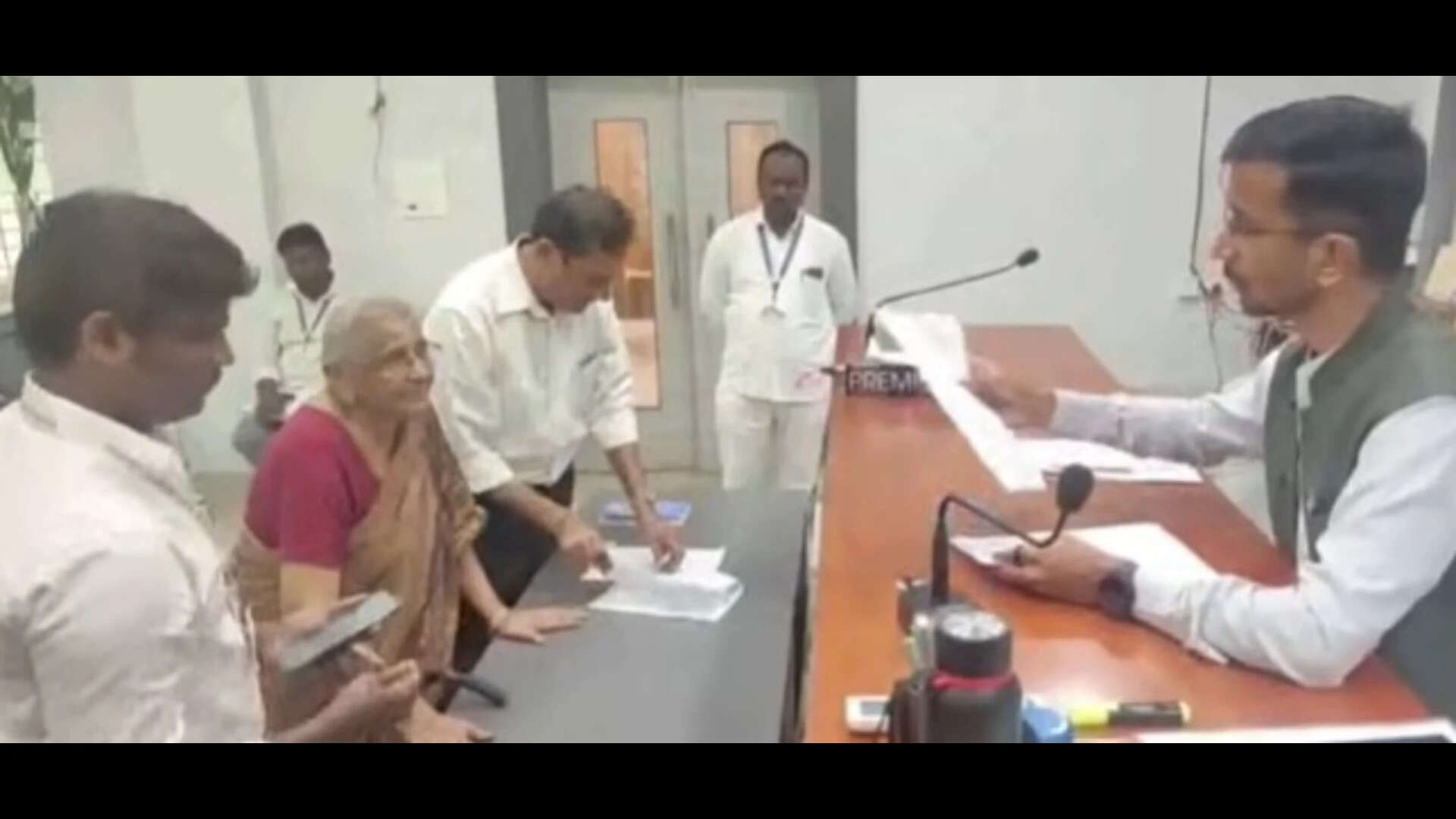
Most people spend decades chasing the American dream. They sacrifice their comfort, build lives from scratch, and celebrate the moment they finally receive that blue United States passport. It represents ultimate global mobility and security. Yet, at 94 years old, Kondragunta Mahalakshmamma decided she wanted none of it anymore. She willingly handed her US citizenship back to Uncle Sam.
Her reason was simple, raw, and completely devoid of bureaucratic logic. She wanted to die as an Indian citizen on the very soil where she was born. You might also find this similar story useful: Why The Us And Oman Partnership Still Matters Right Now.
This isn't just a quirky human interest story from Andhra Pradesh. It highlights a massive emotional reality that thousands of aging non-resident Indians face as they look at the final chapters of their lives. The pull of the motherland isn't just a sentimental cliché. For many, it becomes an absolute necessity as they grow old. Mahalakshmamma made headlines when she walked into the office of Bapatla District Collector J Venkata Murali. She didn't want favors or money. She just wanted her identity back.
http://googleusercontent.com/lmdx_content/ViHTiSnXaOGDKsGszoCnVqrtGGFuMvZEmWEvEgHTAuAEAwRlnIAJaJFSrmPTxRKzFLVmMxDbytXOnkmtfCnvurgDDmLKDVmATgiorjeWGmmbXVtItOhACXdfRpjtizWCOVIQvBfUHNvjZhUtTqnFsBrqtoYJleWqyhYwflZuJSZtRQPlGLRgPtbbTCqoZrqzfsRoXMQyARfmuWVetgXVnMfWfRoYAgYnKXReCHbDPzvLOR18623 As discussed in latest reports by The Washington Post, the effects are widespread.
From Virginia back to Chinthagumpala village
Mahalakshmamma’s journey to the West started under familiar circumstances. After her husband, Nagabhushanam, passed away, she left India to live with her son, Buchaiah Choudhary. Her son is an oncologist, a medical specialist treating cancer. He had established a successful life in Petersburg, Virginia. To make life easier and secure long-term residency in the US, Mahalakshmamma took the natural next step. She became a naturalized US citizen in July 2000.
She lived in the United States for nearly 18 years. She adjusted to a completely different culture, navigated American suburbs, and enjoyed the comfort that a successful doctor's household provides. But the quiet streets of Virginia never quite replaced the vibrant warmth of her native village, Chinthagumpala, located in the Chinaganjam mandal of Andhra Pradesh.
The turning point arrived in 2018. Her son decided to return to India to work at the NRI Hospital in Mangalagiri. Mahalakshmamma didn't hesitate. She packed her bags and came back with him. Settling back into her village, the realization hit her that living in India as a foreign national wasn't enough. She didn't want to just be a guest with an Overseas Citizen of India card. She wanted the real thing.
The legal reality of Indian citizenship restoration
India doesn't allow dual citizenship. Period. The moment you take an oath of allegiance to another country, your Indian citizenship automatically terminates under Section 9 of the Citizenship Act of 1955.
Many aging NRIs don't realize how legally complicated it is to undo that choice. To get her Indian citizenship back, Mahalakshmamma had to formally renounce her US citizenship first. Think about that for a second. At her age, she voluntarily made herself stateless during the transition period just to prove her commitment to her home country.
She filed her formal renunciation with the American government and then logged onto the Indian government's online citizenship portal to apply for registration under Section 5(1)(g) of the Citizenship Act. This section allows a person who has been registered as an OCI for at least five years, or someone who was a citizen of independent India before, to regain their citizenship after residing in India for twelve months continuously before making the application.
When she sat before District Collector J Venkata Murali, she pleaded with him to accelerate the local verification. The process requires a thorough local police check, an inquiry by the district administration, a report sent to the state government, and finally, a nod from the Union Ministry of Home Affairs in New Delhi. Time is a luxury she simply doesn't have. She told the collector that she is nearing 95 years of age and her only final wish is to have her last rites performed in her native village as an official citizen of India.
Why the OCI card fails the ultimate emotional test
You might wonder why she didn't just use the Overseas Citizen of India card. The OCI card gives former Indian citizens a lifelong visa. They can live, work, and buy property in India without any major restrictions. It looks and feels like dual citizenship to the untrained eye.
But it isn't. An OCI holder cannot vote. They cannot hold public office. They cannot buy agricultural land. More importantly, it carries a psychological asterisk. You are still legally classified as a foreign national in the eyes of the Indian legal framework.
For an individual looking at the end of their life, that asterisk matters. Mahalakshmamma didn't want her final certificate of existence to bear a foreign stamp. She promised the Bapatla collector that she would respect the Constitution of India and abide by every law of the land. She wanted the legal right to spend her remaining days as a true daughter of the soil.
The District Collector assured her that the administration would process her application through the standard legal channels immediately. The inquiry will move to the Andhra Pradesh state government, which will then send its official recommendation to the Central government for final clearance.
The growing trend of reverse migration among elderly NRIs
Mahalakshmamma's situation isn't an isolated incident. It highlights a massive demographic shift that immigration experts see frequently. Wealthy or successful NRIs move their aging parents to western countries like the US, UK, or Canada for healthcare and family proximity. For the first few years, the novelty and the high standard of living work well.
Then, isolation sets in.
Elderly immigrants often face massive language barriers outside major metropolitan hubs. They experience a lack of social connection and weather that keeps them trapped indoors for months. The structured, individualistic lifestyle of the West often clashes deeply with the communal, collective memory of their youth in India. When a spouse passes away in a foreign land, that loneliness multiplies.
Many senior citizens find themselves longing for the familiar sounds of their native tongue, the seasonal festivals, and the simple ability to walk out of their front door and talk to a neighbor without planning it weeks in advance. When their children decide to return to India due to shifting career options or family obligations, these elderly parents are the first to rejoice.
The practical roadmap to reclaiming Indian citizenship
If you or an elderly family member are considering a similar path, you need to understand that this isn't a simple paperwork swap. The Indian government takes citizenship tracking seriously to prevent security issues. The process demands meticulous planning.
First, you must reside in India for a continuous period of twelve months before you even hit submit on the online application. This means tracking your entries and exits carefully. Any brief trip outside India during this window can reset your eligibility clock.
Second, you must initiate the formal renunciation of your foreign citizenship. This involves booking an appointment at the foreign embassy or consulate, paying the required renunciation fees, and surrendering your foreign passport. The US government charges a significant fee for this, and they will ensure all your tax obligations are completely settled before letting you go.
Third, prepare for intense local verification. Local police officers will visit your current Indian residence to verify that you actually live there and that you have a clean record. They will interview neighbors and check local documentation. Once the district collector signs off on the report, it travels up the bureaucratic ladder to the state secretariat before heading to the Ministry of Home Affairs in New Delhi. The entire process can easily take anywhere from several months to over a year.
Final steps for families managing senior relocation
If an elderly relative wants to return to India permanently, don't wait until the last minute to sort out their legal status. Start by auditing their current residency documents, overseas tax status, and health insurance options in India. Many foreign health policies don't cover long-term treatments back in India, meaning you need to set up local coverage or set aside dedicated funds for medical care.
Begin gathering old Indian passports, birth certificates, or school records that prove past Indian citizenship. Having these documents organized prevents major delays when local officials begin their background checks. If the emotional need to reclaim full citizenship arises, consult a legal expert specializing in Indian immigration laws before surrendering a foreign passport. This ensures the transition happens safely without leaving a senior relative temporarily stranded without valid travel documents.