Prehistoric humans didn't live in isolated bubbles. We tend to imagine ancient communities as small, localized groups staring nervously at the horizon, rarely interacting with anyone outside their valley. But every so often, a single archaeological find shatters that lazy assumption.
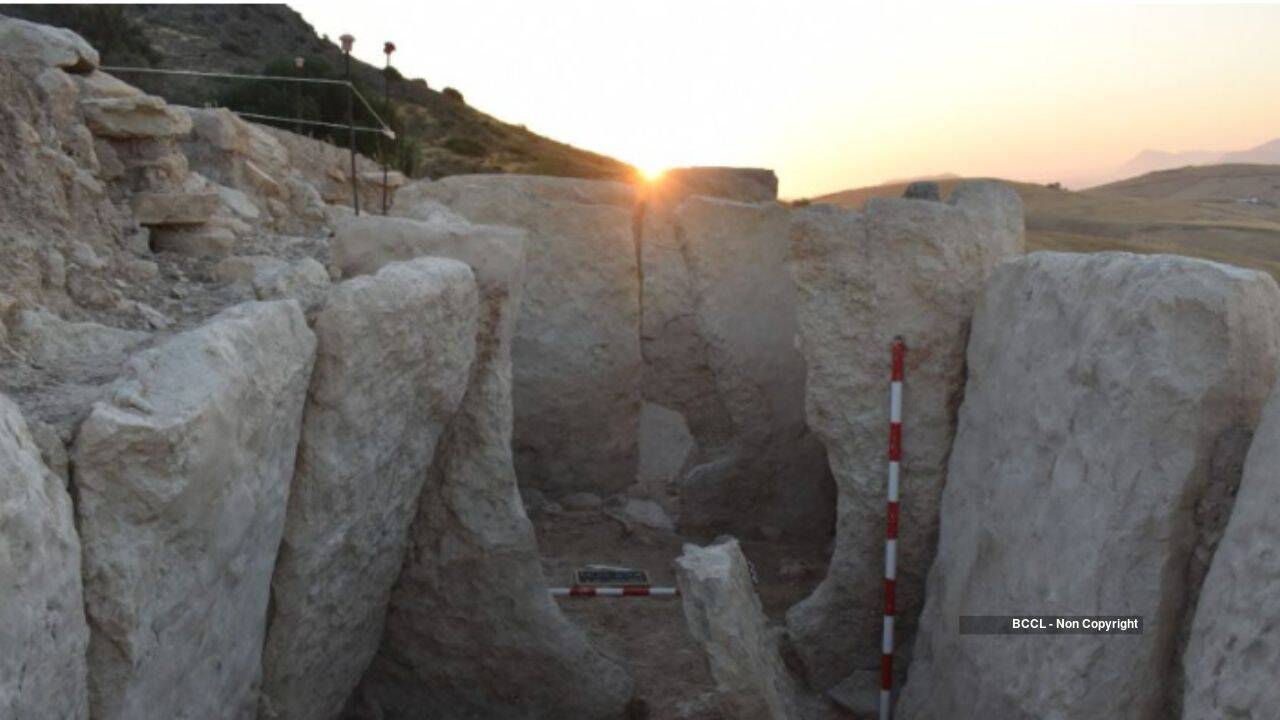
That proof just came out of the ground near Teba in southern Spain. Researchers from the University of Cádiz spent four grueling excavation campaigns unearthing Dolmen I of the La Lentejuela necropolis in Málaga. It is a massive, 13-meter-long megalithic tomb built more than 5,000 years ago during the third millennium BCE.
What's inside changes how we look at early European mobility.
The Architecture of a Prehistoric Monument
You don't build a 13-meter tomb by accident. It takes communal labor, serious engineering, and strict social organization.
The structure relies on giant vertical stone slabs called orthostats, some standing over two meters high. Workers hauled massive horizontal capstones to seal the top, then buried the entire complex beneath a massive earthen mound known as a tumulus. That protective layer of sand and small rocks kept the interior largely shielded from environmental degradation for fifty centuries.
Dr. Eduardo Vijande and Dr. Serafín Becerra, who led the Thalassa research group excavating the site, note that it ranks among the most complete and monumental funerary structures in all of Andalusia.
Inside, the tomb features multiple internal compartments operating as collective ossuaries. This wasn't a single-occupancy grave. Generations of families or community groups returned to this monument, carefully placing bones and bodies into chambers over a long timespan. It served as a permanent anchor for the living, a physical architecture designed to link living clans with their ancestors and cement their territorial claims.
Exotic Goods and Long Distance Networks
The stone work is impressive, but the grave goods tell the real story.
When archaeologists cleared the ossuaries, they recovered sophisticated flint tools including razor-sharp arrowheads, large blades, and a rare, beautifully crafted halberd—a hybrid weapon and status symbol consisting of an axe blade mounted on a pole. But local flint isn't what caught expert attention.
The tomb contained exotic materials that had no business being deep inland in southern Iberia unless a massive logistical network brought them there. Researchers pulled amber, ivory, and marine seashells directly from the burial chambers.
As project specialist Juan Jesús Cantillo points out, finding seashells far inland isn't just a quirky detail. It proves that coastal resources held heavy symbolic and prestige value, traveling massive overland routes to reach elite members of inland communities.
Think about what that requires. Moving amber and ivory across thousands of years of rugged terrain means structured trade routes were humming long before written history started tracking commerce. People across the Mediterranean and inner Spain were trading value, luxury, and cultural ideas on an expansive scale.
Why This Discovery Matters Right Now
We often look at ancient history through a lens of technological inferiority. We assume that without modern infrastructure, transport, or communication, human societies were localized and crude.
This Málaga tomb proves the exact opposite. Long before the rise of classical empires, complex exchange networks spanned across geographic barriers. Prehistoric communities placed immense value on foreign items, creating social hierarchies tied directly to what you could import from far-away shores.
The extraordinary preservation of La Lentejuela gives modern science a pristine laboratory to study how these ancient people lived, traded, and honored their dead. Future archaeometric testing on the ivory and amber will likely pinpoint exact geographic origins, mapping out ancient supply chains with startling precision.
History isn't just written in books. It's buried in the dirt, waiting for the next trench to rewrite what we think we know.