Every time the British summer hits 30 degrees, the exact same phrase echoes across the country. Well, it's nothing compared to 1976. It has become the ultimate benchmark for British endurance. It's a generational badge of honour for anyone who lived through it. But as decades pass, the line between historical reality and nostalgic myth starts to blur. Was it really the glorious, endless summer of melting ice lollies and sun-kissed beaches, or was it a grueling national crisis that pushed the UK infrastructure to the absolute brink?
The truth is, it was both.
While modern heatwaves frequently shatter individual temperature records—like the terrifying 40.3°C peak in 2022—1976 remains unique. It wasn't the single-day spikes that broke the nation. It was the brutal, unrelenting duration. For 15 consecutive days between late June and early July, temperatures crossed 32.2°C somewhere in England. Combined with a severe drought that began the previous year, the country essentially transformed into a dust bowl for 16 weeks.
The Dry Spell That Parched an Island
To understand why 1976 felt so apocalyptic, you have to look at the months leading up to it. The summer didn't just suddenly explode out of nowhere. The previous winter and summer had already been unusually dry. By the time June arrived, water levels across the UK were already dangerously depleted.
When the sun locked into place on June 23, the ground was already baked hard. Rivers slowed to a crawl. Major reservoirs began to vanish entirely, dropping down to muddy puddles.
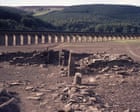
The scale of the water depletion was staggering. Haweswater Reservoir in Cumbria dropped to a mere 10% of its normal capacity. As the water retreated 60 feet below the usual line, it exposed the remains of Mardale Green, a village flooded decades earlier to build the reservoir. In Derbyshire, the Ladybower Reservoir dried out completely, revealing the ghostly ruins of Ashopton and Derwent. People literally walked dryshod over historic streets that had been underwater for a generation.
It wasn't just a scenic curiosity. The dry earth turned Southern England into a tinderbox. Devastating heath and forest fires tore through the landscape, obliterating over 50,000 trees in Dorset’s Hurn Forest alone.
The Plague of 23 Billion Starving Ladybirds
As if the cracked earth and forest fires weren't enough, July brought something straight out of an Old Testament plague. Ladybirds. Billions of them.
The British Entomological and Natural History Society later estimated that by late July, roughly 23.65 billion seven-spotted ladybirds were swarming the southern and eastern coasts of England. You couldn't walk on the pavement without hearing a constant crunch underfoot. They covered the beaches, blanketed houses, and crawled over anyone brave enough to step outside.
The reason for this ecological explosion was a perfect, cruel storm of biology. A warm spring had triggered a massive population spike in aphids, which are the primary food source for ladybirds. But as the intense heat dried out the plants the aphids fed on, the aphid population suddenly crashed.
Suddenly, billions of newly matured ladybirds were left with absolutely nothing to eat. Driven by desperation, the swarms migrated toward the coasts in search of food. They were starving, and they began doing something ladybirds rarely do. They started biting humans. Beachgoers in areas like Weston-super-Mare were forced to abandon the sands entirely, fleeing from clouds of hungry, biting insects.
Standpipes and Bathing With a Friend
By August, the situation had shifted from an uncomfortable summer to a full-blown civil crisis. The government had to step in. Parliament rushed through the Drought Act 1976, granting unprecedented powers to ration water and cut off domestic supplies.
In thousands of communities, particularly across the South West and Wales, mains water was shut off for hours at a time. The modern convenience of a turning tap disappeared. Instead, families had to carry plastic buckets and containers down the street to communal standpipes.
Water conservation became a national obsession. The National Water Council took out full-page newspaper advertisements instructing the public on how to save every drop. The most famous cultural artifact of this era was the cheeky public slogan: “Save water, bath with a friend.”
People took it seriously. Families shared the same few inches of bathwater, passing it down from parents to the youngest children. They saved the greywater from washing machines to pour over dying vegetable patches. If you dared to use a hosepipe on your lawn, you risked public shaming or a hefty fine.
The Magic of the Drought Minister
As the crisis peaked in late August, Prime Minister James Callaghan made a desperate political move. He appointed Denis Howell as the special Minister for Drought. It was a bizarre appointment that instantly captured the public imagination.
Howell was a jovial figure who tried to lead by example. He openly admitted to the press that he and his wife were sharing bathwater to do their part.
What happened next entered the halls of British folklore. Only days after Howell took the job, the blocking high-pressure weather system finally broke. Massive thunderstorms rolled across the UK, bringing torrential rain for the first time in months. The downpours were so heavy and persistent that September and October turned out to be exceptionally wet.
Howell was instantly redubbed the "Minister for Floods." His apparent ability to summon rain simply by taking the job became a running national joke, but the structural damage to the country was already done. The heatwave caused an estimated 20% spike in excess deaths, ruined nearly £500 million worth of crops, and permanently altered British forests by killing off thousands of drought-sensitive beech trees.
What We Forget About the Summer of 1976
When people look back at 1976, they tend to remember the community spirit. They remember the neighborhood chats around the water standpipe, the endless soundtrack of Elton John and Kiki Dee topping the charts, and the novelty of a British summer that actually stayed hot.
But looking at it through a modern lens reveals a stark reality. The infrastructure of 1976 was completely unprepared for extreme climate events. Roads literally melted under the heat, requiring gritters to spread sand over tarmac just to keep vehicles from sinking. Train tracks buckled as steel temperatures soared past 50°C.
Today, we view extreme heat with a sense of clinical alarm, tied directly to discussions on global climate change. In 1976, the public treated it more like a strange, exhausting adventure. There were no cooling centers, no widespread air conditioning, and very little understanding of skin cancer risks. People simply stripped off their layers, endured the sunstroke, and kept carrying their water buckets.
The next time the UK enters a heatwave and someone tells you it's nothing compared to 1976, they are technically right. Modern heatwaves might hit higher peaks, but they haven't yet matched the absolute, world-shifting endurance test of that dry, ladybird-infested summer.
If you want to understand how your local area handled the historic drought, look up your local archive records for the 1976 water maps. You might be surprised to find just how close your own street came to running completely dry.