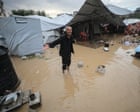
Winter doesn't care about geopolitics. When freezing storms hit Gaza last week, they didn't just bring rain; they smashed through fragile plastic sheets and flooded makeshift encampments where nearly a million displaced people are trying to survive. Right now, 150,000 tents are stuck sitting just outside Gaza's borders, waiting for approvals that move at a snail's pace while children face hypothermia and waterborne diseases.
Let's look at the reality on the ground.
Aid organizations have sounded alarms for months. According to the United Nations, around 940,000 people in Gaza live in flood-prone zones inside makeshift tents that offer zero defense against heavy winds or freezing rain. When the recent storms hit, at least four children and a woman lost their lives. Some died when a sand dune collapsed onto their shelter; others succumbed to the bitter cold and wet conditions. Sewage infrastructure is completely shattered, meaning rising floodwaters mix directly with waste right outside people's temporary homes.
Families are literally using cooking pots to catch leaks coming through their tent roofs. Others watch helplessly as their clothes and blankets soak through, with zero money left to replace them.
The Logistical Bottleneck Keeping Aid Out
Why aren't those 150,000 tents inside? The delay boils down to a bureaucratic wall of restrictions on what authorities classify as "dual-use items," combined with chaotic crossing approvals.
Charities like Shelterbox point out a frustrating lack of transparency. One day, basic toolkits and building supplies get the green light; the next day, they're rejected with zero explanation. Even the trucks getting through are counted in ways that obscure reality. Israeli authorities claim roughly 600 trucks enter daily, but they count 12 pallets as a single truck instead of the standard 20. That accounting trick shrinks actual import volumes by nearly 40 percent.
Because durable materials are blocked, aid workers have to improvise. They stitch together old tarpaulins and wooden pallets—materials that fall apart the moment a real storm rolls off the sea.
The Human Toll Behind the Numbers
Statistics are easy to ignore, but individual stories show the raw desperation. Nour al-Batsh, a mother with a seven-month-old infant, watched her tent collapse under the wind and rain. To keep her baby alive, she scraped together enough funds from international donations to rent a partially destroyed apartment for $500 a month. She looks out her window and sees her old tent site, knowing full well that returning to it means facing lethal conditions.
Medical teams on the ground are bracing for a massive spike in respiratory infections, hypothermia, and water-borne diseases. Without basic infrastructure like functional stormwater pumps—disabled by a chronic lack of power—the water has nowhere to go.
Humanitarian groups like the Council for Arab-British Understanding are demanding that international governments pressure authorities to speed up approvals and reinstate suspended licenses for major aid agencies. But political debates don't keep people warm at night.
Until real, durable shelter materials cross the border en masse, families across Gaza will keep watching the sky, terrified of the next cloudburst.