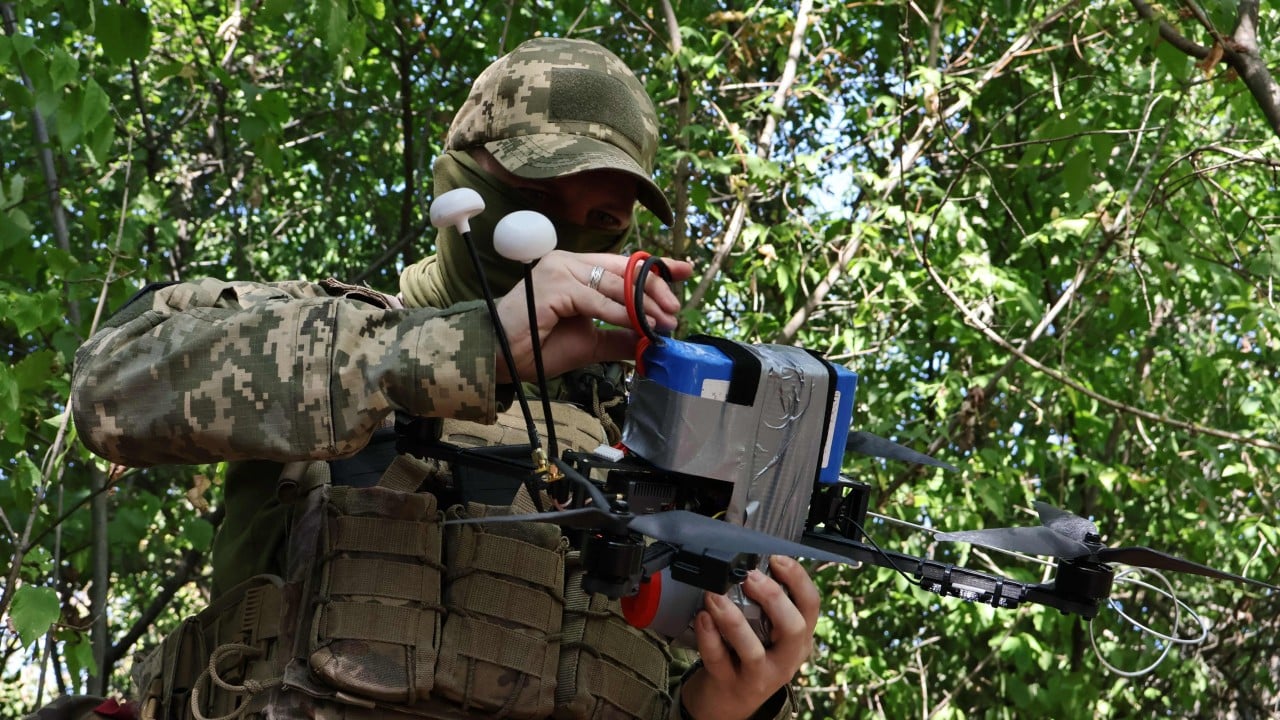
Explosions lit up the night sky across Narva Bay, visible to anyone watching from the safety of Estonia. Ukrainian long-range drones slammed straight into the vital Russian Baltic Sea port of Ust-Luga, sending massive plumes of fire and smoke billowing into the atmosphere. This wasn't just another routine skirmish along a jagged front line. It was a precise, high-stakes message delivered right to the doorstep of Vladimir Putin's Leningrad region while peace negotiations were actively underway in the United Arab Emirates.
Diplomacy in modern conflicts rarely pauses for the battlefield. In fact, guns and talks usually escalate in tandem. As delegates gathered in Abu Dhabi for US-brokered peace talks, the contrast between conference rooms and burning oil terminals could not have been starker.
The Strategic Importance of Ust Luga
Why target Ust-Luga? Simple economics and logistics. Located in the north-west of Russia, this port serves as a critical export hub for Russian energy and industrial materials. Striking here hits state revenues and exposes glaring vulnerabilities in air defense networks protecting regions close to St. Petersburg.
Regional governor Aleksandr Drozdenko confirmed that three workers sustained injuries and a local power station was temporarily cut off after the overnight blitz. He claimed that air defenses intercepted roughly 150 drones over the wider Leningrad region. Yet, the physical evidence of fire and smoke visible across international borders tells a different story about the leaks in Russia's defensive shield.
Flights faced major disruptions in St. Petersburg airspace. Across the Gulf of Finland, Helsinki imposed temporary restrictions. NATO fighter jets scrambled in Lithuania after picking up an unidentified aerial object on radar. The shockwaves of a single Ukrainian drone strike extend far beyond the blast radius.
Reality Check at the Negotiating Table
While the port burned, Ukrainian President Volodymyr Zelensky exposed a staggering disconnect happening behind closed doors in Abu Dhabi. Russian senior military and intelligence officers at the talks claimed that Putin's forces controlled half the territory in the Donetsk region currently held by Ukrainian troops.
We are talking about an area spanning roughly 1,000 square miles—almost twice the size of Greater London. Ukrainian negotiators brought actual video footage, photographs, and satellite evidence to disprove the claim. Zelensky noted bluntly that Putin lives in a completely different reality, feeding American mediators inflated figures about how quickly Russian forces could occupy the rest of eastern Ukraine.
Despite the friction, American officials reportedly confirmed the Ukrainian battlefield assessments, validating Kyiv's frontline maps against Moscow's fantasy figures. Zelensky continues to push for a direct, face-to-face meeting with Putin to settle the terms once and for all.
Sabotage on the Northern Rails
Physical infrastructure inside Russia took another massive hit far from the Baltic coast. A crucial mainline bridge collapsed in the Arkhangelsk region, severing rail connections across a vast swathe of northern Russia. Freight train wagons derailed over the Viled River, plunging regional logistics into chaos.
This specific rail line functions as the ultimate lifeline to Vorkuta, an isolated Arctic mining outpost that becomes entirely inaccessible by road when winter sets in. Local authorities immediately launched investigations into suspected sabotage. Whether partisan resistance fighters or precision kinetic strikes caused the bridge failure, the result remains the same. Supply chains inside Russia are cracking under the strain of a prolonged war of attrition.
The Cost on the Ground
Back in Ukraine, the retaliation was swift and brutal. Overnight strikes hammered Kryvyi Rih, Zelensky's birthplace. Russian forces targeted local power plants with chilling precision as sub-zero temperatures gripped the country. Homes, schools, and kindergartens suffered heavy damage, leaving large portions of the city in total darkness and freezing conditions.
Moscow's strategy remains transparent. When military setbacks mount at ports like Ust-Luga and logistics fail on northern rail bridges, the campaign pivots toward breaking civilian morale through infrastructure destruction.
Wars do not end because diplomats sit down at luxury hotels in the UAE. They grind forward through fire, broken bridges, disputed maps, and burning terminals until one side's economic and military endurance finally breaks.