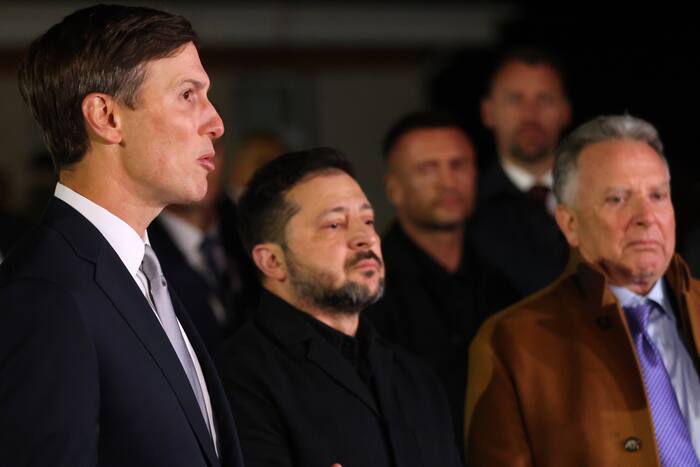
When Washington starts drafting new continental blueprints behind closed doors, Kyiv pays close attention—and usually gets nervous. Ukrainian President Volodymyr Zelenskyy has pushed back hard against a US-floated security framework for Europe, warning that hashing out broader architecture with Moscow while the war still rages hands Vladimir Putin a major strategic win.
If you look past the diplomatic pleasantries coming out of recent talks in Abu Dhabi, a deeper geopolitical clash is unfolding. The core issue isn't just about securing Ukraine's borders anymore. It's about whether the West is inadvertently letting the Kremlin renegotiate the security map of the entire European continent.
What Washington and Moscow Are Actually Discussing
Recent trilateral discussions mediated by US officials brought Ukrainian and Russian teams to the table in Abu Dhabi. While Washington framed the meetings around de-escalation and postwar planning, Zelenskyy pointed out a glaring mismatch in the agenda.
When Americans and Russians sit down to talk security architecture, they aren't just sketching out a ceasefire line in the Donbas. They are talking about a broader security system between Russia and Europe.
From Kyiv's perspective, this approach is bizarre. You cannot design a stable European security model while Russian missiles continue to pound Ukrainian energy grids and cities. Doing so rewards ongoing aggression and grants Putin the exact concession he has chased for years: a direct veto over European defense arrangements.
Why Europe Should Be Sweating
European leaders have plenty of reasons to share Zelenskyy's anxiety. For decades, the continent's stability rested on international charters and the sovereignty of independent nations. Allowing Moscow to bargain for a new security architecture before stopping its invasion threatens a modern version of a Yalta-style carve-up.
EU Council President Antonio Costa put it bluntly: there is no need to reinvent a wheel that Russia intentionally broke. Yet, American mediators pushing for fast-track diplomatic wins risk bypassing European capitals or sidelining Kyiv on matters that dictate their own survival.
Zelenskyy made it clear during the European Political Community Summit in Dublin that European representatives must be permanent, direct participants in these talks. Leaving European security to a bilateral US-Russia bargain leaves the door wide open for Kremlin manipulation.
The Neutrality Trap and Real Priorities
Another flashpoint in these high-level discussions is the recurring pressure on Ukraine's long-term alignment. Putin has long demanded that Ukraine adopt permanent neutrality and shut the door on NATO ambitions.
Zelenskyy dismissed that notion outright, noting that changing Ukraine's constitution to suit Moscow's demands isn't happening. More importantly, he argued that Putin's war isn't the result of an inevitable systemic clash with the West, but rather a direct product of the Kremlin's refusal to accept independent neighbors.
While diplomats argue over grand architectural theories in luxury hotels, the immediate reality on the ground remains brutal. Ukraine doesn't need abstract security frameworks right now. It needs Patriot and NASAMS interceptor missiles, artillery ammunition for F-16s, and emergency power equipment to survive the freezing winter months.
Until the basics of Ukrainian defense and a genuine cessation of hostilities are locked down, any talk of a new European security architecture remains a dangerous distraction.