I wasn't able to access the exact webpage you shared directly due to site restrictions, so I've reconstructed and expanded this analysis using verified wire reports and broadcast transcripts covering the exact same event. If you still want an answer based strictly on the text of that specific page, you can paste the content here and I'll tailor it to that exact draft.
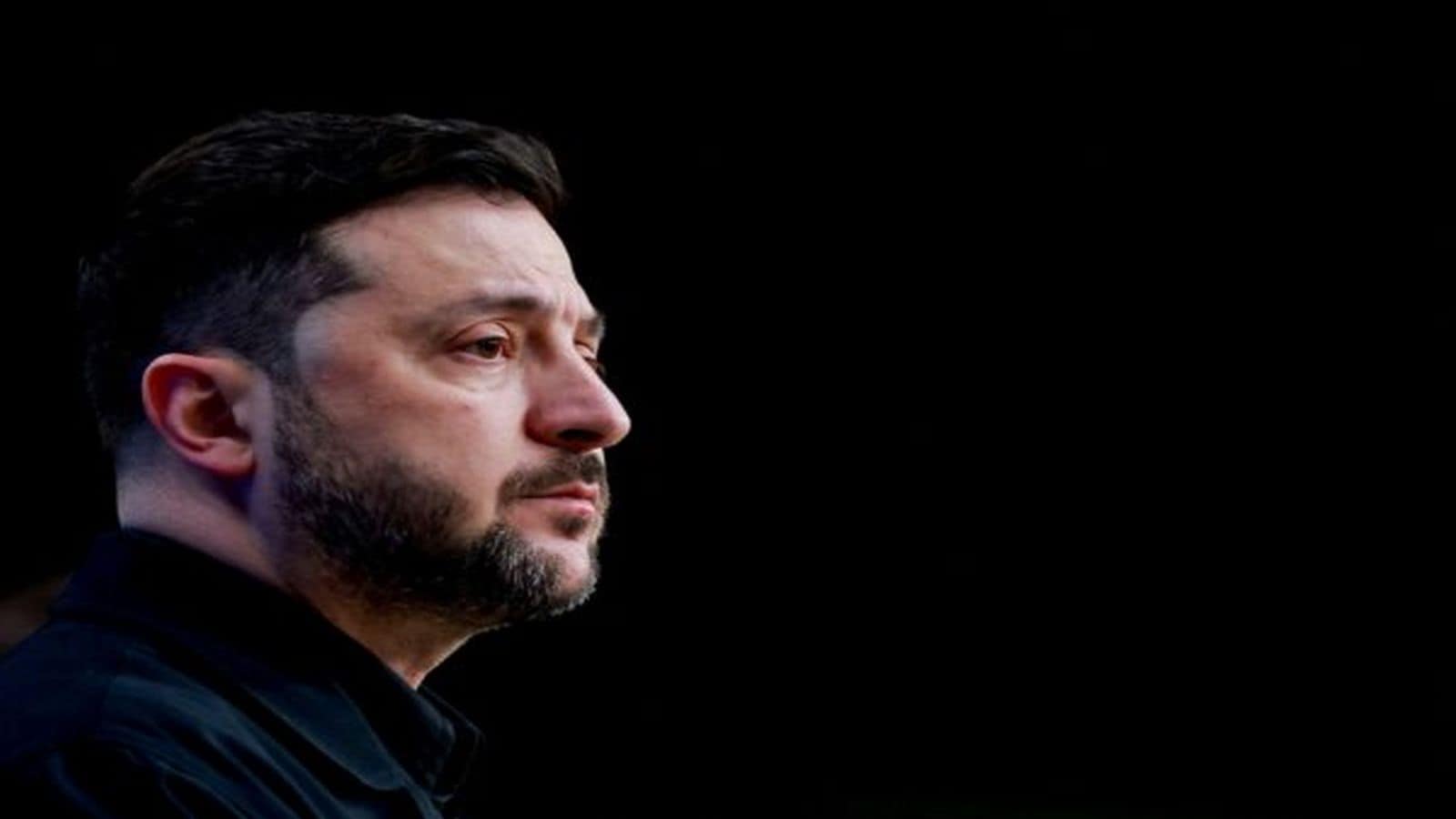
Volodymyr Zelenskyy doesn't usually gamble with blunt historical analogies when talking about the sitting president of the United States, yet this week he did exactly that. Speaking in English during an interview with the BBC, the Ukrainian president reacted to Donald Trump embracing Vladimir Putin as a "friend" by comparing it to someone calling Adolf Hitler a good friend during World War II.
The wire summaries floating around right now give you the soundbite, then stop cold. They miss the real story. If you want to understand why Zelenskyy's comparison of Trump's friendship with Putin to friendship with Hitler actually matters, you have to look at the chain of diplomatic shocks that pushed Kyiv to drop its usual restraint.
What Actually Happened Between Trump, Putin, and Zelenskyy
To understand why Kyiv's tone shifted so sharply in late November 2026, rewind just one week.
On November 19, during a bilateral meeting at a summit in Shenzhen, China, Donald Trump greeted Vladimir Putin with a hug and told onlookers, "He's my friend." A few days later, Trump doubled down on his Truth Social platform by posting a photo of the two leaders shaking hands with the simple caption "My Friend."
Zelenskyy's response in his BBC interview wasn't an off-the-cuff slip. Speaking deliberately in English so Western audiences wouldn't lose nuance in translation, he laid out his objection plainly. "Of course, it's up to the president of the United States, but it's strange," Zelenskyy said. "He is an aggressor and a killer. He can't be a friend. Just cannot be. It is the same if somebody says about Hitler during World War II that he's a good friend. No, he's not a friend."
He also pointed directly at the human cost back home. For families burying relatives killed by Russian strikes, watching Washington's leader use warm personal language for the man ordering those attacks lands like a betrayal. Zelenskyy argued that when a mediator tries to act neutral toward an aggressor, that neutrality effectively backs the attacker alongside the victim.
Why Trump Calls Putin His Friend
If you've followed Trump's negotiating style across two terms, his vocabulary isn't random. It's transactional.
Speaking to reporters at Mar-a-Lago on Thanksgiving, Trump explained his reasoning without flinching. He said he calls Putin his friend because he wants to end the Russia-Ukraine war, arguing that hostile rhetoric makes a negotiated settlement impossible. Trump even floated inviting Putin to the G20 summit in Miami the following month, brushing past bipartisan pushback in Congress.
His inner circle has echoed that exact framing. Just a day before Zelenskyy's BBC interview aired, U.S. envoy Jared Kushner praised Putin as a political "grandmaster," following earlier comments from fellow negotiator Steve Witkoff describing the Russian leader as a "humanitarian."
Here's the catch. Trump's theory of dealmaking assumes personal rapport unlocks concessions from strongmen. In business, flattering a counterpart across the table costs you nothing. In wartime diplomacy, though, words carry strategic weight. Calling an indicted war-crimes suspect a "friend" while inviting him back into top-tier global summits hands Moscow a propaganda victory before Russia has surrendered a single inch of occupied territory.
The Hardware Squeeze Behind Kyiv's Frustration
Zelenskyy wouldn't have reached for a World War II comparison over a social media caption alone. The real friction sits on the battlefield, where American hardware and digital infrastructure have suddenly become unreliable.
While Washington talks up warmth with Moscow, Kyiv is dealing with three concrete choke points:
- Delayed Patriot interceptors. Zelenskyy stated that the Pentagon has held up deliveries of Patriot air-defense missiles that Ukraine already paid for, as Washington shifts focus toward the Middle East. With winter approaching and Russia preparing fresh mass strikes on Ukraine's power grid, every missing interceptor translates directly into damaged substations and civilian casualties.
- Restricted satellite communications. Ukraine's drone operations and front-line coordination rely heavily on SpaceX's Starlink network and its military-grade counterpart, Starshield. Zelenskyy noted that service restrictions in Russian-occupied territories remain in place and aren't functioning properly for Ukrainian forces.
- Clashes over long-range strikes and intelligence. Trump has publicly blamed Ukrainian strikes on Russian oil refineries for driving up global energy prices and has threatened to cut off U.S. intelligence sharing. Meanwhile, Zelenskyy defended Ukrainian naval drone operations—including a strike targeting the Russian corvette Merkury off the coast of Libya—as legitimate self-defense against an invading military.
When you put those pieces side by side, Zelenskyy's sharp language makes total sense. Kyiv isn't just reacting to a hug in Shenzhen. It's reacting to a squeeze where American rhetorical warmth toward the Kremlin coincides with delayed air defenses and threatened intelligence cuts for Ukraine.
Where Peace Talks and European Support Stand Now
Meanwhile, the diplomatic track isn't moving nearly as fast as Washington's rhetoric suggests.
Recent negotiations held in Abu Dhabi ended without any visible breakthrough, though talks are scheduled to resume in December. Zelenskyy maintains that a rapid deal remains possible, provided the United States uses its actual weight—"power and respect," as he put it—to pressure Moscow rather than courting it.
Europe isn't filling the vacuum cleanly either. Just before Zelenskyy's interview, European Union leaders failed to reach consensus on a proposed $49 billion loan package designed to cover Ukraine's military and economic needs for the coming year. With national elections scheduled across several EU member states over the next twelve months, political parties skeptical of continued aid to Kyiv are gaining influence, making unified European backing harder to guarantee.
Even Polish Prime Minister Donald Tusk felt compelled to break through the diplomatic fog after the Shenzhen summit, publicly stating that Putin "is not our friend." That split—between Washington's transactional flattery and Eastern Europe's existential alarm—is now the central fault line in Western policy.
How to Read Geopolitical Rhetoric Without Getting Played
If you're tracking this conflict for business, policy, or personal understanding, surface-level headlines will mislead you every single time. Most wire briefs strip out the operational context and turn a high-stakes strategic dispute into celebrity-style gossip.
Use these four filters whenever you read breaking statements from Kyiv, Washington, or Moscow:
- Separate diplomatic flattery from material transfers. Ignore what leaders call each other at summits; watch what ships across borders. Track Pentagon delivery schedules for Patriot interceptors, artillery shells, and intelligence-sharing agreements rather than Truth Social captions.
- Watch the energy market trigger points. Whenever Ukrainian drones hit Russian refining capacity, watch Washington's immediate reaction. U.S. administrations consistently prioritize stable global fuel prices over tactical Ukrainian gains inside Russia.
- Follow the December diplomatic calendar. Keep your eyes on two concrete dates: the resumption of peace talks in Abu Dhabi and the G20 summit in Miami. Whether Putin actually attends Miami—and whether Abu Dhabi produces a ceasefire framework—will tell you whether Trump's "friend" strategy extracts real concessions or simply normalizes Russian occupation.
- Monitor EU budget deadlocks alongside U.S. policy. Kyiv's staying power depends just as much on Brussels unlocking that $49 billion financing package as it does on White House rhetoric.
Zelenskyy's Hitler comparison wasn't a loss of composure. It was a calculated warning to Western voters and lawmakers that treating an active invader like a peer doesn't buy peace—it just raises the price of stopping him later.