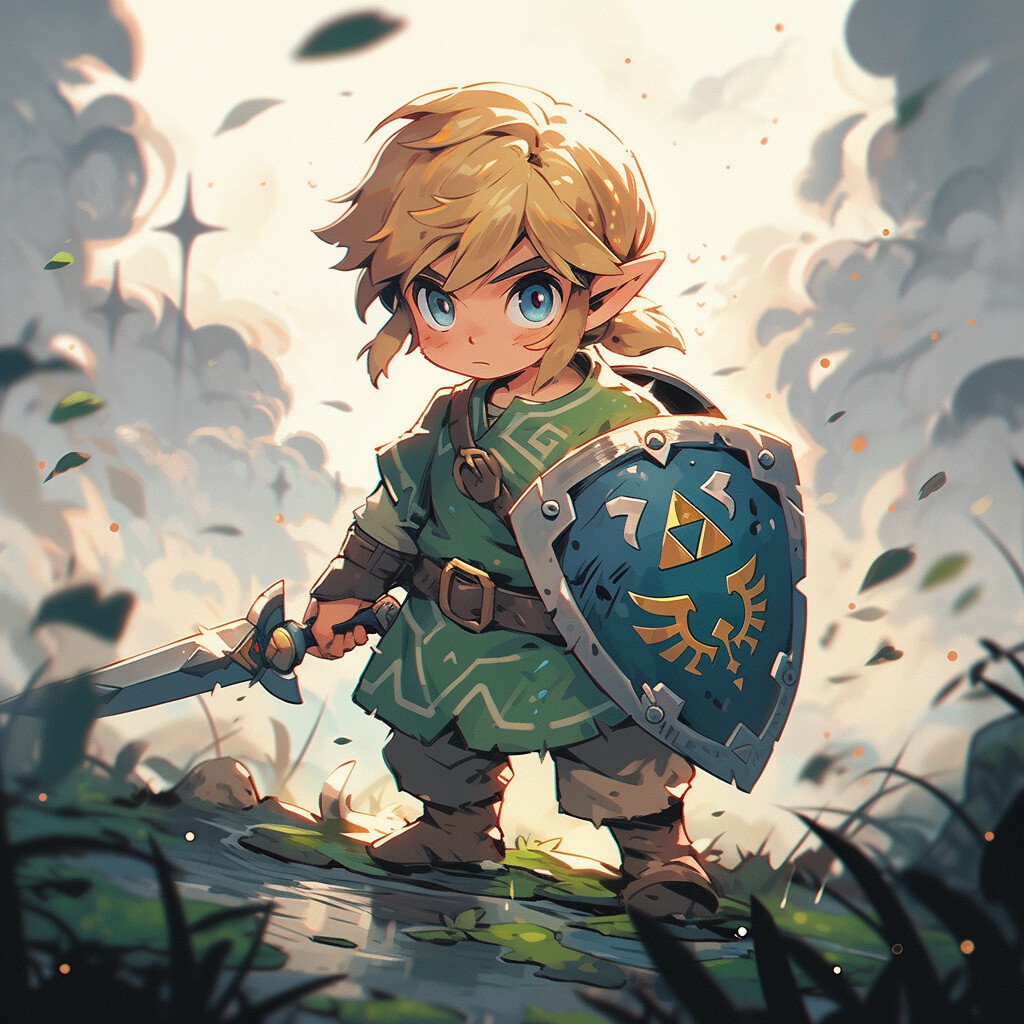
Video games have traded atmosphere for photorealism, and honestly, we lost something magical along the way. When Nintendo released Zelda Ocarina Of Time back in the late nineties, they didn't just build a 3D adventure; they mapped out a blueprint for how a virtual world should feel alive. You boot it up today, listen to that opening theme echo across the screen, and you instantly remember why this cartridge defined an entire generation. It's easy to dismiss classic titles as mere nostalgia trips, but this specific masterpiece holds up because its design philosophy puts player curiosity above hand-holding. Modern titles love throwing waypoint markers at your face every three seconds, treating you like you can't navigate a room without a glowing breadcrumb trail. Nintendo took a different route. They trusted you to look at the horizon, spot an interesting landmark, and walk toward it just to see what happened. That radical trust in the player creates an unforgettable bond, one that keeps players coming back decades later to replay every dungeon and master every song.
Mastering Hyrule In Zelda Ocarina Of Time
Moving from two dimensions to a fully realized three-dimensional space felt terrifying for developers back in 1998. Nobody knew if players would get motion sick, if camera angles would ruin combat, or if puzzle design would translate to a Z-axis. Nintendo cracked the code by introducing Z-targeting, a mechanic so revolutionary that third-person action games still copy it today. You hold a single trigger button, lock your gaze onto a Stalfos or a Lizalfos, and suddenly sword combat transforms from a chaotic flailing match into a graceful dance of shielding, dodging, and striking at the precise opening. It's brilliant engineering disguised as simple convenience. Without this system, boss fights against phantom riders or giant forest dragons would devolve into frustrating exercises in fighting the camera. Instead, you focus entirely on reading enemy patterns and timing your strikes. That focus on clean mechanics over visual clutter is why people still speedrun the game and analyze its code frame by frame. You can check out community-driven preservation efforts like Nintendo's official history portal to see how deeply this release influenced subsequent hardware iterations. You might also find this connected story useful: Why Epic Games Moving Toward Ai Changes Game Development Forever.
The Genius Of Spatial Puzzles
Dungeon design in this era relied on structural logic rather than abstract key-and-lock routines. When you step into the Forest Temple or the Fire Temple, you aren't just moving through rooms; you're manipulating the environment on a grand scale. Changing the water levels in the Lakebed-adjacent Water Temple or twisting the corridors of the forest maze forces you to build a mental map of the entire building. You make mistakes, get stuck, and have to retrace your steps. That friction makes solving a puzzle genuinely rewarding. Contemporary design often fears player frustration so much that it inserts automated hints before you even try to think. Back then, hitting a dead end meant you missed a tiny detail on the ceiling or forgot to use a specific item. You had to pay attention to audio cues, enemy placement, and architectural shifts. That level of spatial awareness teaches you to look at every virtual wall as a potential secret waiting to be uncovered.
Music As A Mechanical Tool
Using the ocarina isn't just a clever aesthetic choice to tie into the title; it's a core gameplay mechanic that changes the state of the world. Learning songs on a grid of buttons tied to face controls turns musical notes into passwords. You play the Prelude of Light to warp across the map, or the Song of Storms to drain a well and unlock a hidden basement. This integration of music elevates the atmosphere while giving you direct agency over environmental puzzles. When you pull out your instrument in front of a mysterious stone pedestal, you feel like an active participant in a living myth rather than a spectator watching a pre-rendered cutscene. The sound design by Koji Kondo anchors every region with a distinct auditory identity, making the transition from the sunny, peaceful fields of Lon Lon Ranch to the oppressive, fiery depths of Death Mountain feel visceral and immediate. As extensively documented in latest reports by Reuters, the effects are worth noting.
The Evolution Of 3D World Building
Building a seamless world on cartridge hardware required immense technical wizardry. Loading screens had to be hidden behind clever corridor designs, doors that opened slowly, or riding Epona across wide-open fields while the engine streamed assets in the background. This limitation accidentally created a brilliant pacing rhythm. You experience intense, claustrophobic dungeon crawling followed by moments of total freedom riding your horse across a golden field. It's a breathing room structure that modern sprawling open worlds often forget to include. Today's maps are frequently packed with repetitive check-list icons that turn exploration into a chore rather than a genuine discovery.
Why Nostalgia Isn't Enough
People often claim that affection for classic software stems purely from rose-colored glasses, but mechanics don't survive decades of scrutiny if they're fundamentally broken. The pacing holds up because the difficulty curve is tuned with absolute precision. You start as a kid in a tight, comforting village, learning basic mechanics, swinging a small wooden sword, and rolling through tall grass. By the time you pull the Master Sword and wake up seven years later in a ruined, monster-infested future, the stakes feel massive because you've lived through the transition. You watched the kingdom fall because of your own youthful naivety, creating a personal narrative weight that few modern dialogue-heavy scripts manage to achieve.
Designing For Longevity
If you want to understand why older game design principles still resonate, look at how tight the feedback loop is. Every tool you pick up, from the hookshot to the boomerang, serves a dual purpose for combat and puzzle-solving. You never receive an item that sits dead in your inventory; every single gear piece gets tested across multiple environments. Contrast this with modern sprawling titles that flood your inventory with dozens of redundant crafting materials and situational weapons you'll never touch twice. Simplicity, when executed with absolute mastery, beats feature bloat every single day of the week. You can read broader retrospectives on industry milestones via IGN's historical archives to trace how this specific title shifted the trajectory of action-adventure development permanently.
To get the most out of revisiting classic titles today, stop relying on digital guides or walkthroughs the second you hit a roadblock. Put the controller down for a minute, review your inventory items, and examine the room's geometry. Give yourself the space to figure things out through pure trial and error. Load up the original hardware or an official port, turn off your phone notifications, and let yourself get lost in the pacing without any modern distractions interrupting your focus.