You can only tell a generation that they have to sacrifice their future for so long before things snap. For years, young people across Europe have been told to tighten their belts, accept crumbling school infrastructure, and swallow the economic pill of stagnant growth. But when thousands of protesters hit the streets under the banner of the "Gen Z Takes Care of It" campaign, the frustration stopped being theoretical. What started as a coordinated series of demonstrations against soaring living costs and looming military service quickly fractured into chaotic clashes and storefront looting in cities like Frankfurt.
Politicians can point fingers at extremists or express shock at the broken windows, but ignoring the structural decay fueling these demonstrations is a massive mistake. Let's look at what actually happened, why young Europeans are boiling over, and why this unrest isn't going away anytime soon.
The Breaking Point Behind the German Protests
If you walk into a typical public university or high school in Berlin or Frankfurt right now, you won't find a high-tech paradise of learning. You will find peeling paint, water-damaged ceilings, broken plumbing, and a severe shortage of educators. When high school students like Janelle Schulz publicly point out that their school toilets are broken and ceilings are leaking, they aren't exaggerating for effect. They are describing the everyday reality of studying in Europe's largest economy.
Organizers of the rallies projected massive numbers, aiming for upwards of 180,000 participants. While actual turnout landed closer to 18,000 combined across major hubs like Munich, Berlin, and Frankfurt, the smaller numbers didn't dilute the intensity. The anger is raw. Young people see billions channeled into defense budgets, security shifts, and debt recovery, while their own housing options evaporate and education standards plummet.
Conscription Fears and the Fight Against Coercion
One of the unique flashpoints driving this movement is the fierce opposition to compulsory military service. As geopolitical tensions remain high across the continent, governments are quietly—and sometimes openly—evaluating ways to replenish military manpower. For a generation that values peace and personal freedom, the prospect of forced state service feels like a betrayal.
"We are here today to fight for peace and freedom, rather than for war and coercion," explained Lina Friedrich, a spokesperson for the movement.
When you combine compulsory service anxiety with skyrocketing rents and grocery prices that devour entry-level wages, the social contract breaks down. Young adults realize that the economic model they inherited offers high taxation, low wage growth, and minimal security.
How Peaceful Demands Turned Into Frankfurt Chaos
No one should excuse vandalism, but pretending it happened in a vacuum is intellectually dishonest. While daytime rallies featured students holding banners demanding climate action, educational funding, and fairer tax distributions at places like the Brandenburg Gate, nightfall brought a completely different crowd.
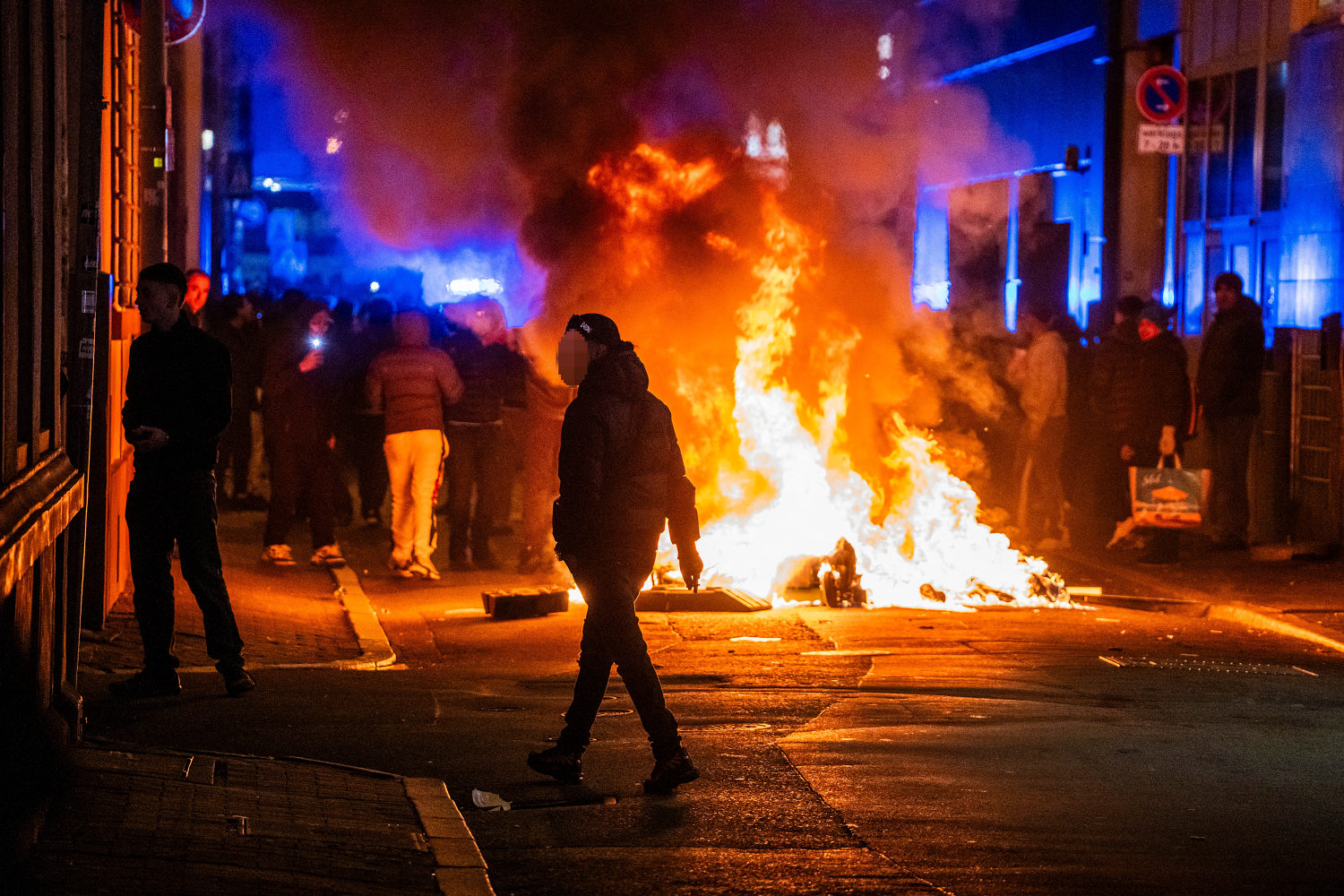
In Frankfurt, masked rioters smashed storefront windows, hurled rocks, and threw Molotov cocktails at police officers and emergency services. Police deployed water cannons and tear gas in northern hubs like Hamburg while barricades burned in the streets. Hesse State Interior Minister Roman Poseck was quick to condemn the violence, blaming roughly one hundred left-wing extremists for hijacking the demonstration and drawing unfavorable comparisons to the fiery urban riots seen in France.
State officials and police chiefs are terrified of a contagion effect. They know that when peaceful youth movements lose faith in institutional change, fringe elements find it frighteningly easy to step into the vacuum and turn a march into a riot.
The Wider European Discontent
Germany isn't an isolated bubble. Across the continent, a broader youth-led rebellion is taking shape. From rental protests in Portugal to violent clashes over public spending cuts in French cities like Toulouse and Marseille, the youth demographic is waking up to a shared reality.
Consider the core grievances fueling this wave:
- Housing markets that price working youth out of independent living entirely.
- Public infrastructure starved of cash while national leaders prioritize macro-level defense spending.
- Deep anxiety over employment security and retirement systems buckling under an aging population.
When mainstream student organizations try to distance themselves from radical elements—such as Germany's national school student union planning separate, moderated actions for later in November—it highlights an internal struggle. Do young people work within the system, or do they burn it down?
What Leaders Get Wrong About Gen Z Activism
Chancellor Friedrich Merz and other federal leaders face an uphill battle if they think they can ignore these warnings or dismiss the protesters as radical fringe actors. When 18-year-olds stand up at rallies and call out political leaders directly for offering nothing but spending cuts and heavy burdens, it signals a total collapse of trust between the state and its youngest voters.
If governments want to prevent Frankfurt-style riots from becoming a regular weekend feature in European capitals, they need to change tack. Cosmetic policy adjustments and stern police warnings won't fix structural decay. Until politicians take the economic survival of their youngest citizens as seriously as macroeconomic indicators, the streets will remain volatile.