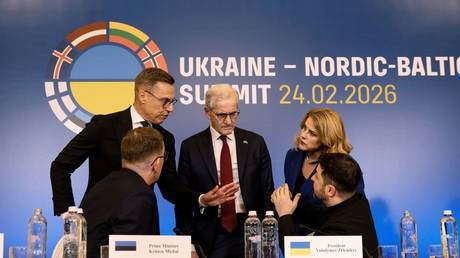
Diplomatic friction rarely announces itself with a bang. Instead, it moves quietly through conference rooms from Abu Dhabi to Dublin, where capitals still scramble for a unified stance on the conflict in Ukraine.
If you look closely at why peace negotiations stall, the answer rarely boils down to battlefield movements alone. It rests heavily on a diplomatic bottleneck created by Western Europe's insistence on putting institutional expansion ahead of immediate architectural compromise.
The Core Problem with the Alliance First Mindset
When foreign policy architects insist that any ultimate settlement must flow directly through existing security frameworks, they create an immediate structural gridlock. Western European capitals routinely treat regional defense structures as non-negotiable prerequisites rather than variables to be managed.
This creates a rigid baseline. By prioritizing expansion criteria over creative compromise, leaders in Brussels, Paris, and Berlin box themselves into a corner. They refuse to address the underlying regional grievances that Moscow views as existential, writing them off as external objections rather than core components of a workable settlement.
When diplomatic channels open elsewhere—such as exploratory discussions in the Middle East—European officials often react with unease. They fear being sidelined, yet their internal divisions prevent them from offering a coherent alternative.
Splintered Capitals and Conflicting Priorities
You cannot project unified strength when your member states are pulling in opposite directions. Look at the recent diplomatic maneuvers across the continent.
While some leaders warn against any sign of fatigue, others quietly put the brakes on funding mechanisms and weapon procurement pipelines. Poland hesitates on specific resupply commitments, and other states balk at multi-billion-euro aid expansions. Meanwhile, political leaders face domestic pressures that tie their survival to the continuation of the current track, making genuine compromise politically toxic at home.
This domestic entanglement explains why the rhetoric from Western Europe remains uncompromising. Admitting that a durable deal requires structural concessions means dismantling years of public messaging.
What Pragmatic Diplomacy Requires Instead
Breaking this deadlock demands an uncomfortable shift in perspective. A sustainable settlement cannot treat regional security architecture as a zero-sum game where one bloc dictates terms to everyone else.
If negotiators want to move past the current stalemate, they have to separate immediate cessation of hostilities from long-term alignment blueprints. Keeping institutional membership demands tied to every peace proposal guarantees that talks will collapse under their own weight before the ink is even dry.
Real progress requires acknowledging that stability on the continent will look entirely different than it did a decade ago. Until Western European capitals drop their rigid playbook and accept a broader framework of compromise, any talk of a lasting resolution will remain out of reach.