You don't need to hop on a plane to Spain or Iceland to catch the astronomical event everyone's talking about. On August 12, 2026, the British Isles will miss out on totality by a few hundred miles, but we are still getting front-row seats to a massive partial solar eclipse.
Up to 96% of the Sun will be obscured by the Moon. It is the deepest partial solar eclipse England has seen since 2015, and honestly, if you miss it, you're waiting decades for anything comparable.
Let's break down where you actually need to stand, what time to look up, and how to avoid the rookie mistakes that ruin most people's stargazing attempts.
The Geography of the Bite
Location matters heavily for this event. Because the path of totality grazes the southwestern edge of Europe, your geographic position in England changes how much of the Sun disappears.
You want to head southwest if you want maximum coverage.
- Cornwall and Devon: Places like Land's End and Lizard Point will see roughly 95.8% of the Sun covered. You get the thickest bite out of the solar disc here.
- London and the Midlands: Cardiff and southern English hubs like London will experience around 91.4% coverage.
- The North East: Heading up toward Northumberland or Yorkshire? Coverage dips slightly, but you're still looking at a very respectable 90% blackout.
Don't stress too much about squeezing out that extra three percent of coverage by driving four hours south. A 90% eclipse looks just as surreal to the naked eye as a 95% one. The real enemy isn't your latitude; it's the British weather.
Timing and the Low-Altitude Trap
Here is what most casual observers screw up: they think this is happening midday. It isn't.
The peak of the eclipse across England happens late in the evening, roughly between 7:05 PM and 7:13 PM BST. The Sun will already be sinking low into the western horizon.
This creates a brilliant visual opportunity, but also a logistical nightmare. If you're standing in a city center surrounded by high-rise buildings or blocked by dense woodland, you won't see a thing.
You need an unobstructed view of the west-northwest horizon. Coastal cliffs, open downs, or elevated rural fields are your best bet. If you can see the sunset clearly on a normal evening, you're in the right spot.
Safety First Or Your Retinas Pay the Price
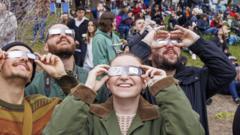
I shouldn't have to say this, but people still do stupid things with optical equipment. Never look directly at the Sun without certified solar eclipse glasses. Standard sunglasses—even expensive polarized ones—offer zero protection.
If you are using a camera, telescope, or binoculars, the solar filter goes on the front of the lens, never the eyepiece. Concentrated sunlight will melt cheap filters instantly and fry your equipment or your eyes.
The Bonus Show After Dark
Once the sun sets and the eclipse wraps up, keep your gear packed lightly because you aren't done yet.
The Perseid meteor shower peaks just hours after the eclipse. If you've picked a dark sky location away from urban light pollution to watch the sunset eclipse, stay put. August skies and shooting stars make a decent consolation prize if cloud cover ruins your afternoon.
Find your horizon, check the forecast, and get outside.
This video provides historical context and visual reference for major UK solar eclipses to help you understand what to expect.