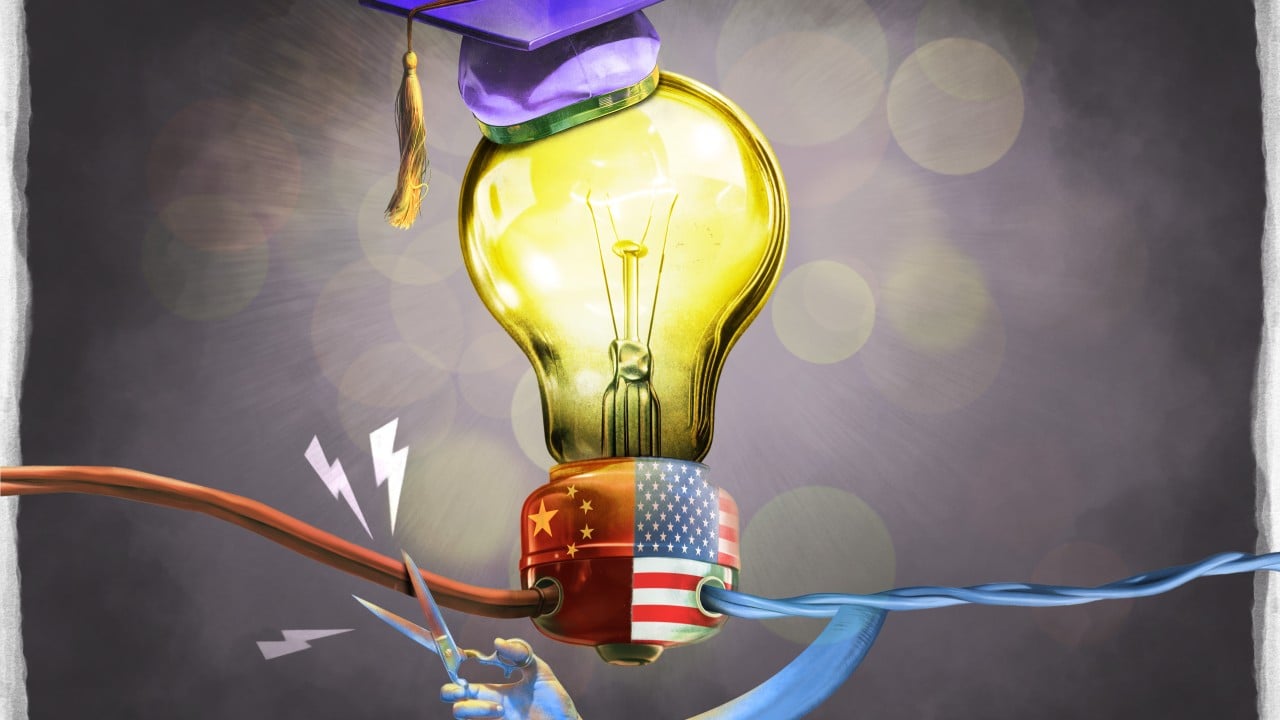
Putting a padlock on a lab door sounds tough in a briefing room. In real science, it often just moves the light switch somewhere else.
US restrictions on China are reshaping global research faster than most policymakers admit, and honestly, the consequences look a lot messier than a clean geopolitical scorecard. Washington has stacked export controls, grant bans, institutional audits, and steeper visa hurdles on top of each other to slow Beijing's scientific rise. China has pushed back with its own critical-mineral leverage, aggressive recruitment, and massive domestic budgets. Meanwhile, working researchers on both sides are stuck navigating rules that change mid-experiment.
I've watched university research compliance offices scramble for years as agency guidance shifted from criminal prosecutions under the China Initiative to civil disclosure traps, False Claims Act settlements, and sweeping grant restrictions. What's striking isn't just that joint papers are dropping. It's how the ecosystem is fracturing, who pays the hidden price, and why blunt restrictions often backfire in the exact fields Washington cares about most.
Why US Restrictions on China Backfire in Slow Motion
Policymakers usually treat scientific leadership like a race between two sprinters on a straight track. Slow one down, and the other falls behind. Science doesn't work like that. It's a web of shared data, specialized instruments, graduate pipelines, and open peer debate.
When the U.S. tightens restrictions, the immediate effect is friction. Grants stall. Joint labs close. Graduate students face longer security checks or higher costs—including the steep $100,000 H-1B fee that took effect in September 2025—just to stay in the research pipeline. Look at the numbers from a September 2026 Carnegie Endowment analysis: while the U.S. still held a net gain of 2,145 AI researchers in 2025 and retained 89% of its AI talent, the share of Chinese-origin AI researchers ending up in China jumped from 57% in 2022 to 69% in 2025. Fewer people are making the trip over, and more trained minds are staying put or heading back.
That shift isn't purely a story about Chinese labs getting better, though they have. It's also about risk math. If a talented researcher feels unwelcome, faces endless disclosure paperwork, or worries a routine grant could trigger a federal audit, staying home starts looking pretty rational.
The Quiet Penalty Inside Peer Review
You don't even need a formal ban to change how science gets funded. A June 2026 study from the Stanford Center on China's Economy and Institutions tested over 7,100 U.S. scientists and more than 1,200 policy professionals using identical peer-reviewed grant proposals that only swapped the foreign partner country between Germany and China.
Unconditional support among U.S. scientists dropped from 48% for the German collaboration to 30% for the Chinese one. Among policy respondents, unconditional backing fell from 68% to 28%, while outright rejection climbed to 12.6% compared with 2.3% for Germany. Even researchers with past ties to Chinese colleagues—and Asian American scientists—showed that same penalty across batteries, biotechnology, robotics, and environmental science.
That finding bothers me for a simple reason. Scientists pride themselves on judging evidence on merit. When geopolitics seeps into how peers evaluate identical proposals, blind spots creep in—especially in fields like infectious disease, climate modeling, and materials where ignoring what's happening in China leaves you flying half-blind.
Compliance Traps Replace Espionage Cases
In my experience advising or observing research administration, the biggest day-to-day hazard for labs isn't dramatic cloak-and-dagger espionage. It's paperwork collision.
Federal rules now stretch across multiple layers: CHIPS and Science Act disclosure mandates, National Security Presidential Memorandum-33 requirements, foreign talent recruitment certifications, export controls on dual-use hardware and software, and proposed Office of Management and Budget grant rules that have threatened broad curbs on international awards. On top of that, defense audits and restricted-entity lists—such as the National Science Foundation's Dear Colleague Letter 26-022 tying funding eligibility to federal restricted-party lists—have pushed universities to sever formal ties rather than risk a compliance slip.
Often, settlements and penalties stem from incomplete disclosures or uncoordinated forms rather than malicious intent. Universities end up playing defense, shutting down borderline collaborations just to stay out of the crosshairs.
How China Turned Pressure Into Domestic Scale
If Washington assumed export controls and academic curbs would freeze China's scientific momentum, the past few years proved otherwise. Beijing hasn't stood still. It has poured money into domestic chip design, AI ecosystems, clinical trials, and university labs while building its own retaliatory levers.
Analysis from Georgetown's Center for Security and Emerging Technology has shown how heavily Chinese output has climbed in areas like chip design and fabrication research, while broader bibliometric studies—including work published in Quantitative Science Studies—point to China closing the gap in high-impact output across core physical and computing sciences. Meanwhile, Beijing has tightened export controls on critical minerals, refining inputs, and specialized materials, reminding Washington that supply-chain chokepoints cut both ways.
Still, let's not overread China's momentum as effortless perfection. A November 2026 analysis from CKGSB Knowledge noted that even as returnees and domestic graduates boost China's numbers, elite returnees in some studies published less right after moving back, and researchers still contend with domestic bureaucracy, political constraints, and narrower international networks. Decoupling creates friction on both sides. A lab with fewer global peers can still publish plenty of papers, yet lose early warning on outside breakthroughs.
What Most People Miss About Talent and Decoupling
People love a neat headline about "reverse brain drain." Reality is way more lopsided.
Yes, high-profile departures make headlines—from senior principal investigators taking chairs in Beijing to growing numbers of Chinese-descent scholars moving back after years in the U.S. A Proceedings of the National Academy of Sciences study estimated roughly 20,000 scientists of Chinese descent left the U.S. between 2010 and 2021, and tracking by researchers at Princeton and elsewhere has documented steady streams of faculty departures continuing into 2025 and 2026.
At the same time, data from recent talent trackers shows the U.S. still attracts large numbers of international researchers and retains most of those who stay. The real danger isn't an overnight collapse of American labs. It's a slow leak in the pipeline. When fewer top students come for PhDs, fewer stay for postdocs, and fewer mid-career researchers see a welcoming long-term home, the compounding advantage erodes over a decade, not a single budget cycle.
There's another detail people overlook: science isn't all military-grade AI or advanced lithography. Sharing data on emerging pathogens, air pollution, agricultural resilience, or seismic hazards isn't charity. It's self-preservation. Treating every cross-border lab handshake like a national security breach blurs the line between protecting genuinely sensitive defense tech and shooting yourself in the foot on public health and basic science.
Where the Debate Actually Stands
You don't have to pick a cartoonish side to see why this debate is so heated. In a November 2026 Brookings Institution roundtable on scientific collaboration with China, experts clashed sharply over where to draw the line.
One camp argues that blanket openness ignores reality when a strategic rival ties civilian research to military-civil fusion and recruits overseas talent aggressively. From that view, taxpayer money shouldn't subsidize work that could strengthen an adversary's defense or edge out domestic innovation.
The other camp counters that broad bans and sweeping entity lists punish basic, non-sensitive science while weakening the very openness that helped the U.S. attract top global talent in the first place. As researchers like Kyle Chan and Yingyi Ma have emphasized in policy discussions, targeted guardrails around genuinely sensitive technologies make far more sense than shutting the door on whole fields or deterring international scholars.
Honestly, that distinction—targeted guardrails versus blanket suspicion—is the hardest part for governments to get right. Broad rules are easy to write and politically safe to defend. Precision takes real technical expertise, clearer definitions, and fewer knee-jerk reactions.
Practical Next Steps for Researchers, Leaders, and Observers
Whether you run a lab, manage compliance, invest in deep tech, or just try to follow global science without falling for hype, you can't afford to treat old assumptions as permanent.
- Audit collaborations by actual risk, not headlines. If you work in university administration or grant management, separate genuinely sensitive dual-use tech, restricted entities, and undisclosed foreign affiliations from routine basic research. Keep disclosure records clean and consistent across every federal agency form.
- Track talent flows, not just paper counts. Paper volume tells you who is publishing today. Visa policies, graduate enrollment, postdoc retention, and lab funding stability tell you who will lead five to ten years from now.
- Diversify scientific partnerships early. Researchers and companies shouldn't rely on a single bilateral corridor. Building strong ties across Europe, Japan, South Korea, Singapore, India, and other hubs keeps scientific exchange resilient when U.S.-China policy swings.
- Watch policy triggers closely before committing multi-year resources. Federal rules on grant eligibility, export controls, and restricted lists have shifted rapidly across administrations and agencies. Build contingency plans into international projects before signing long-term agreements.
The science race isn't going back to the quiet assumptions of the 2000s. Rules are tighter, trust is thinner, and both sides are building bigger walls around what they consider vital. The winners won't just be the countries with the biggest budgets—they'll be the ones that protect real security without strangling the curiosity that drives discovery in the first place.