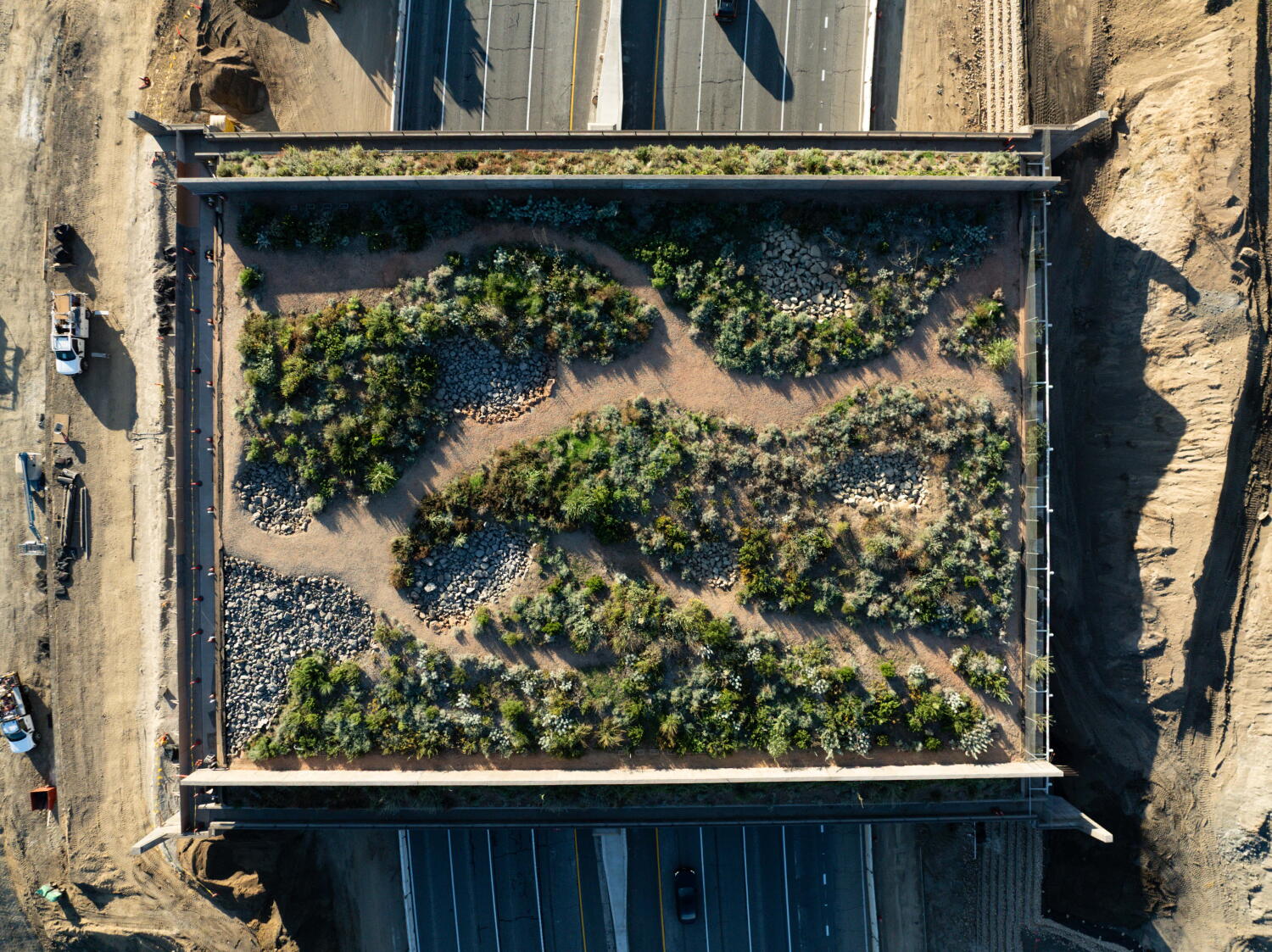
Southern California traffic doesn't care about mountain lions, bobcats, or local ecology. Ten lanes of roaring asphalt on the 101 Freeway in Agoura Hills have carved a permanent concrete barrier through the region, isolating populations and threatening regional biodiversity. For years, experts warned that local genetic pools were shrinking toward collapse.
Enter the Wallis Annenberg Wildlife Crossing. Spanning roughly 175 feet by 320 feet, this massive structure is sprinting toward a December 2 opening date. It's designed to heal a fragmented landscape by reconnecting the Santa Monica Mountains to larger natural areas up north. Yet, as the final layers of native soil and plants go in, Mother Nature is throwing a wrench into the timeline. Weather unpredictability and climate patterns like El Niño threaten to disrupt the home stretch of this multi-million dollar engineering feat. You might also find this similar story useful: Why Emmanuel Macron Blaming Donald Trump For French Riots Misses The Point Completely.
The Battle Against the Clock and Weather
Heavy winter storms back in 2022 and 2023 already pushed back the schedule. When torrential rains hammer grading sites and hillside installations, construction grinds to a halt. Mudslides, erosion risks, and saturated earth make placing delicate native vegetation nearly impossible.
People often forget that building a wildlife bridge isn't just about pouring concrete. Crews have laid down tons of specialized earth, planting dozens of native species sourced from a tiny five-mile radius. If heavy downpours hit right before the ribbon-cutting, young root systems wash away before they can anchor. The project isn't just racing political skepticism anymore; it's racing the skies. As extensively documented in recent reports by The Guardian, the implications are worth noting.
Why This Crossing Is Worth Every Dollar
Critics love to label massive public works as boondoggles. But look at the numbers and the biology. The local mountain lion population faces severe inbreeding depression due to the concrete moat of the 101 Freeway. Without fresh genetic lines, extinction in the Santa Monica Mountains is a matter of when, not if.
This bridge changes the equation. It provides a continuous, landscaped corridor complete with native shrubs, trees, and acoustic-dampening walls to block headlights and noise. Animals won't just stumble across it by accident; they'll follow carefully integrated topography designed by landscape architects who mapped everything from soil microbes to apex predators.
What Happens After the Ribbon Cutting
Finishing construction on December 2 doesn't mean animals instantly flood across the bridge. Nature moves at its own pace. Wildlife experts note that it takes months, sometimes years, for shy species like bobcats and deer to trust new man-made structures.
Camera traps will monitor every square inch of the crossing once it opens. Scientists expect initial scouts—mostly coyotes and smaller mammals—to test the waters first. Mountain lions will take longer, sizing up the unfamiliar smells and lack of vehicle noise before daring to cross.
If El Niño stays away long enough for the crews to lock down the final phase, Southern California will claim a monumental conservation victory. Check the live cameras online, track the milestone dates, and watch how concrete and conservation finally meet in the middle.