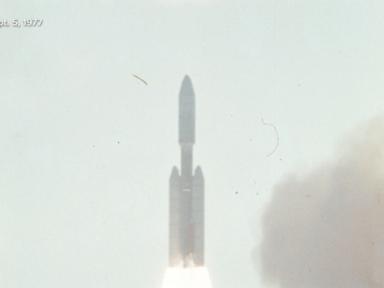
Forty-eight years ago, humanity flung a pair of copper-and-gold time capsules into the dark. Today, one of those scraps of engineering is hurtling through interstellar space at roughly 38,000 miles per hour, over fifteen billion miles from Earth. That craft is Voyager 1.
Most people assume space probes quietly shut down after a few years when their budgets run out or batteries die. Voyager 1 shatters that assumption daily. Even now, decades past its original design life, engineers at NASA's Jet Propulsion Laboratory are still troubleshooting code written in the 1970s, beaming patches across a void that takes light nearly a full day to cross.
Space isn't empty. It's filled with hostile radiation, magnetic anomalies, and subatomic debris that slowly eat away at electronics. Yet, Voyager keeps pushing forward, sending back faint whispers of data that rewrite our understanding of the heliosphere's edge.
The Reality of Operating a Machine in Interstellar Space
You can't just send a service technician to fix a thruster when you're billions of miles away. Every single problem requires a masterclass in deep-space forensics.
Think about the architecture. We're talking about computer memory measured in fractions of a megabyte. Modern smartphones possess millions of times more processing power than the entire flight system guiding a craft through the interstellar medium. When a memory glitch crippled one of Voyager 1's flight data subsystems, teams had to dig through paper archives of code documentation yellowed by age because the original engineers had long since retired or passed away.
Fixing it took months of agonizing calculation. You issue a command, wait nearly 45 hours for a round-trip confirmation, and hold your breath. When the fix finally took hold, it proved something profound about human ingenuity. We build things that outlast our own expectations because necessity forces absolute precision.
Why the Milestone Actually Matters
Headlines about milestones sound routine until you break down the physics. Voyager 1 isn't just far away; it has crossed the termination shock and entered the local interstellar medium. It samples plasma density, magnetic field strength, and cosmic rays from outside our solar system's protective bubble.
Before Voyager, scientists relied on theory and remote observation to guess what waited at the edge of interstellar space. Now we have direct telemetry. We know the pressure of the interstellar wind is pushing back against our sun's solar wind in ways models didn't fully predict.
This isn't just about cosmic trivia. It maps the galactic neighborhood we inhabit. If you want to understand how star systems interact with the broader galaxy, Voyager 1 is our only set of eyes and ears currently stationed outside the fence.
The Clock is Ticking
Let's be realistic. Voyager 1 won't last forever. Its nuclear power source, a radioisotope thermoelectric generator, is steadily decaying. Every year, it produces less electrical current, forcing mission operators to shut down critical science instruments one by one to conserve power. Heaters have been turned off. Thrusters once used for orientation have degraded, forcing engineers to switch back to thrusters dormant for nearly four decades.
Within a few years, the power will drop too low to sustain any active instruments. The radio transmitter will fall silent. Voyager 1 will become a ghost ship, a silent metallic ghost drifting endlessly toward other star systems, bearing a golden record meant for ears that may never exist.
That finite timeline is precisely why every single day of data we get right now feels so urgent. We are watching the twilight of a masterpiece of engineering.
Stop taking these transmissions for granted. Every ping from the edge of the solar system is a reminder that we figured out how to touch the stars with tools made of vacuum tubes and audacity.