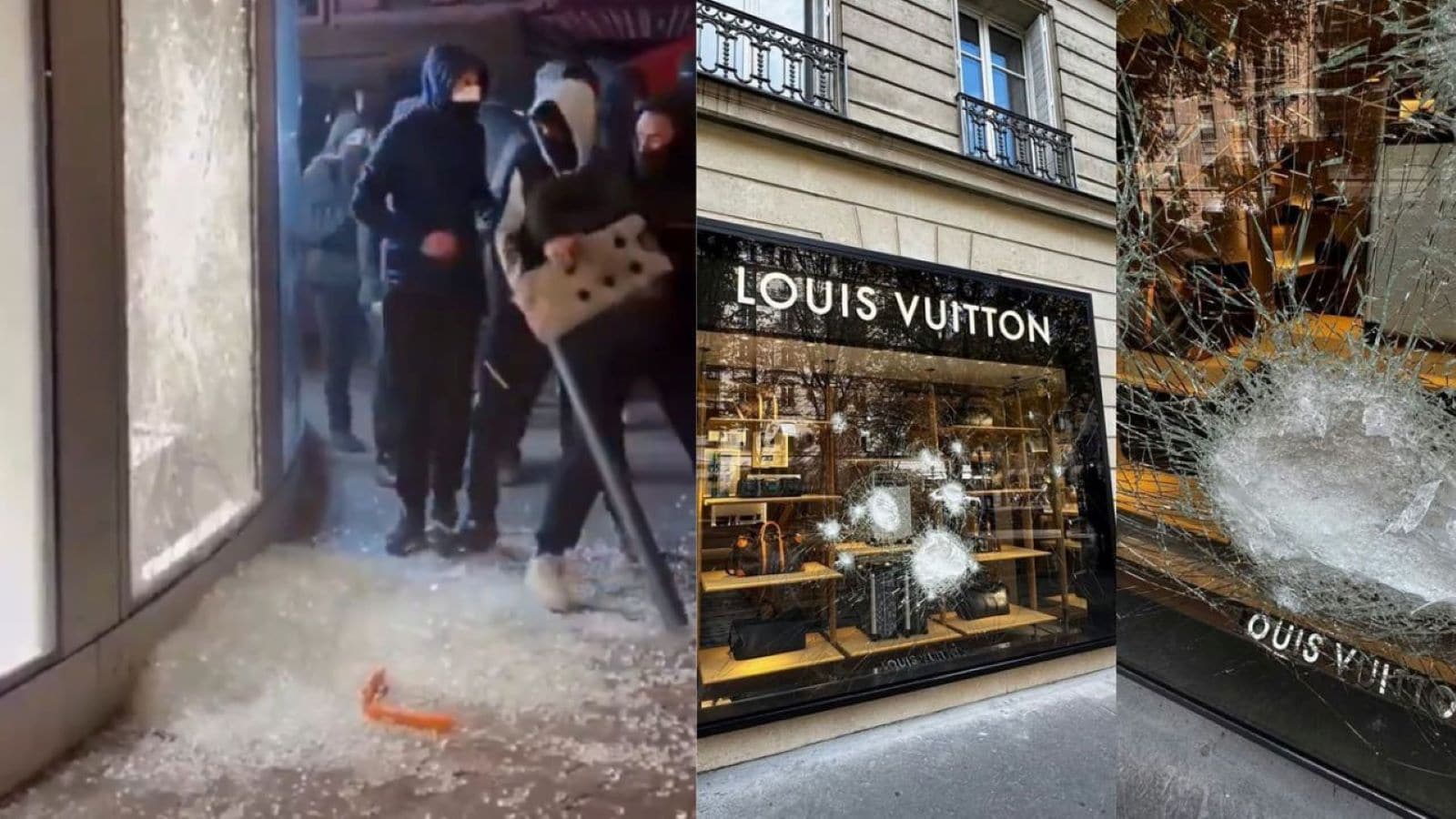
Social media loves a good underdog story, especially when it turns a chaotic street protest into free advertising. Last month, during intense demonstrations in Paris, a luxury boutique window took a severe beating from masked individuals wielding metal road barriers. The glass cracked heavily, spiderwebbing under repeated blows, but it refused to break completely. The looters gave up and walked away empty-handed.
Almost immediately, the internet did what the internet does best: it ran with a narrative that made for great viral content. Posts exploded across X and TikTok claiming that an obscure Chinese manufacturer had inadvertently scored the marketing win of the century by supplying unyielding, "riot-proof" security glass to high-end French storefronts.
Except reality is a bit more complicated than a viral caption.
Unpacking the Viral Claims
The footage itself is real, captured during demonstrations across France on October 17. Thousands took to the streets, and storefront security faced severe tests in several commercial districts. When videos circulated of heavy objects bouncing off shattered yet intact window panes, online commentators started hunting for the mastermind behind the product.
Accounts pointed fingers at a lesser-known Chinese supplier, spinning tales of brilliant guerrilla marketing where a factory supposedly watched its product withstand European unrest and immediately capitalized on the clip. It sounds like a brilliant corporate fable. It also happens to ignore how high-end commercial architecture actually works in major European capitals.
Fact-checkers and open-source investigators quickly pointed out major holes in the viral narrative. First, the storefronts featured in many of the widely shared clips belong to complexes like the Westfield Forum des Halles in Paris. Major commercial hubs of this scale rely heavily on established European glass giants—such as France's own Saint-Gobain or regional heavyweights—that have supplied certified laminated and burglary-resistant architectural glass to European retailers for decades.
The specific company named in many viral posts lacked a verifiable corporate footprint or official connection to the boutique installations. The trail often led not to an industrial manufacturer's official landing page, but to independent social media accounts and commentators repurposing footage for engagement.
Why Laminated Security Glass Actually Works
You don't need magic bulletproof tech from a foreign startup to stop a brick. Modern commercial architecture relies on physics and layered polymers.
Storefront security glass like the kind installed in high-risk retail areas isn't a single thick pane of regular window glass. It is structural laminated glass, often built to strict European standards like EN 356 for burglary and attack resistance.
- Multiple Layers: The pane consists of several sheets of glass bonded tightly together with high-strength polymer interlayers, such as polyvinyl butyral.
- Controlled Fracture: When struck with a heavy object like a metal bar, the glass breaks. In fact, it's supposed to break. The outer layer shatters to absorb and dissipate the kinetic energy of the blow.
- The Retention Core: Even though the glass looks completely ruined with a spiderweb of cracks, the inner plastic interlayer holds the shards in place.
This means an attacker has to punch through layer after layer of bonded material while the pane flexes and absorbs the shock. It creates an exhausting, time-consuming barrier that frustrates smash-and-grab thieves who rely on quick entry.
The Danger of Unverified Social Media Lore
This entire episode highlights a growing problem in modern digital culture. A striking visual goes viral, an anonymous account slaps an unverified brand name onto it, and millions of people accept the story as absolute truth without checking the source.
Social media algorithms reward speed over accuracy. A clever hook about an underdog Chinese factory outsmarting European luxury standards generates massive engagement. The truth—that commercial real estate uses heavily regulated local supply chains built over years of engineering standards—doesn't pull the same numbers.
Next time you see a viral video claiming a random company accidentally won the marketing jackpot through a civil disturbance, take a moment to look past the caption. Good security engineering isn't an accident, and viral posts rarely tell the whole story.