When Hakainde Hichilema took the oath of office for his second term as Zambia's president, the celebration was entirely overshadowed by prison gates and police sirens. Security forces stood watch while opposition figures remained locked away, facing treason charges rather than political debate. Hichilema won roughly 60 percent of the vote in the August 2026 general election, defeating challenger Brian Mundubile. Yet, the official inauguration on September 1st felt less like a triumph of the ballot box and more like a warning shot to anyone daring to challenge the ruling party.
If you expected a straightforward victory lap from a leader who initially swept to power in 2021 promising democratic renewal, look closer. The reality on the ground exposes deep fractures in one of southern Africa's most stable political systems. If you found value in this post, you might want to look at: this related article.
The Turning Point on Election Night
The trouble started almost immediately after the polls closed on August 13th. While international observers from the European Union noted that voting day itself was largely peaceful, they pointed out a heavily skewed playing field that limited fundamental freedoms long before citizens cast their ballots.
Then came the explosive turn of events. Within twenty-हार of the initial count, security forces conducted a dramatic raid on a property linked to Brian Mundubile. The violent confrontation resulted in the death of Mutotwe Kafwaya, a former transport minister and opposition member, alongside the immediate arrest of eleven opposition figures. For another look on this development, see the recent coverage from USA.gov.
Vote counting ground to a halt as election officials pointed to escalating violence at polling stations and stolen ballot papers. Critics accused the electoral commission of pausing the count to manipulate results, while international groups watched in mounting alarm. Hichilema ultimately secured victory with about 60 percent of the valid votes, while Mundubile captured roughly 38 percent in his first presidential bid.
Cracking Down on Dissent
Zambia has long prided itself on being a beacon of peaceful transfers of power since returning to multiparty democracy in 1991. However, this election cycle tested those democratic norms to their absolute breaking point.
Mundubile and his Tonse-Pamodzi Alliance attempted to challenge the election results legally, but the legal avenues vanished. Courts effectively closed for election appeals, and the opposition leader was prevented from filing formal disputes. Instead of heading to court, Mundubile faced a barrage of legal trouble, ultimately getting charged with treason after a brief period in hiding.
Human rights advocates didn't hold back their criticism. Gina Romero, the United Nations Special Rapporteur on the right to peaceful assembly, urged authorities to release all political detainees immediately and restore basic democratic accountability. Prominent figures like Sudanese-British billionaire businessman Mo Ibrahim warned that the turmoil directly threatened Zambia's hard-earned reputation for respecting constitutional processes.
The Economic and Geopolitical Stakes
Why did the political climate turn so toxic? Beyond domestic political ambitions, copper-rich Zambia sits at the center of fierce international competition. Both China and the United States view the nation's critical minerals as vital assets for global supply chains and technology manufacturing.
Hichilema built his first campaign in 2021 around fixing a crippled, debt-ridden economy. While he has made strides in debt restructuring and attracting foreign interest, everyday citizens still struggle with lingering economic hardships. Those frustrations fueled Mundubile's unexpectedly strong showing at the polls, catching the ruling party off guard and triggering a severe defensive reaction from the state apparatus.
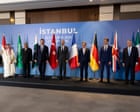
When regional leaders like Kenyan President William Ruto, Botswana President Duma Boko, and Zimbabwean President Emmerson Mnangagwa attended the September inauguration, their presence signaled vital regional backing for Hichilema. That kind of strong diplomatic support from neighbors often shields incumbent governments from heavier international penalties, leaving local opposition movements with very few places to turn.
What Comes Next for Zambian Politics
Zambia's political trajectory now stands at a dangerous crossroads. If the state continues to use heavy-handed policing, military deployments during vote counting, and treason charges against political rivals, the country risks sliding backward into authoritarian habits.
You cannot claim to champion a vibrant multiparty democracy while locking up your main competitors in maximum-security prisons. True stability requires open competition, independent judiciaries, and absolute respect for the rule of law. Hichilema stated during his inauguration speech that political competitors remain an important part of the nation's democracy. Actions, however, speak louder than carefully scripted rhetoric. Until political detainees walk free and courts reopen their doors to fair appeals, the shadow over Lusaka will only grow darker.
Zambia election: President to be sworn in as opponent sits in prison
This video provides an on-the-ground report regarding the contentious swearing-in ceremony of Zambian President Hakainde Hichilema while his primary political rival remained imprisoned.
http://googleusercontent.com/youtube_content/1