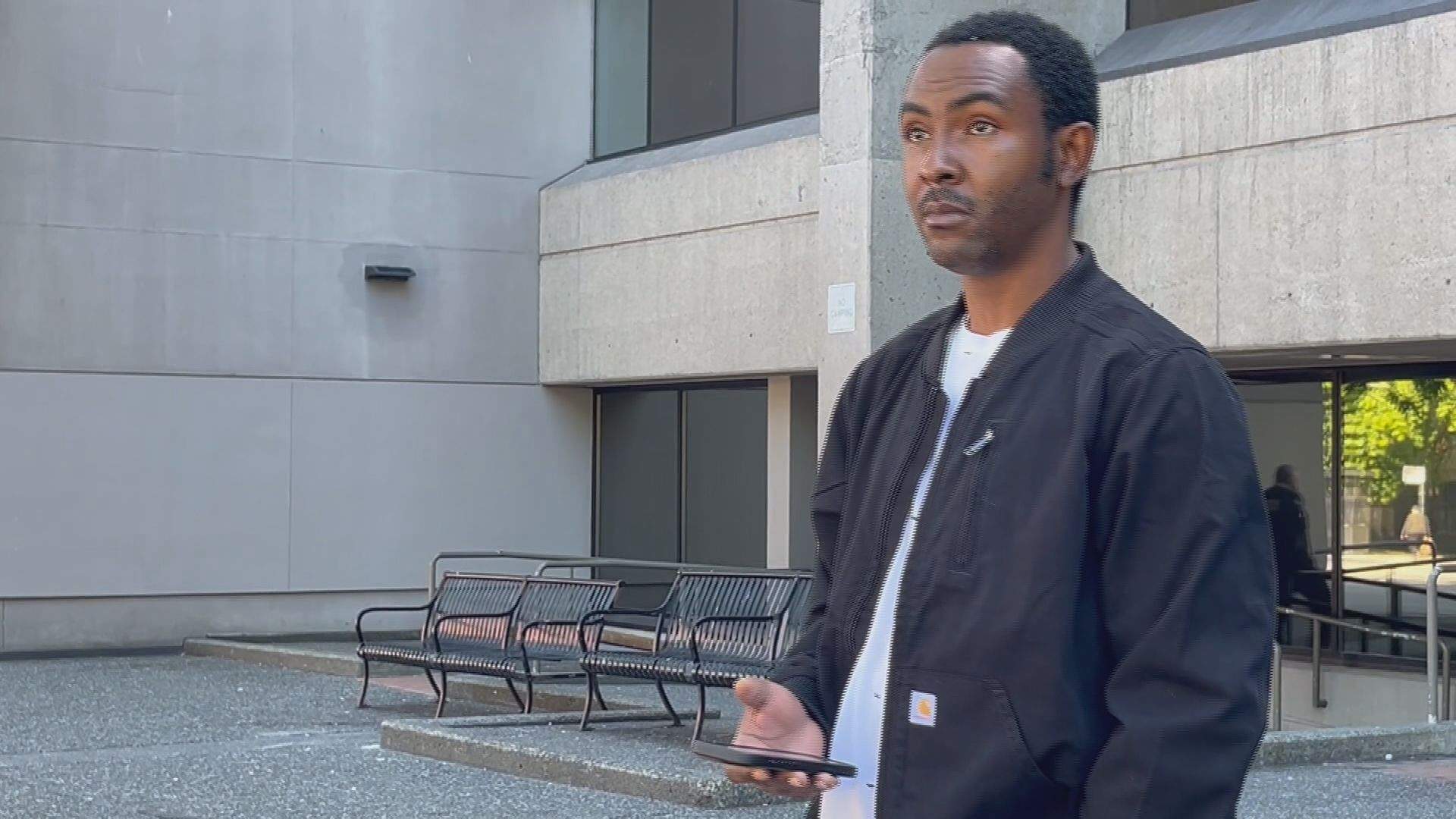
Midnight on a world-famous urban waterfront is supposed to feel serene. Instead, for a visitor from Toronto walking back from Stanley Park along Vancouver's Coal Harbour seawall, April 15, 2025, turned into a nightmare of pure survival.
When Peterhans Nungu received a sixteen-month conditional sentence followed by twelve months of probation after pleading guilty to assault causing bodily harm, the legal outcome ignited immediate anger. People across the country looked at the brutal facts of the attack and asked a very simple question. How does a violent stranger assault that leaves a victim with a concussion, severe facial bruising, torn clothing, and memories of a shattered phone result in community service instead of prison time?
To understand why this case concluded the way it did, you have to look past the headline numbers and examine the messy intersection of Canadian sentencing law, mental health struggles, and the harsh realities of urban safety.
The Terrifying Reality of the Attack
The details read like a horror film script. Shortly after midnight, the victim was simply walking along the Coal Harbour stretch of the seawall. Nungu approached her, tried striking up a conversation, and instantly took offense when she ignored him and kept walking.
What followed was a relentless pursuit. Nungu didn't just walk away; he chased her down, hurled verbal abuse, and violently threw her to the ground. When she managed to get up and tried calling emergency services, he closed the distance, smashed her phone into the pavement to cut off her lifeline, and dragged her back down.
Closed fists hammered her head and face. She screamed for help while kicking desperately. Breaking free for a brief moment, she sprinted toward the safety of her hotel, but Nungu caught her again and hurled her hard against a concrete planter. She lost consciousness. When she woke up, her attacker was tearing at her clothing.
Bystanders finally intervened, pulling Nungu off the victim and holding him until police arrived. Hospital records showed immediate, severe injuries: golf ball-sized bruises on her forehead and cheek, lacerations across her nose and eyebrow, deep hand cuts, and an eye swollen completely shut.
When a violent encounter leaves someone physically battered and emotionally traumatized, the public expects a heavy hammer from the courts. That expectation collided violently with Canadian criminal procedure when the sentence was handed down.
Breaking Down the Conditional Sentence
Conditional sentences shock people who don't spend their lives inside courtrooms. Hearing that an offender convicted of a brutal assault gets to serve their time in the community feels like a slap on the wrist to victims and onlookers alike.
In Canadian law, a conditional sentence is a prison sentence served in the community under strict conditions rather than behind bars in a provincial or federal institution. It is not an acquittal. It is not probation. It is a jail sentence that permits the offender to live at home under curfews, travel restrictions, treatment mandates, and supervision.
Judges look at several legal pillars before handing down a conditional sentence. They weigh denunciation, deterrence, and rehabilitation. In Nungu's case, the defense initially argued for a ruling of not criminally responsible due to a mental disorder. While that specific legal argument didn't ultimately result in an NCR ruling, mental health context heavily influenced how the courts viewed his culpability and future risk.
Police reports noted that while in custody, Nungu had spoken gibberish for several minutes before giving a coherent statement and admitting to the assault. When a defendant struggles with severe psychological issues, the Canadian justice system often leans toward supervised community treatment combined with strict oversight rather than warehousing individuals in overcrowded penal institutions without adequate psychiatric care.
Yet, this theoretical balance between punishment and rehabilitation frequently fails to comfort victims whose lives have been upended. The psychological toll of wondering if your attacker is walking the same streets you visit leaves permanent scars that no conditional supervision order can heal.
The Mental Health Defense Dilemma
Mental illness in the criminal justice system creates an ongoing public debate without easy answers. Defense counsel pushed early in the proceedings for a finding of not criminally responsible, pointing to mental health disorders that compromised Nungu's capacity to understand the nature of his actions at the time.
An NCR ruling means an accused person is sent to a psychiatric hospital rather than prison until a review board determines they no longer pose a significant threat to public safety. When that defense path pivots to a guilty plea, as it did when Nungu pleaded guilty on November 10, the court must navigate a delicate middle ground.
He offered an apology outside court, stating he was doing much better and vowing that the incident would never happen again. For the victim and the public, apologies ring hollow when compared against the raw violence of the attack.
Critics argue that mental health struggles should explain behavior without excusing violent harm against innocent strangers. If someone suffering from an acute mental health episode poses an active, physical danger to the public, public safety must take precedence over community-based rehabilitation experiments. The courts struggle constantly with this tension. They must apply constitutional principles, Supreme Court precedents on sentencing restraint, and statutory guidelines that prioritize non-custodial options for non-violent or mid-level offenses where rehabilitation appears possible.
Urban Green Spaces and the Illusion of Safety
Vancouver sells itself to the world as a paradise of natural beauty. Stanley Park, the seawall, and the endless miles of accessible waterfront are cultural treasures. Millions of tourists walk these paths every year without a second thought.
Midnight strolls along the water feel safe because the environment looks peaceful and civilized. That perception creates a dangerous false sense of security. Urban parks and waterfront pathways become isolated corridors after dark. Lighting drops, pedestrian traffic vanishes, and emergency response times stretch out when seconds matter most.
Random stranger attacks in major Canadian cities have surged over recent years, fueling widespread anxiety about urban safety. People are asking hard questions about city planning, municipal policing, and social support systems that fail to catch individuals falling through the cracks of society before they turn violent.
When a tourist from Toronto experiences a brutal assault on a world-famous Vancouver landmark, the reputational damage to the city matches the personal trauma inflicted on the victim. Visitors expect basic security in high-traffic tourist zones. When cities fail to guarantee that baseline, the public reaction turns bitter.
Navigating Personal Safety in Public Spaces
You cannot control the mental state of strangers you pass on a dark street, but you can change how you move through urban environments. Relying blindly on the peaceful atmosphere of a city landmark after midnight is a gamble you shouldn't take.
If you travel or explore urban centers late at night, keep these practical rules in mind:
Stick to well-lit, high-traffic commercial corridors after dark. Seawalls and secluded park trails lose their safety buffers the moment foot traffic drops to zero.
Keep your phone accessible, charged, and functional, but avoid walking with both headphones clamped over your ears. Situational awareness remains your best early warning system. If someone makes you uncomfortable, cross the street, enter a brightly lit business, or head toward a populated area immediately.
Never assume an iconic tourist destination is monitored or patrolled simply because it attracts thousands of visitors during daylight hours. Once midnight hits, many of these zones become entirely deserted.
If you find yourself confronted by an aggressive stranger, create distance instantly. Do not engage in arguments, do not stop to negotiate, and scream loudly to draw immediate attention from any nearby buildings or passing vehicles.
The Search for True Accountability
The legal chapter on this seawall assault is technically closed with Nungu's conditional sentence and probation terms. But the broader societal debate is wide open.
When a system prioritizes the rehabilitation of an offender over the absolute security of innocent citizens, faith in public institutions erodes. Victims are left carrying the physical and psychological wreckage while perpetrators return to the community under supervision.
Public safety requires a justice system that balances compassion with uncompromising protection for the public. Until policymakers and courts align sentencing practices with the real-world fear experienced by everyday citizens walking down public streets, cases like this will continue to trigger profound public anger.
Take responsibility for your own awareness when walking alone after dark. The streets aren't always as safe as the brochures claim, and trusting your instincts is often your only reliable defense.