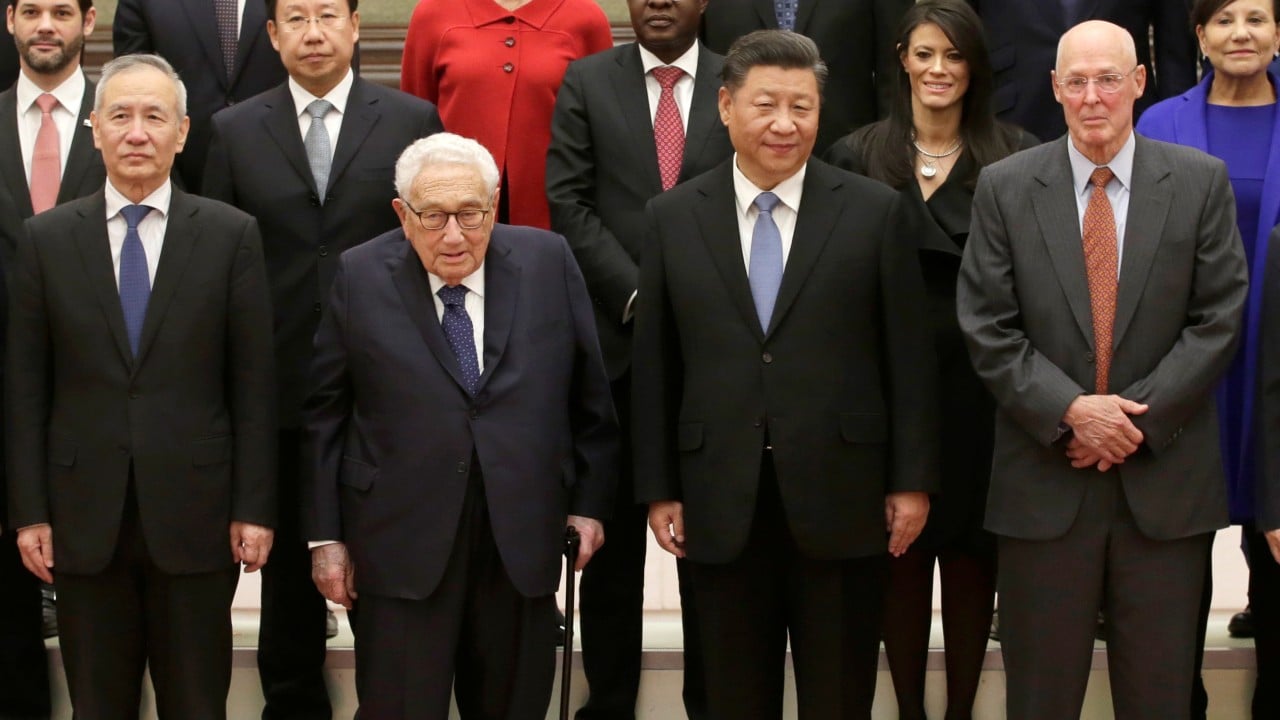
The era of backchannel diplomacy managed by single, larger-than-life statesmen is officially dead. For decades, the bilateral connection between Washington and Beijing relied heavily on the personal weight of figures like Henry Kissinger, who could fly between capitals and cut through bureaucratic paralysis. That old playbook doesn't work anymore. Academic and expert gatherings, such as the recent China-US Intergenerational Dialogue, have made it clear that institutional memory is vanishing fast.
If you look at the current state of affairs, a severe shortage of American China experts matches an equally rigid wall of mistrust on the other side. Academic exchanges are shrinking, visa restrictions are tightening, and universities in the West are scaling back joint research programs under political pressure. Relying on nostalgic memories of the 1970s is a trap. We need a completely different pipeline of talent to keep superpower friction from turning into outright catastrophe.
The Death of Elite Backchannel Diplomacy
Old-school diplomacy used to mean a handful of elite handlers managing the temperature of the Pacific. It was centralized, secretive, and heavily dependent on personal trust. Today, that structure is a liability. Domestic politics in both countries punish anyone perceived as too soft or cooperative.
When political survival depends on taking a hardline stance, communication breaks down. We've replaced seasoned analysts with noisy partisan commentators who treat international relations like a spectator sport. Without quiet rooms where honest technical assessments can happen, misunderstandings snowball into trade wars and military posturing.
Consider how tech policy operates right now. Export controls on advanced semiconductors and artificial intelligence models are drawn up by legislators who often don't understand the supply chains they are trying to break. They act on worst-case assumptions because the specialists who actually understand how Chinese and American labs collaborate have been sidelined or silenced.
Why Institutional Knowledge Is Disappearing
The talent pipeline is drying up at both ends. On the American side, enrollment in advanced Mandarin programs has dropped, and young scholars hesitate to specialize in Chinese studies because funding is scarce and career paths are politically fraught. Who wants to spend a decade studying a region only to find themselves targeted by congressional committees for academic exchanges?
On the Chinese side, young professionals face a similar chilling effect when engaging with Western institutions. Mutual suspicion treats every joint seminar or fellowship like a potential espionage vector. When you criminalize curiosity, you end up with two populations that only view each other through state-approved media filters.
This creates a dangerous echo chamber. Policymakers on both sides are flying blind, relying on outdated stereotypes rather than on-the-ground intelligence. If your only source of information about a rival power is a threat assessment brief written by someone who has never lived there, your decisions are going to be fundamentally flawed.
Training the Next Crop of Track 1.5 Intermediaries
Fixing this mess requires decentralizing diplomacy. We can't wait for another mastermind to emerge from the upper echelons of power. Instead, we need a massive reinvestment in Track 1.5 and Track 2 diplomacy—structured, semi-official dialogues involving scientists, business leaders, economists, and mid-career academics.
These new intermediaries don't need to rewrite global security pacts. They need to solve boring, practical problems. Think about climate change data sharing, common safety frameworks for artificial intelligence, and maritime safety protocols. These are areas where cooperation is mandatory for survival, yet political grandstanding keeps getting in the way.
Universities and independent foundations must step up to protect independent researchers. If we don't shield young scholars from political crossfire, we will raise an entire generation of experts who only know how to yell across a digital divide.
Moving Past Conflicted Co-Dependency
Economists often describe the modern economic relationship as a conflicted co-dependency. Neither economy can decouple cleanly without taking massive damage, yet both sides keep trying to build economic walls. Pretending that total separation is possible is a delusion.
The practical reality is that supply chains are tangled, research is interconnected, and global challenges do not respect national borders. Pretending otherwise just hurts consumers and slows down innovation.
We need to empower professionals who can navigate this complexity without ideological blinders. Stop waiting for politicians to fix the climate between Washington and Beijing. The real heavy lifting will be done by engineers, academics, and operators who refuse to let political theater destroy functional communication. Support cross-border research, protect language programs, and keep the channels open before the current silence hardens into something permanent.