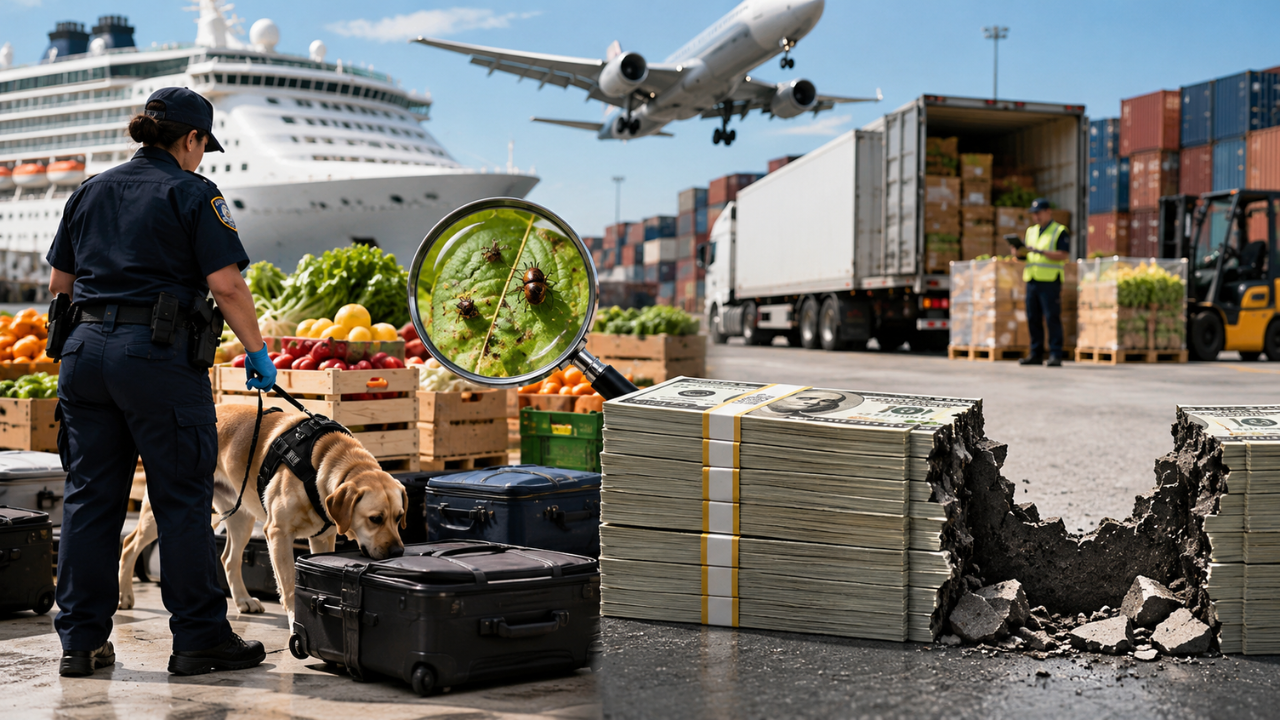
When the federal government drops over eight hundred million dollars on border security and agricultural quarantine, you assume the system pays for itself. Back in 2011, reality looked a whole lot messier. The United States spent $861 million inspecting travelers and cargo for foreign agricultural pests, yet ran a staggering $325 million funding gap.
How does a massive federal program run up such a glaring shortfall? It comes down to a toxic mix of outdated statutory limitations, administrative slip-ups, and collection failures that left taxpayers footing the bill for bugs.
The Structural Flaw in Border Fee Collection
The core issue wasn't a lack of trying. It was a failure of the law. Jointly administered by the US Department of Agriculture (USDA) and Customs and Border Protection (CBP), the Agricultural Quarantine Inspection (AQI) program exists to keep invasive pests out of American soil. But the Animal and Plant Health Inspection Service (APHIS) operated under strict statutory handcuffs.
Federal law simply didn't let the government charge every person entering the country. Pedestrians walked across borders scot-free. Commercial buses, private vessels, and private aircraft enjoyed legal exemptions that blocked authorities from recovering passenger inspection costs.
Worse yet, APHIS often chose not to collect small fees from certain groups, deciding the administrative headache outweighed the revenue. When you legally restrict an agency from charging key operators, deficits aren't a surprise. They're guaranteed.
The Cost Split Mismatch Between Agencies
Running a massive inspection apparatus takes coordination, but the financial plumbing between APHIS and CBP was broken. Back in 2005, the two agencies agreed to split AQI fee collections based on their actual share of program costs. By 2011, that agreement was completely ignored.
CBP handled the heavy lifting, taking on more than 80 percent of total program costs at ports of entry. What did they get in return? Just 60 percent of the fee collections. Meanwhile, APHIS incurred a modest 19 percent of the costs yet retained 36 percent of the revenue.
CBP had to cover that massive multi-million dollar discrepancy out of its own annual appropriations. APHIS, on the other hand, sat on cash reserves intended to weather economic downturns, keeping funds padded well beyond standard safety margins while sister agencies bled cash.
Missed Railcar Fees and Lax Oversight
Administrative sloppiness compounded the statutory mess. According to Government Accountability Office findings, APHIS failed to collect AQI fees for railcars according to its own written regulations. That single oversight cost the government $13.2 million in 2010 alone.
CBP didn't fare much better. The agency possessed the tools to verify and enforce fee collections for commercial trucks, private aircraft, and private vessels, but leadership didn't mandate their use. The exact annual revenue loss from those unverified transit categories remains unknown, which tells you everything you need to know about internal oversight at the time.
The Long Road to Regulatory Reform
Change in federal bureaucracy crawls at a glacial pace. It took until late 2015 for APHIS to finally publish a sweeping rule overhaul designed to capture missing revenue. Those updates removed old caps on commercial cargo vessels and railcars, adjusted truck fee structures, and slapped a $1.75 fee on cruise ship tickets.
Even after those reforms, the math didn't fully add up. Congress never handed the Secretary of Agriculture blanket authority to set fees covering the aggregate costs of all inspection services. Rail passengers stayed entirely exempt, leaving CBP to fund those inspections through standard taxpayer-backed appropriations.
Fixing government revenue shortfalls requires more than updating a rulebook every few decades. Until legislators give agencies the legal teeth to charge every transport category fairly, border agricultural defense will keep relying on taxpayer bailouts to fill the gap.