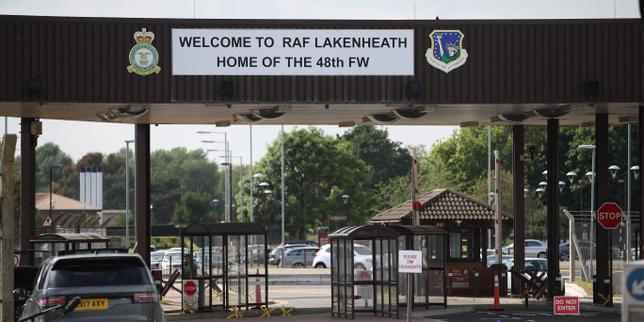
Security alarms blared across Suffolk on a Friday evening when suspected unauthorized drones began cruising over Royal Air Force Lakenheath. If you think military installations are completely immune to low-altitude aerial peeping, recent events prove you're dead wrong. The U.S. Air Force had to activate rapid security protocols, forcing personnel on the base to shelter in place while security forces tracked the unknown quadcopters.
No personnel, aircraft, or base infrastructure were harmed during the incident, but the alarm bells ringing through Western defense circles are deafening. This wasn't an isolated glitch or a hobbyist flying a Christmas present too close to a fence. It's part of a growing, highly stressful pattern of security breaches plaguing allied military assets across Europe.
Inside the Lakenheath Lockdown
When the alert dropped at RAF Lakenheath—a sprawling facility in eastern England hosting the U.S. Air Force's 48th Fighter Wing—protocols moved fast. Personnel were ordered to stay indoors while base security and British authorities coordinated a response. Local police and the Ministry of Defence jumped into action to figure out who was operating the unauthorized hardware overhead.
Local member of parliament Nick Timothy noted that while authorities confirmed no immediate threat to the public and resolved the immediate scare, the atmosphere around these bases remains tense. Why? Because this incident lands right on the heels of other high-profile security scares involving allied military real estate in the United Kingdom.
Just weeks earlier, the U.S. military felt compelled to shift aircraft and relocate refuelling assets from regional bases like Mildenhall and Fairford. Threats tied to broader geopolitical flashpoints—including rising tensions involving Iran—have pushed security commanders to treat every blip on the radar with maximum seriousness.
Why Drones Are Winning Against Traditional Base Defense
Protecting a multi-million-dollar fighter wing from a commercial drone flying at a few hundred feet sounds easy on paper. In practice, it's an absolute headache. Standard air defense systems are designed to track high-speed ballistic missiles or enemy fighter jets, not a consumer-grade quadcopter bought off a commercial shelf for a few hundred dollars.
Drones are small, quiet, and notoriously difficult to spot on traditional radar arrays when they hug tree lines or urban clutter. Even when you spot them, figuring out who's holding the controller on the ground is where things get messy. Are they hostile reconnaissance scouts probing base reaction times, or just careless vloggers looking for viral footage? Security teams basically have to treat every single sighting as a worst-case scenario until proven otherwise.
The Bigger Picture Nobody Wants to Talk About
Military analysts have warned for years that commercial unmanned aerial vehicles represent an asymmetric loophole. State actors don't need to fly stealth bombers over allied territory when they can potentially use off-the-shelf drones to map perimeters, test response times, or capture sensitive imagery of hangars and flight lines.
When you combine these aerial intrusions with recent trespass investigations at RAF Molesworth and alleged terror plots linked to RAF Fairford, a clear picture emerges. The perimeter defense playbook needs a complete rewrite. Bases that operated with relative peace for decades are suddenly on high alert, dealing with constant airspace violations that drain resources and test nerves.
Local authorities continue urging anyone near these sensitive sites to report suspicious behavior immediately. But until counter-drone tech catches up to the sheer volume of cheap commercial hardware flooding the market, expect more lockdowns, more scrambled security teams, and plenty of nervous moments on British soil.