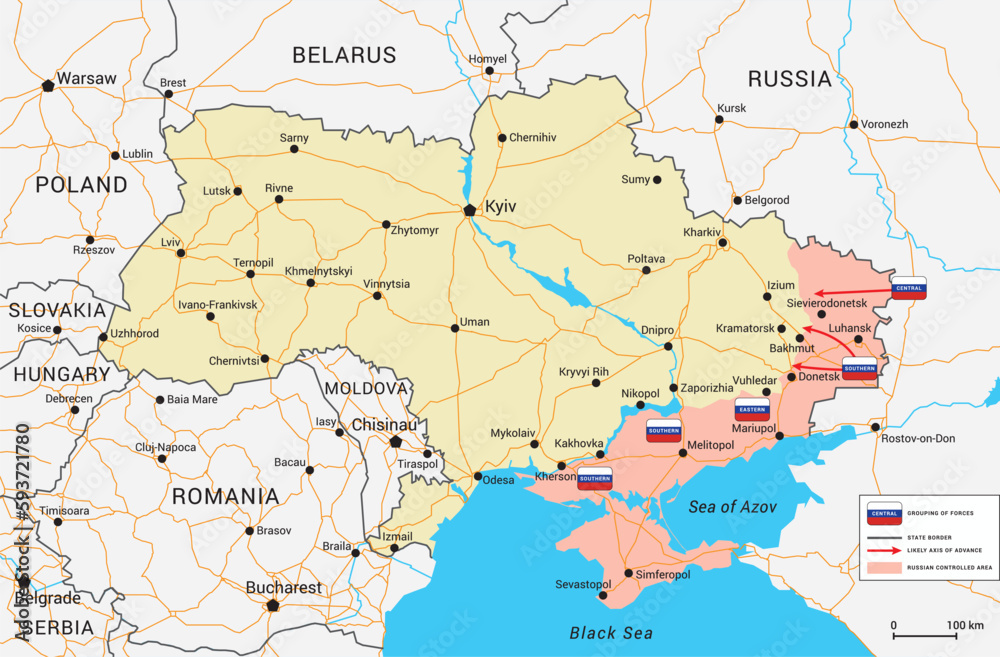
Modern warfare doesn't just happen in muddy trenches or over disputed border towns. It happens in server racks.
When Ukrainian long-range drones struck a major data center operated by Russian tech giant Yandex in the Ryazan region, it wasn't a random hit. It marked a brutal expansion of the conflict into Russia's digital core. For months, Moscow's missiles have hammered Ukrainian data hubs, telecommunications infrastructure, and energy grids. Kyiv is now returning fire in mirror-like fashion, targeting the high-performance computing power that drives Russia's domestic artificial intelligence and digital surveillance systems.
If you thought servers were safe from shrapnel, think again. The war has officially entered the cloud.
Why Yandex Became a Military Target
Yandex is often called Russia's Google, but that label misses the point. In a heavily state-monitored economy, tech platforms work hand in glove with government objectives. Yandex houses core applications, navigation networks, and digital services that everyday Russians rely on, while simultaneously fueling national artificial intelligence research.
The specific facility hit in Sasovo, Ryazan, wasn't just storing cat videos or backup files. It housed critical hardware, including supercomputers built around high-end Nvidia chips used to train large language models like YandexGPT. A day after that strike, another Yandex data hub in the Kaluga region southwest of Moscow took a hit and was partially disabled.
Yandex public relations teams scrambled to reassure customers, stating that workers were battling around the clock to keep services online. But behind the corporate spin, the vulnerability is stark. When your algorithms require massive computational power, you need massive physical buildings full of power-hungry servers. Those buildings have GPS coordinates. And drones have long ranges.
The Tit-for-Tat Escalation in Digital Infrastructure
President Volodymyr Zelenskyy made Kyiv's strategy explicit, noting that Ukraine responds in mirror-like fashion when infrastructure gets battered. Russian air campaigns have repeatedly targeted Ukrainian server farms and data hubs, knocking out internet connectivity for tens of thousands of households and forcing vital digital services offline.
This isn't a new playbook, but the targets are evolving. Earlier in the conflict, Ukrainian strikes focused on industrial warehouses belonging to major Russian e-commerce giants like Wildberries and Ozon to strain logistics. Now, the crosshairs have shifted directly to high-tech machinery.
When you strike a supercomputer facility, you aren't just breaking glass. You are choking off the domestic technological development that feeds automated military systems, logistics tracking, and state propaganda distribution.
Beyond the Server Room
The drone strikes on Yandex hubs didn't happen in a vacuum. They coincided with a broader wave of attacks targeting Russian missile production facilities and energy infrastructure. Overnight operations hit a missile component factory in the Tver region and a liquidation center for intercontinental ballistic missiles in Nizhny Novgorod. Further east, the Ukhta oil refinery belonging to Lukoil—sitting roughly 1,900 kilometers from the Ukrainian border—also absorbed hits.
Moscow's response follows its usual grim script, maintaining aerial bombardments on Ukrainian cities like Zaporizhzhia and striking cargo vessels in Black Sea ports. Both sides are playing a high-stakes game of economic attrition. Russia wants to freeze Ukrainians out of power and communication networks as winter approaches. Ukraine wants to prove that Russian territory, from oil refineries to AI supercomputing clusters, remains entirely exposed.
What This Means for the Future of Tech Warfare
We are watching a grim precedent unfold in real time. Critical digital infrastructure has lost its sanctuary status. For years, tech companies built sprawling data campuses under the assumption that physical borders and international norms would protect server farms just as they protect hospitals or schools.
That illusion is gone.
Data centers require immense amounts of electricity, cooling water, and physical land area. They are loud, hot, and impossible to hide from satellite imagery. As artificial intelligence becomes central to national security, logistics, and economic survival, the buildings housing those models become high-value military objectives.
If you are running a massive cloud provider or an AI lab anywhere near a geopolitical flashpoint, you are no longer just a commercial enterprise. You are a node in a national security network. And in modern conflict, nodes get targeted.