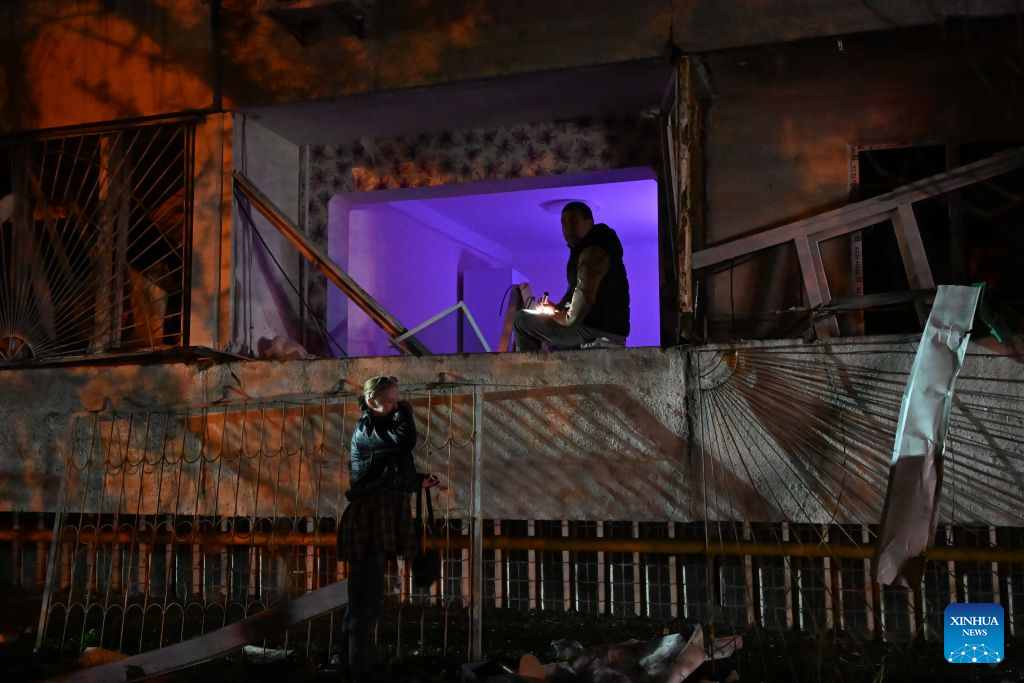
The skies over Kyiv have changed. For years, the drone war sounded like a swarm of angry lawnmowers—propeller-driven Shahed loitering munitions buzzing across the night sky, slow enough for mobile defense groups with heavy machine guns to track and shoot down. That era is fading fast. Russia has introduced high-speed, jet-powered strike drones, forcing Ukraine into a desperate, fast-moving race to redesign its air defense strategy before its energy grid collapses.
When a threat flies twice as fast and much higher, traditional counter-measures break down. You can't rely solely on slow propeller interceptor drones or expect manual mobile teams to track targets screaming across the horizon at hundreds of kilometers per hour. Ukrainian defense officials and domestic manufacturers have had to pivot overnight, scaling up production of new high-speed interceptor platforms like the Bars system, produced jointly with international partners, alongside experimental turbojet interceptors designed to match enemy speeds.
The Math Problem of Modern Air Defense
Warfare always comes down to simple economics. If an attacking force deploys an inexpensive jet-powered drone, the defending nation cannot afford to use million-dollar surface-to-air missiles to neutralize every single threat. Doing so drains national stockpiles within weeks.
Ukraine's answer relies on asymmetric economics: building interceptors that are cheap enough to scale yet fast enough to hit turbojet targets. Ukrainian military officials reported that units utilizing systems like the Bars interceptor have achieved high success rates in localized tests, bringing down multiple incoming high-speed targets in single engagements. Even so, the sheer volume of attacks means manufacturing needs to surge. President Volodymyr Zelenskyy recently noted goals to scale production significantly, aiming for hundreds of specialized interceptor drones per month to keep pace with the shifting front lines of technology.
Beyond the Propeller Era
The tactical shift isn't just about building faster flying machines; it's about altering how air defense networks operate under extreme pressure. While fighter jets like the F-16 and older MiG platforms still scramble to intercept fast-moving threats, relying solely on crewed aircraft is unsustainable for round-the-clock defense.
Ground-based units are adopting AI-assisted turrets, automated tracking optics, and high-speed small missiles to bridge the gap. Yet, challenges remain immense. Integrating these systems requires reliable communication links and constant adaptation as enemy manufacturers modify drone flight profiles, speeds, and radar signatures to evade detection.
The race in the skies above Eastern Europe serves as a brutal preview of modern aerial warfare. Speed wins, cost dictates sustainability, and waiting for perfection means losing cities. Ukraine's ability to manufacture, field, and adapt these high-speed interceptor networks over the coming months will dictate whether its critical infrastructure survives the winter.