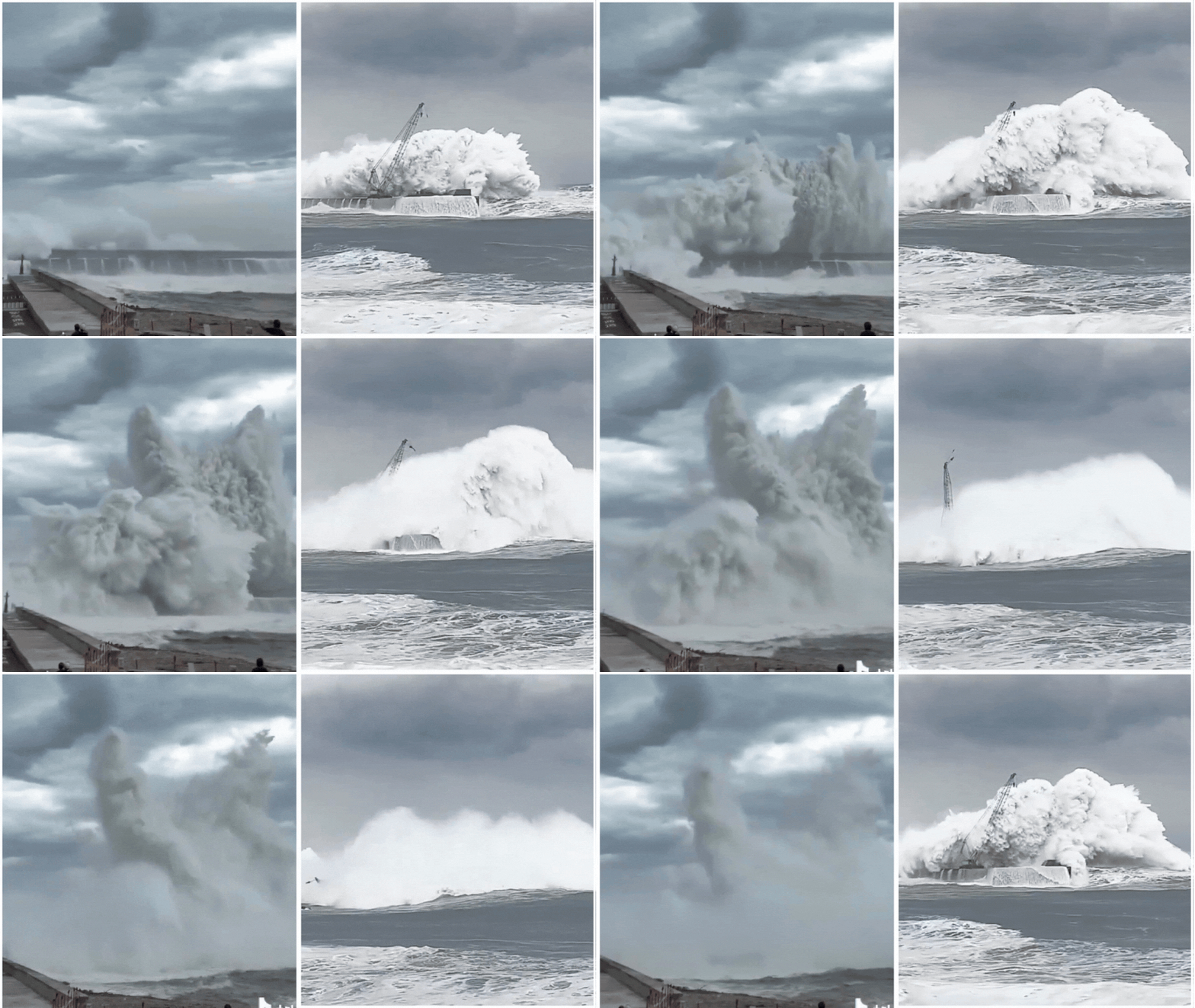
Massive walls of water slammed directly into Taiwan's eastern coastline as Typhoon Champi roared past the island. You don't realize the sheer power of the Pacific until you watch concrete breakwaters get tossed aside like children's blocks. When the storm finally cleared its immediate path toward the Chinese coast, the toll was grim: over 500 people injured and at least one life lost.
Storm tracking numbers only tell half the story. Champi entered the regional waters packing maximum sustained winds that once reached an astonishing 298 kilometers per hour. By the time it brushed Taiwan's northeastern tip, the Central Weather Administration clocked center gusts near 126 kilometers per hour. More dangerously, the system possessed an exceptionally wide wind radius. That meant relentless squalls didn't just hit and run; they lingered, punishing the island for hours on end.
The Human Toll and Infrastructure Shocks
Official tallies from Taiwan's fire department confirmed a tragic fatality on Liuqiu Island, where a man was swept away by rogue coastal surges. Beyond that tragic loss, 527 individuals sustained various injuries from flying debris, uprooted trees, and falls during heavy downpours.
Infrastructure took a massive hit too. Taipower, the state-owned electricity utility, reported that more than 167,000 households lost power at the height of the storm. Crews worked around the clock to restore lines, but the sheer volume of downed distribution poles slowed down recovery in mountainous regions.
Transportation practically ground to a halt. The transport ministry logged 242 flight cancellations on Saturday alone. That followed a chaotic Friday where airlines grounded nearly 1,000 flights as authorities issued severe weather warnings across Taipei and surrounding districts. Schools, offices, and financial markets shut down entirely. Over 2,600 residents living in vulnerable landslide-prone areas had to pack bags and evacuate before the worst bands arrived.
Why Champi Stunned Meteorologists
Typhoons in the western Pacific are common, but Champi's behavior baffled forecasters. Early atmospheric models suggested a potential direct landfall if the storm stalled near the eastern ridge. While it ultimately stayed just offshore—passing roughly 150 kilometers east of the island—its slow forward speed amplified its destructive potential.
When a cyclone slows down near a mountainous landmass like Taiwan, the friction alters the wind patterns while heavy moisture gets squeezed out against the central mountain ranges. That creates severe flash flood risks and gale-force winds that whip through urban canyons in Taipei with terrifying speed.
Footage shared widely online showed citizens struggling just to stand upright against fierce gusts, while towering ocean swells smashed over seawalls. Coastal highways turned into raging rivers of salt water and debris.
What Happens Next
Champi didn't stop at Taiwan. Meteorologists tracked the weakening storm as it curved north toward the Chinese coastline before charting a course for southern Japan's southwestern islands.
Taiwanese authorities handled the crisis with practiced efficiency. Decades of living with recurring natural disasters have baked strict protocols into local infrastructure, building codes, and emergency response frameworks. Without those robust early warnings and swift evacuations, the casualty count would have been much higher.
Nature reminds us constantly that engineering can only mitigate disaster, never prevent it. Keep an eye on local meteorological updates if you're traveling across East Asia during typhoon season. Always heed evacuation orders early.