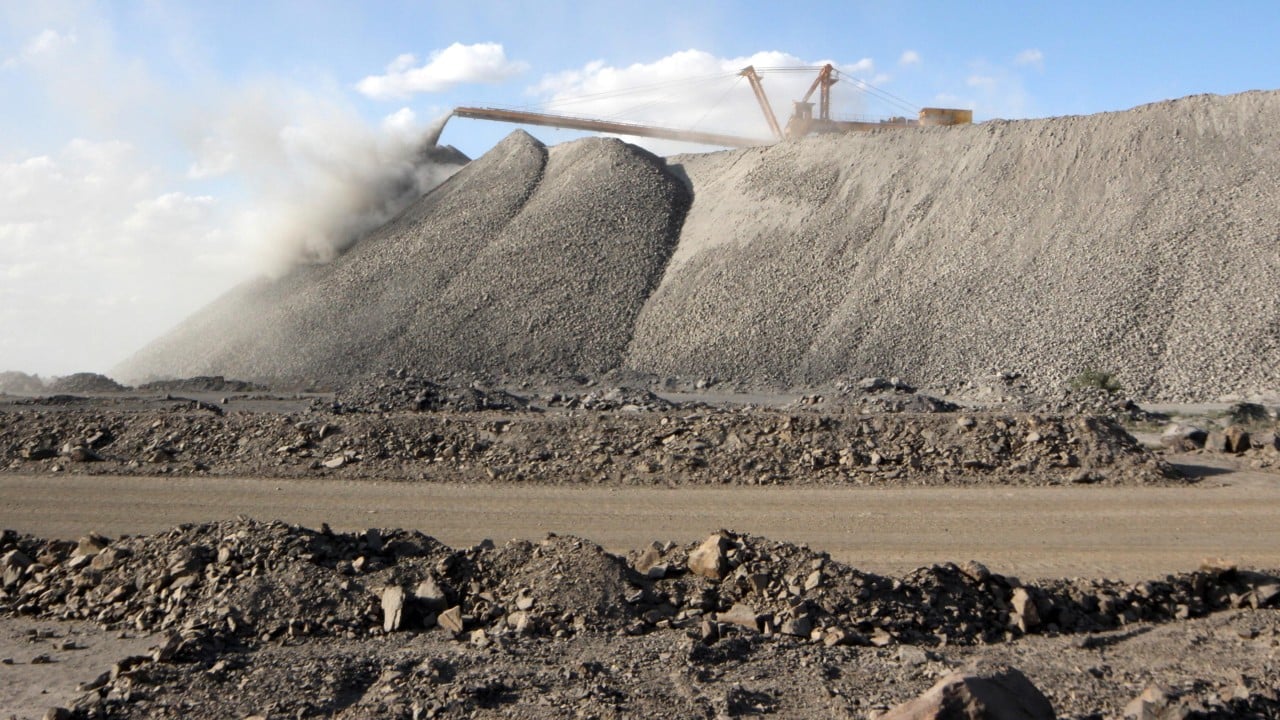
Everybody wants to talk about critical minerals right now, but few people understand the raw geological complexity sitting underneath central Turkey. When reports surfaced that Chinese geologists had carried out an in-depth investigation mapping the complex evolution of Turkey's Kızılcaören and wider Beylikova deposits, global resource markets took notice. Ankara claims this single region in Eskişehir province holds 694 million tons of ore, which would make it the second-largest rare earth reserve on earth behind China’s Bayan Obo.
If you look past the initial headline hype, the reality is far more complicated. Mineral reserves on paper don't automatically translate into active industrial supply chains. The geological makeup of the site involves a carbonatite-related structure rich in light rare earth elements alongside barite, fluorite, and trace amounts of thorium and uranium. Transforming that raw ore into high-purity individual oxides requires an aggressive midstream processing capability that most nations simply do not possess at scale. For an alternative perspective, consider: this related article.
Why the Kizilcaoren Deposit is So Difficult to Process
Extracting rare earth elements isn't like digging up gravel. The mineralogy at Beylikova and its associated Kızılcaören zones is notoriously stubborn. You're dealing with a complex matrix where valuable light elements like lanthanum, cerium, and neodymium are locked tightly inside rock formations alongside radioactive elements.
That radioactive presence is a massive hurdle. Because thorium and uranium naturally tag along with these rare earth minerals, processing licenses in Turkey sit under the direct purview of the Nuclear Regulatory Board. Operating a facility of this magnitude demands rigorous waste management frameworks. If you cut corners on environmental safety, public health disasters follow swiftly. Similar insight regarding this has been shared by Business Insider.
Beyond safety, the technological bottleneck is brutal. China currently dominates global rare earth refining, controlling over ninety percent of the world's processing capacity. When Turkey initially explored partnerships, discussions hit roadblocks over proprietary technology transfers. Ankara has since tried hedging its bets, talking to Western partners, Swiss firms, and European entities. Yet, building a refinery from scratch takes years of specialized engineering. A pilot plant is running, but scaling up to industrial production is an entirely different beast.
The Global Scramble for Non-Chinese Supply Chains
Western governments are desperate to secure critical minerals outside of Beijing's direct orbit. Electric vehicles, wind turbines, and defense equipment all rely on permanent magnets built from these elements. Turkey's massive ore body looks like an absolute jackpot on paper.
International geologists and scientific teams regularly study these formations because understanding their genesis helps predict grade continuity and extraction yields. When Chinese researchers map out the geological evolution of these alkaline complexes, they are gaining deep structural insights into how the deposit formed millions of years ago. This scientific mapping helps engineers figure out the most efficient ways to crack the ore, but knowing how a rock formed doesn't instantly solve the chemical nightmare of separating seventeen distinct elements with similar atomic properties.
If Turkey eventually bridges the technological gap, it could reshape regional trade flows. But don't expect instant miracles. Moving from an uncertified resource estimate to fully commercialized, profitable production usually takes well over a decade. Financing needs to be locked in, state-backed price floors must be guaranteed, and environmental safeguards have to satisfy international standards.
Practical Next Steps for Resource Analysts
If you are tracking critical mineral markets or evaluating geopolitical exposure, stop looking at headline tonnage figures alone. Pay close attention to midstream technological agreements rather than raw extraction announcements. Look at whether independent resource audits verify the actual recoverable rare earth oxide grades. The countries and companies that win the next decade won't be the ones with the biggest dirt piles; they will be the ones that master clean, scalable separation chemistry.