Donald Trump wants you to believe a Ukraine peace deal is right around the corner, even as Russian missiles keep hitting European airspace and Ukrainian cities. On Thursday, November 26, 2026, the U.S. President publicly stated that he pressed Russian President Vladimir Putin to "pull back all military aggression against territories throughout Europe" so Washington can broker a rapid end to the war. Sounds straightforward on paper. In practice, the gap between Trump's diplomatic optimism and what's actually happening on the ground in Eastern Europe is massive.
I've watched peace initiatives rise and collapse throughout this conflict since Russia launched its full-scale invasion back in February 2022. Every time a high-profile summit generates rosy headlines, the reality of entrenched military objectives and red lines crashes the party. Trump's latest comments—made just one day after a Mar-a-Lago sit-down with NATO Secretary-General Mark Rutte—reveal both a genuine urgency to stop what he called a "complete bloodbath" and a serious disconnect over how Moscow negotiates.
What Trump Actually Said About Putin and European Aggression
During his Thursday update, Trump pointed back to his recent face-to-face meetings with Putin at the Asia-Pacific Economic Cooperation (APEC) summit in China. According to Trump, he spent considerable time urging the Russian leader to dial back military activity across European territories.
"I really believe this is a strong possibility," Trump said regarding a quick settlement. "Thousands of people are being killed each and every month. A complete bloodbath."
Notice what Trump left out. He never defined which "territories throughout Europe" he meant. Nor did he outline any concrete concessions Moscow has agreed to make. This ambiguity is classic Trump negotiating style—keep the framing broad, project confidence, and avoid boxing yourself into public ultimatums before talks gain traction.
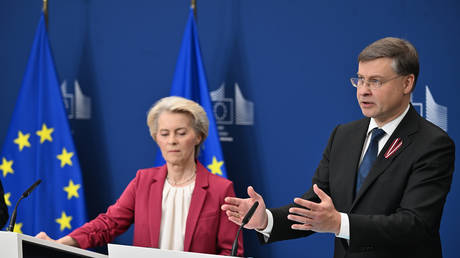
Yet the timing of his remarks matters. Just 24 hours earlier, Trump hosted NATO chief Mark Rutte at Mar-a-Lago. Their joint statement Wednesday night emphasized "the importance of Russia avoiding any actions that intentionally, or unintentionally, expand the war" alongside pushing for a rapid peaceful resolution. Rutte, whom European diplomats frequently call the "Trump whisperer," struck a carefully calibrated tone afterward, noting that American leadership stays essential for building a stronger NATO.
If you read between the lines, Rutte wasn't just there to nod along. European allies are deeply nervous that Washington's eagerness for a fast deal could sideline their security concerns—or worse, reward Russian territorial gains.
Why European Capitals Aren't Buying the Peace Optimism
Ask any defense official in Warsaw, Tallinn, or Berlin right now, and you'll get a starkly different picture than the one coming out of Mar-a-Lago. While Trump talks up a quick Ukraine peace deal, Russia has been testing NATO's perimeter in ways that look nothing like de-escalation.
Consider what happened just last week:
- Airspace violations in Poland. Two Russian missiles and a suspected drone came down inside Polish territory while European forces were conducting large-scale military exercises nearby for a potential postwar stabilization mission. Rutte called it a "grave violation," though Moscow flatly denied responsibility.
- Sabotage and accusations in Estonia. Estonian authorities accused Russian security services of orchestrating an attempted arson attack on a domestic defense contractor. Days later, Moscow flipped the script, alleging that Tallinn was letting Ukrainian drones fly through Estonian airspace to hit northwestern Russia while obstructing Russian cargo ships in the Baltic Sea. Estonian Foreign Minister Margus Tsahkna rejected both claims as "baseless".
- Naval escalation beyond the Black Sea. On Thursday, Kremlin spokesperson Dmitry Peskov accused Ukraine of trying to widen the war into the Mediterranean and Baltic seas after Kyiv claimed strikes on a Russian warship docked in Libya and another vessel in the Gulf of Finland.
German Chancellor Friedrich Merz summed up Europe's mood bluntly during a Bundestag budget address earlier this week. Russia, Merz warned, is escalating tensions across the Baltic region, Poland, the Black Sea, and even outer space. "By supporting Ukraine, we are supporting and protecting ourselves," he told German lawmakers.
That's the core friction point. Trump frames the conflict primarily as a bilateral bloodletting between two leaders who despise each other—Volodymyr Zelenskyy and Vladimir Putin—that American dealmaking can resolve. European leaders view it as an existential test of continental borders.
The Battlefield Reality Undercutting Diplomatic Talk
Talk is cheap when missiles are still flying overnight. Hours before Trump spoke on Thursday, Russian forces launched another wave of strikes on Kyiv, injuring at least seven people. Near the Black Sea port of Odesa, Russian attacks hit two foreign grain ships carrying over 100,000 tons of cargo. Moscow's Defense Ministry claimed it targeted military hardware, a standard line that rarely matches civilian and commercial damage reports on the ground.
Ukraine isn't sitting still either. Kyiv's forces recently struck an oil refinery terminal deep inside Russian territory and hit a southern Russian airbase, following earlier attacks that severely damaged the strategic Kerch Bridge linking occupied Crimea to the Russian mainland.
Meanwhile, Zelenskyy warned on Thursday that Ukrainian intelligence points to an imminent Russian campaign targeting energy grids and heating infrastructure as winter sets in. His immediate priority isn't drafting a peace treaty—it's begging Western partners for Patriot and NASAMS air-defense interceptors so Ukrainian cities don't freeze in the dark.
You can't easily reconcile these two realities. One side is preparing for a brutal winter siege; the other is suggesting a deal could materialize "quickly".
What People Get Wrong About Trump's Leverage Over Moscow
A common mistake observers make is assuming Trump's personal rapport with Putin translates into diplomatic compliance. Last week on the sidelines of APEC, Trump raised eyebrows across Europe by warmly greeting Putin as a "friend," drawing sharp pushback from Polish Prime Minister Donald Tusk. Earlier, Trump waived certain sanctions on Russia to advance a controversial diesel arrangement aimed at easing fuel prices spiked by the U.S. conflict with Iran—a move that angered both European allies and hawks within his own Republican Party.
Does friendly rhetoric buy concessions from the Kremlin? History says no.
Look at what happened when U.S. envoys Steve Witkoff and Jared Kushner met with Putin in Moscow earlier this month. Kushner later suggested Russia might be "comfortable" with Article 5-style security guarantees for postwar Ukraine. Within hours, Russian Deputy Foreign Minister Sergei Ryabkov poured cold water on the idea, stating publicly that even "quasi-membership" in NATO for Ukraine remains completely unacceptable.
Even more telling, Kremlin foreign policy adviser Yuri Ushakov confirmed that Putin used those meetings to dust off Moscow's sweeping December 2021 security demands. Those prewar proposals didn't just demand keeping Ukraine out of NATO—they called for rolling back NATO troops and weaponry from Central and Eastern Europe to where they stood in 1997. Ushakov noted the Kremlin plans to update those demands with "fresh considerations".
Putin isn't looking for an off-ramp that preserves Ukrainian sovereignty. He's testing whether Washington's desire for a quick headline will push the U.S. to pressure Kyiv and Europe into concessions they've rejected for years.
Who Actually Gets a Seat at the Negotiating Table
Another major sticking point that the Washington Times coverage glosses over is who gets to negotiate. U.S.-mediated talks between Russian and Ukrainian delegations resumed earlier in November after a nine-month freeze, yet the format itself remains a battleground.
Russia's ambassador to Germany, Sergei Nechayev, stated this week that Moscow is willing to keep talking in a trilateral format—Russia, Ukraine, and the United States—while demanding that European officials travel to Moscow to explain their positions before joining any broader table. Putin himself dismissed European objections to Moscow's security proposals as "nonsense," even while acknowledging you can't settle European security without Europeans involved.
Kyiv and Brussels refuse to be cut out. Following a Coalition of the Willing summit in Berlin last week, Zelenskyy insisted that Europe will be represented by five nations alongside the European Union and NATO. At the same time, EU leaders meeting in Brussels on Thursday debated the bloc's 2028–2034 long-term budget, 2027 financial aid for Kyiv, and a fresh package of sanctions designed to squeeze Moscow harder.
Estonian Prime Minister Kristen Michal captured the European consensus ahead of the Brussels summit: Europe can't afford defense cuts right now, and Ukraine needs to know Europe has its back with real money and weapons through what looks like a punishing winter.
How to Read the Next Phase of Ukraine Peace Talks
If you're tracking whether Trump's push on Putin actually moves the needle over the coming weeks, ignore the press conference adjectives and watch three concrete indicators instead:
- Air-defense interceptor deliveries to Kyiv. Watch whether Washington accelerates or stalls Patriot and NASAMS shipments ahead of Russia's expected winter grid offensive. Withholding or delaying air defenses is the primary lever the White House could use to force Kyiv toward unfavorable terms.
- European inclusion when the next meeting date is set. Zelenskyy confirmed Kyiv is waiting on Washington to schedule the next round of talks. If European representatives are excluded from that room, expect Brussels to push back hard—potentially using frozen Russian assets and independent sanctions to complicate any bilateral U.S.-Russia understanding.
- Russian behavior along NATO's eastern flank. Words about pulling back military aggression mean nothing if Russian drones and missiles keep straying into Polish or Baltic airspace. Another border incident near allied troops could trigger NATO Article 4 consultations and freeze diplomatic momentum overnight.
Trump has put his personal credibility on the line by claiming a fast deal is within reach. Until Moscow drops its 2021 demands to roll back NATO and stops escalating across European borders, pressing Putin in private talks won't be enough to stop the war.