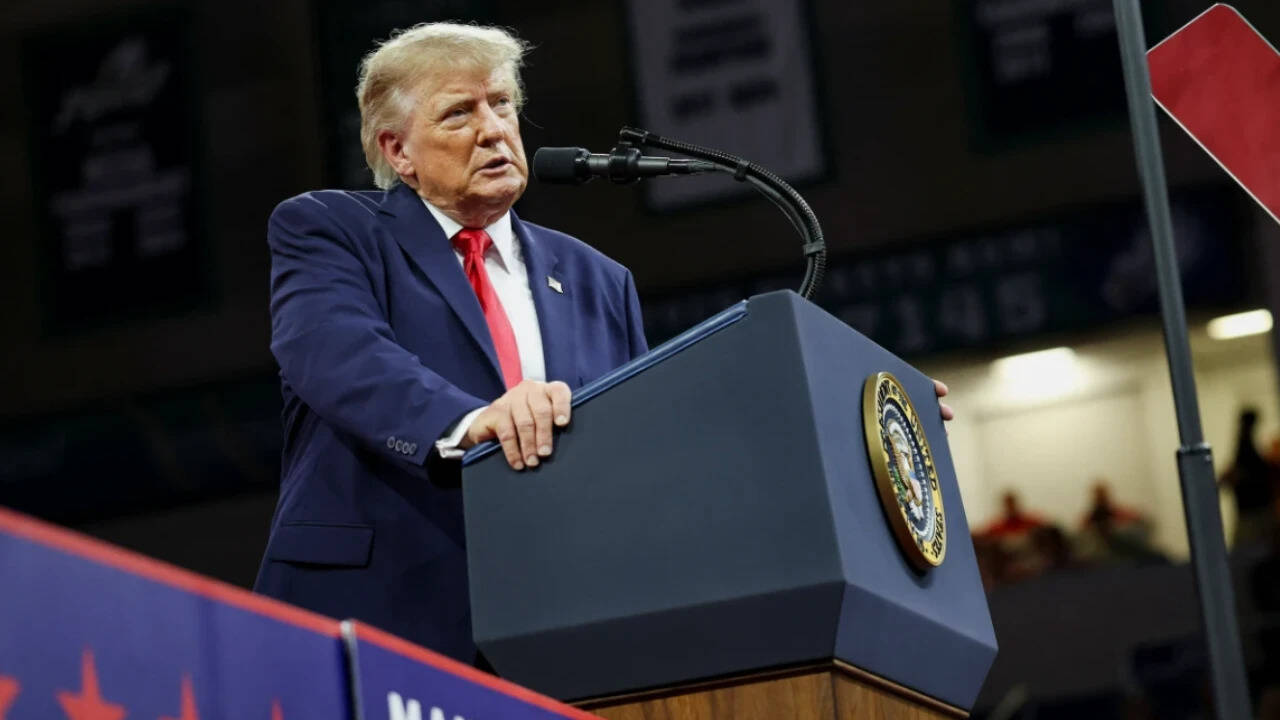
High-stakes posturing has returned to center stage. Donald Trump recently delivered a sharp, unvarnished warning regarding Iran during a campaign rally in Florida, casually tossing out the phrase "another little Epic Fury" while discussing foreign policy and military leverage. When Washington starts bandying about code words and military threats with such nonchalance, Tehran doesn't just listen—it reacts with immediate fire and fury of its own.
Iranian officials quickly fired back, warning the United States not to play with fire. It's a dangerous escalation of rhetoric that highlights how fragile stability remains in the Middle East. If you've been following US-Iran relations, you know this kind of verbal sparring rarely stays confined to podiums and press briefings.
The Rhetoric Behind the Warning
Words matter, especially when they come from a former or current American leader addressing hostile states. Trump’s remarks at Florida Gulf Coast University’s Alico Arena weren't accidental slips. They were calculated signals meant to project strength ahead of domestic political milestones.
By hinting at military action or sudden strikes, the strategy relies heavily on keeping adversaries guessing. Tehran's immediate pushback—urging Washington to back down and avoid reckless moves—shows that the message hit its mark, even if it only succeeded in hardening lines on both sides.
Why This Escalation Feels Different
We are living through a uniquely volatile geopolitical environment. Traditional diplomatic channels are strained, and deterrence has become a high-stakes game of chicken. When leaders use casual nicknames for potential military engagements, it signals a normalization of confrontation.
- Direct threats replace quiet backchannel negotiations.
- Public rallies become the primary venue for foreign policy ultimatums.
- Regional actors brace for sudden retaliatory cycles.
Iran’s response is predictable yet critical. Tehran views any public threat as domestic provocation and a challenge to its sovereignty. Telling Washington not to play with fire is standard operational procedure for Iranian state media and military commanders, but the underlying tension is entirely real.
What Happens Next on the Global Stage
Expect the diplomatic freeze to deepen. Sanctions talk will likely intensify alongside covert cyber operations and proxy friction across the region. Neither side wants a full-scale regional war, yet both keep edging closer to the line through unchecked rhetoric.
Keep a close eye on naval movements in the Gulf and statements coming out of Tehran's security councils. The war of words is just the opening act. Watch how regional proxies respond in the coming weeks, because that will tell you whether this latest round of threats will turn into something far more dangerous.