Twenty-five years have passed since a hijacked airliner tore into the west wall of the Pentagon, killing 184 people. A generation has grown up entirely in the shadow of that morning. While former presidents and Vice President JD Vance gathered at the World Trade Center site in New York, President Donald Trump chose to mark the milestone quarter-century anniversary right here at the U.S. military headquarters in Arlington, Virginia.
That choice changed the tone of the day.
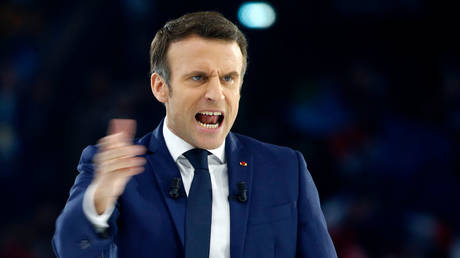
Instead of standing in a strict non-political zone like New York's ground zero memorial, Trump used his address from the Pentagon courtyard to tie the legacy of 2001 directly to modern geopolitical conflicts. Flanked by First Lady Melania Trump, War Secretary Pete Hegseth, and Joint Chiefs Chairman Gen. Dan Caine, Trump delivered a speech that mixed somber remembrance with aggressive foreign policy messaging.
For anyone tracking how Washington processes national security anniversaries, the shift in venue and rhetoric tells a distinct story.
The Symbolic Weight of the Pentagon Ceremony
Morning rain poured down over Arlington as military officials gathered before sunrise. Workers unrolled a massive American flag down the concrete facade of the Pentagon—re-enacting the exact tribute first responders created on September 12, 2001. For the first time since that initial year, that specific historical flag flew alongside the building's scars, raised by surviving first responders like Joseph Morabito, Scott Morgan, and Carl Solberg.
When the formal ceremony began, the focus shifted to the human toll. A bell tolled 184 times, punctuated by the reading of every single name lost inside the building and aboard American Airlines Flight 77.
Trump's remarks leaned heavily on the endurance of the American spirit. "In those harrowing days after the attacks, we saw the authentic spirit of our nation," Trump told the crowd of service members, survivors, and families. "We were all New Yorkers that day. Every one of us."
Yet unlike past commemorations that stayed purely retrospective, the 2026 observance quickly pivoted toward active military engagements.
Connecting 9/11 to Current Conflicts
Trump didn't spend his entire speech looking backward. He used the solemn milestone to explicitly link the post-9/11 security apparatus to ongoing hostilities, specifically the administration's military campaign against Iran.
"We salute every member of the United States military who served in the war on terror," Trump said. "And we salute the service members working right now to ensure the world's number one sponsor of terror—the Islamic Republic of Iran—will never, ever have a nuclear weapon."
War Secretary Pete Hegseth took that connection even further. In a bellicose address, Hegseth argued that the military actions of today are a direct continuation of the fight that started a quarter-century ago against radical Islamic theocracies.
This pivot sparked immediate discussion among political analysts. While supporters viewed it as a necessary reminder that global threats persist, critics noted a stark contrast with the New York City ceremony. In New York, the focus remained tightly locked on victim advocacy, unity, and an ongoing, painful reckoning over accountability—highlighted by family members like Terry Strada, who publicly challenged the administration's foreign alliances during the Ground Zero proceedings.
What a Quarter-Century Means for National Memory
Time changes everything. As Hegseth noted during the Pentagon service, many young service members joining the ranks today weren't even born when the towers fell and the Pentagon was hit.
That reality puts the burden of transmission squarely on institutions and leaders. When you have a generation serving in uniform with no living memory of the chaos of September 11, ceremonies cease to be just about mourning the past. They become recruitment tools, ideological compasses, and warnings about the future.
The 25th anniversary proved that America's collective memory of 9/11 is no longer unified under a single narrative. In New York, it's about family grief, victims' rights, and historical reflection. At the Pentagon, it became a platform for state power, military readiness, and current defense doctrines.
The scars on the building's limestone facade were repaired long ago. But twenty-five years later, how Washington chooses to talk about those scars depends entirely on who holds the microphone.