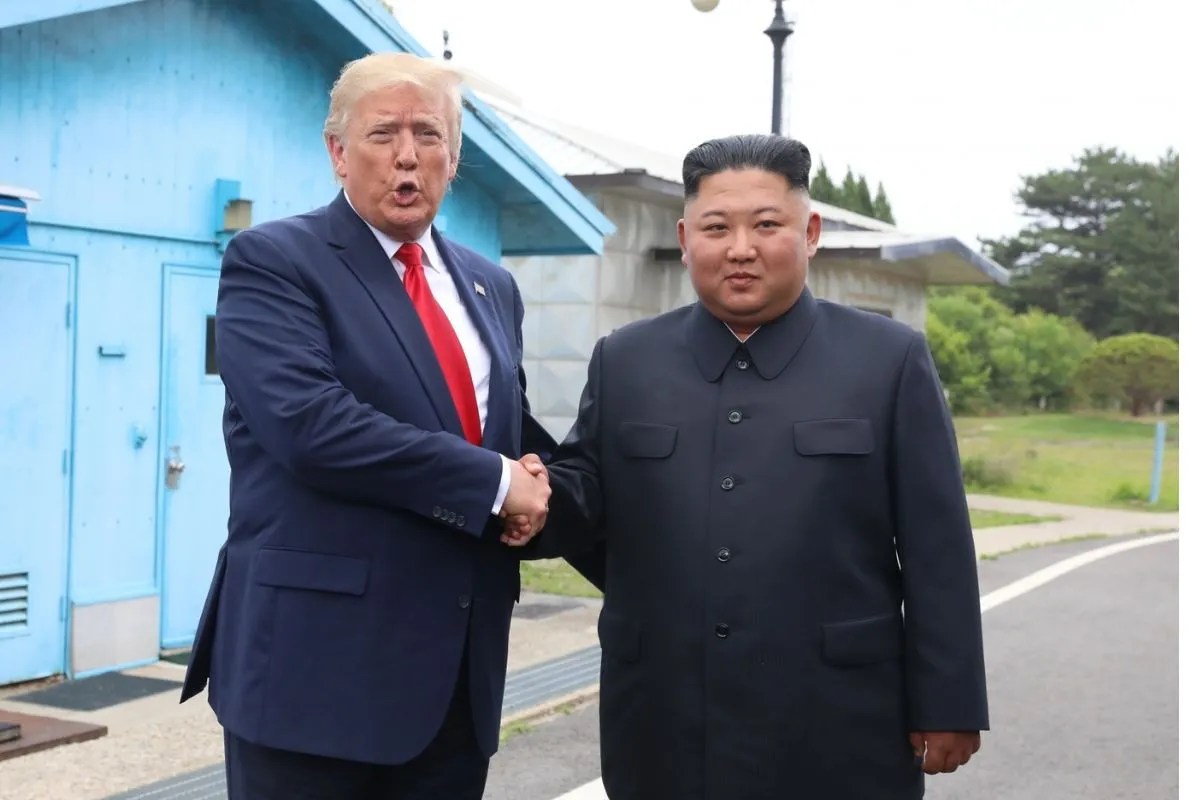
Donald Trump just did it again. During a high-stakes press conference in Washington D.C., the former and current U.S. President casually referred to North Korean dictator Kim Jong Un as his personal friend. He doubled down with a statement that made foreign policy experts choke on their morning coffee: as long as he is around, Pyongyang will stay in line.
Most mainstream commentators treat these remarks as typical Trump bravado or campaign trail posturing. They are missing the bigger picture. When a leader brushes off an expanding nuclear arsenal with a cheerful nod to personal chemistry, it exposes a massive shift in how modern geopolitics actually works. Traditional diplomacy with rigid bureaucratic channels is dead. Personality-driven statecraft has taken over, and the implications for global security are staggering.
Let's look at what is really happening beneath the surface.
The Nuclear Arithmetic Nobody Wants to Talk About
Trump openly acknowledged that North Korea possesses a formidable nuclear stockpile during his remarks, though he brushed it off by claiming their arsenal is nothing compared to American might. But the numbers tell a more complex story.
Estimates vary wildly depending on who you ask. Trump recently claimed that Pyongyang holds around 57 nuclear warheads. Meanwhile, South Korean defense officials calculate the number is closer to 80 or even 120. Whichever figure is accurate, the reality remains unchanged: North Korea is a de facto nuclear-armed state. Decades of economic sanctions, diplomatic isolation, and military posturing failed to stop them.
When Trump claims that Kim only listens to him and respects him, he is pointing to a transactional reality. Conventional deterrence strategies have stalled. While Washington spent decades treating North Korea as an untouchable pariah, Trump treated the dictator like a VIP guest. Say what you want about the optics, but that personal rapport kept inter-continental missile tests frozen during his tenure.
The Double Standard on Iran and North Korea
Critics love to point out the glaring hypocrisy in American foreign policy. Why does Washington slap crushing sanctions and threaten military intervention against Iran's nuclear ambitions while shrugging off North Korea's massive warhead inventory?
Trump addressed this directly, blaming weak policies from previous administrations for letting Pyongyang cross the nuclear threshold before he took office. Honestly, it is a fair critique. Once a regime successfully builds and tests thermonuclear weapons, military options become catastrophic. You can not bomb a country into disarmament without risking millions of lives in Seoul and Tokyo.
This leaves global superpowers with very uncomfortable choices. You either accept North Korea as a nuclear power and manage the risk through backchannel diplomacy, or you risk a full-scale regional war. Trump's approach leans entirely into personal diplomacy because he knows the military alternative is unthinkable.
Personal Chemistry Versus Institutional Strategy
Traditional diplomats hate this strategy with a passion. They believe foreign policy should be run by State Department professionals following decades-old playbooks, treaties, and multilateral alliances.
Yet, those institutional playbooks failed to stop North Korea from enriching uranium in the first place.
Trump’s worldview cuts through the diplomatic red tape. He operates on a simple premise: dictators respond to strength, ego, and personal attention, not sternly worded UN resolutions. By framing Kim Jong Un as a friend who happens to like him personally, Trump reframes a dangerous nuclear standoff into a personal negotiation between two strongmen.
Is it risky? Absolutely. Relying on the mood of an erratic dictator and an aging American politician is no way to run global security. But looking at the alternative—endless escalation, cyber warfare, and proxy tensions—it is easy to see why millions of voters find Trump's blunt, dealmaking approach refreshing.
Rumors are already swirling about a potential face-to-face summit between Trump and Kim later this year. If that meeting happens, expect the foreign policy establishment to lose its mind. But while the experts panic over protocol, two of the world's most unpredictable nuclear actors might just rewrite the rules of engagement yet again.
Keep your eyes on the Korean peninsula. The game hasn't changed; the players just stopped pretending diplomacy is polite.