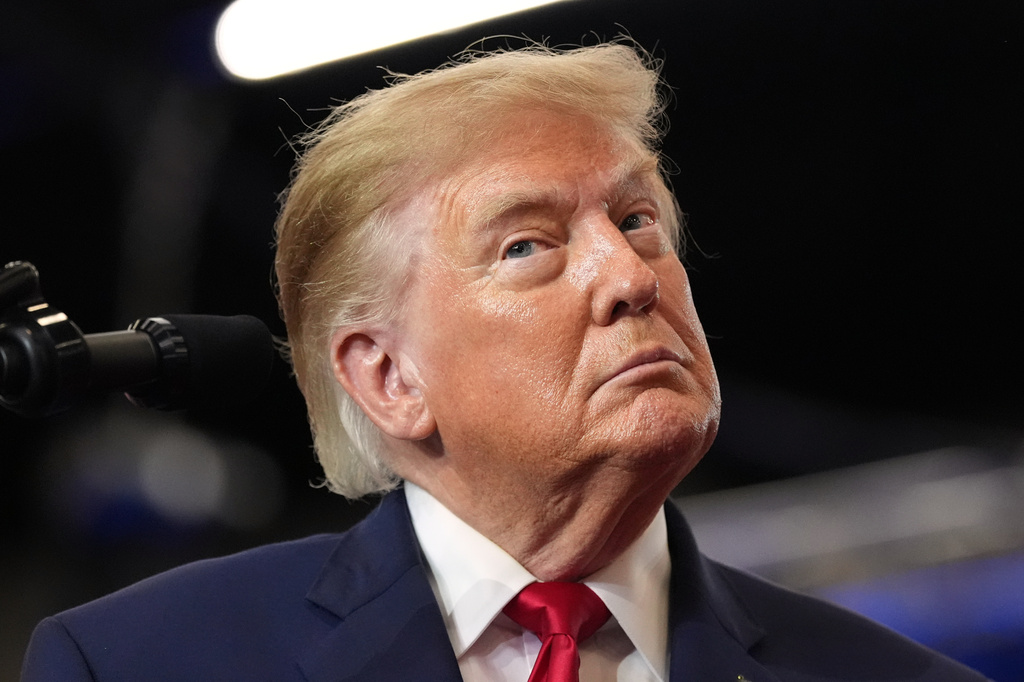
Donald Trump just posted on Truth Social that he wants Ultimate Fighting Championship CEO Dana White to take over as White House press secretary. Yes, you read that right. The man who turns mixed martial arts into a multi-billion dollar empire is being publicly courted to step behind the podium at 1600 Pennsylvania Avenue.
If you are scratching your head wondering how a combat sports promoter could transition into running daily briefings with the White House press corps, you probably haven't been paying attention to how modern political communication actually works. Traditional political PR is dying. Trump knows it, and he wants a media personality who treats a press conference like a pay-per-view main event.
Let us look at why this wild proposal is getting so much attention and what it tells us about the current state of Washington politics.
The Vacuum at the Podium
The White House press secretary chair has seen a revolving door lately. Following the departures of Karoline Leavitt and Katie Zacharia, whose tenure lasted a mere five days, the administration needs stability. Or, at least, it needs someone who can command the room and absorb incoming fire without breaking a sweat.
Enter Dana White.
Trump praised White online as a "violent Fighter and Warrior" and publicly urged him to take the job. He even suggested that White bring along a crew of elite fighters—including Islam Makhachev, Khabib Nurmagomedov, Justin Gaethje, Daniel Cormier, Amanda Nunes, and Kayla Harrison—to help defend the administration from critics.
It is classic Trump theater. But beneath the bombast lies a serious calculation about media dominance.
A Friendship Forged in Atlantic City
This isn't a random pairing. Trump and White go back twenty-five years. Back in the early 2000s, when the UFC was struggling for mainstream acceptance and financial survival, Trump's Atlantic City casinos hosted early events when other venues wouldn't touch them. White has never forgotten that loyalty.
Over the decades, that business relationship evolved into a tight political alliance. White spoke at the Republican National Conventions in 2016, 2020, and 2024. He helped bridge the gap between Trump's campaign and the young, male-dominated demographic that consumes combat sports and digital podcasts. When the White House hosted a UFC fight night on the South Lawn to celebrate the country's 250th anniversary, the lines between political power and sports entertainment dissolved completely.
White already has allies inside the West Point machine. White House Communications Director Steven Cheung previously worked for the UFC from 2013 to 2016. When Trump made his announcement, Cheung jumped on social media with an immediate endorsement, writing that it would be "just like old times."
Will Dana White Actually Do It?
So, is it going to happen?
White is currently juggling a massive corporate empire. When reporters caught up with him at a boxing event in London, he acknowledged the reality of his current workload, conceding that he already has "a lot of jobs." However, he didn't slam the door shut. He confirmed he would fly to Washington to sit down with Trump for a direct meeting.
Even if White ultimately decides to stay in the sports world rather than move to Washington full-time, the gesture accomplishes a major strategic goal. It completely shifts the media narrative away from recent legislative hurdles and midterm losses, dominating the news cycle with a conversation about raw entertainment and cultural power.
Traditional politicians worry about polished talking points and cautious syntax. Dana White built his career on direct confrontation, unfiltered media scasts, and turning controversy into cash. If he ever decides to step up to that briefing room microphone, the daily news cycle will never be the same.