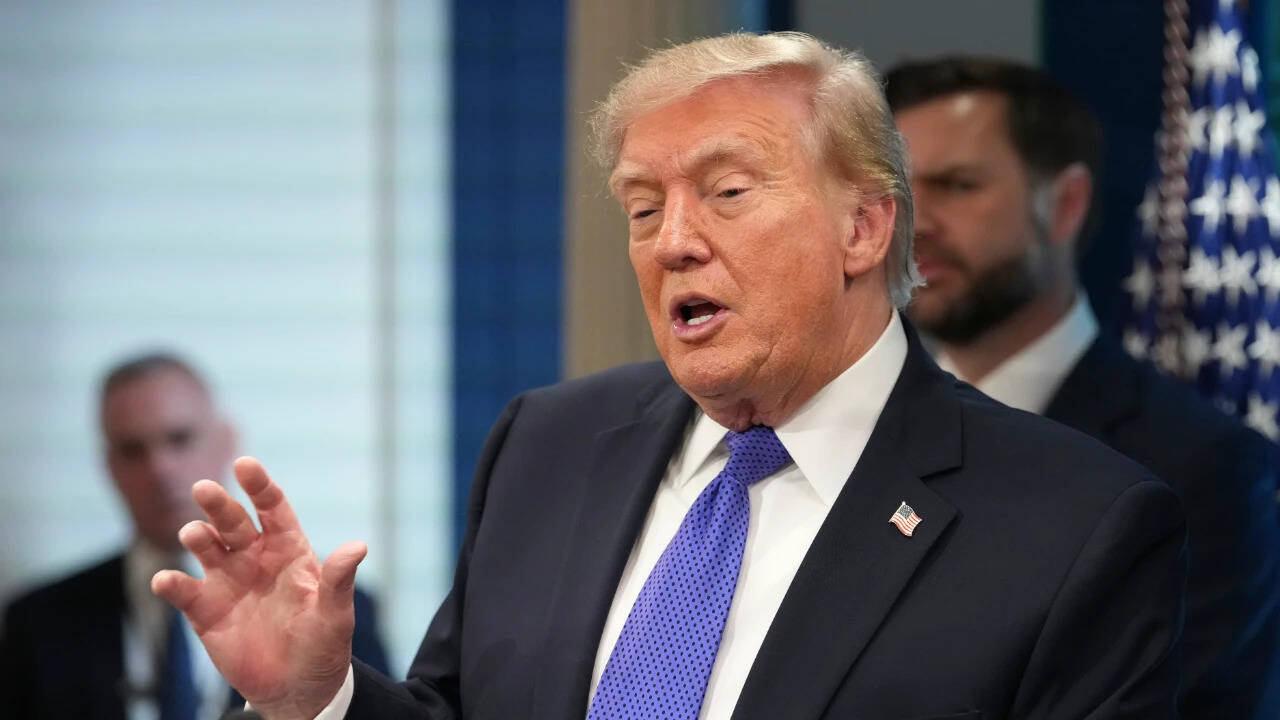
President Donald Trump walked into his White House press briefing on November 20, 2026, trying to change the subject after Republican midterm losses—and he pointed straight to India's growth numbers to argue that lower interest rates could supercharge the U.S. economy.
Let's be honest. When a president comes back from an overseas trip right after a tough election, every line at the podium carries extra weight. Trump's roughly 90-minute briefing touched on a lot of moving parts at once: India's economy and Quad cooperation, Jensen Huang and "second chances" in America, tension inside his own cabinet over China and AI chips, threats to penalize companies building data centers abroad, and a sudden willingness to talk deals with Democrats. For a different look, see: this related article.
If you only read quick bullet lists of the briefing, you miss how these pieces collide. Praise for India's growth sits right next to hardball talk on trade, tech, and a divided Congress. That's the real story behind the headlines.
Why India Entered the White House Briefing Room
Trump didn't bring up India out of nowhere. In his remarks, he pointed to India as an example of an economy pairing lower interest rates with roughly 7% growth, using that comparison to argue that the U.S. could push its own growth much higher if rates came down. Further reporting on the subject has been shared by The Guardian.
You don't have to agree with every macro comparison a president makes at a press conference to see what he's doing rhetorically. For months, Trump has argued that tighter borrowing costs hold back American expansion, and he has repeatedly claimed each percentage-point cut in rates is worth huge economic gains. Holding up India's growth figure gives him an easy international talking point—even though interest rates, inflation, demographics, and central bank mandates work very differently across Washington and New Delhi.
There's also a strategic layer here. Coverage around the briefing and Trump's Asia trip highlights Quad cooperation among the U.S., India, Japan, and Australia—including efforts around maritime security, surveillance, and AI or "superintelligence" work. Putting India in the frame as both a fast-growing economic benchmark and a Quad partner shows how closely trade rhetoric and Indo-Pacific strategy are tangled up right now.
What people often overlook is the tension underneath that praise. Trade and tariffs don't move in a straight line just because leaders talk warmly about growth or strategic alignment. Even when Trump praises another country's economic pace, his core pitch at home stays focused on protecting U.S. leverage and pushing trade terms he says favor American workers and companies.
Second Chances, Talent, and Cabinet Friction on China
One of the sharpest moments from the briefing came when Trump defended former Nvidia CEO Jensen Huang, calling the U.S. a country of second chances and arguing that the country needs to protect brilliant people. Reporting around the event notes that Huang stepped down as Nvidia's CEO earlier in November 2026 after acknowledging extramarital affairs, including one involving a suspected Chinese spy, while Trump argued Huang had learned a lesson and said he wouldn't mind seeing him back at the helm.
That remark captures a classic Trump theme: loyalty to big personalities and high-wattage builders, mixed with impatience toward bureaucratic or political pile-ons. He also praised Elon Musk and Starlink during the same stretch of remarks, reinforcing his view that top innovators are vital assets rather than liabilities to be sidelined.
At the same time, the briefing exposed real friction inside the administration over China and AI hardware. Trump backed Commerce Secretary Howard Lutnick amid scrutiny over advanced chip exports to China and slow-walking certain restrictions, while acknowledging a different approach from Treasury Secretary Scott Bessent. Reporting indicates Bessent had pressed to put a data center firm linked to an alleged Chinese spy on a trade blacklist, whereas Lutnick's department controls key licensing decisions.
Trump didn't paper over that split; he basically told reporters that Lutnick and Bessent bring different instincts—one leaning toward keeping things from blowing up with Beijing, the other pushing harder—and said both views had a place. For anyone watching U.S.-China tech policy, that candor is a big deal. Cabinet disagreements aren't just background noise when export controls and blacklists sit on officials' desks.
Data Centers and Trade Leverage
If there was one area where Trump sounded less like a negotiator and more like an enforcer, it was overseas data centers. He warned that the U.S. won't let American companies build data centers abroad, threatening steep penalties or taxes so rivals like China don't capture that infrastructure.
Here's the catch: threatening penalties is easy at a podium, while enforcing cross-border corporate moves and local permitting is much messier. Communities at home already push back over power demand, water use, and noise from massive data centers, even as Trump argues firms can build their own power generation and ease grid strain.
On trade more broadly, Trump pointed to deals from his Asia trip, claimed more agreements were in the works, and drew a sharp contrast between talking up progress with some partners while hitting others—like Canada—with tough talk over trade deficits. In politics, sweeping trade promises travel fast, but the fine print on tariffs, rules of origin, and enforcement takes months to sort out.
Midterm Reality and Talking to Democrats
You can't separate this press conference from the midterm election hangover. After Republicans lost ground in the midterms—including losing control of the House—Trump struck a mix of defiance and dealmaking.
He backed Vice President JD Vance's view that the conflict with Iran hurt Republicans in the midterms while defending the military action itself and saying Washington wouldn't settle for terms it views as inadequate. And in a move that surprised plenty of observers, Trump signaled openness to working with Democrats on issues like immigration and healthcare, even while waving the veto pen to keep leverage over an incoming Democratic House majority.
Look closely at that combo. A president facing a tougher legislative map has two main levers: executive action and vetoes, or cutting selective deals where incentives overlap. Saying you're open to talks with Democrats on border security or healthcare while keeping veto threats on the table isn't softness—it's a reset play after a rough election.
Common Mistakes When Reading Post-Midterm Pressers
When a briefing covers ten big topics in ninety minutes, it's way too easy to misread what actually matters. A few traps trip people up constantly:
- Treating off-the-cuff comparisons as policy blueprints. When Trump cites India's growth rate and low interest rates to argue for lower U.S. rates, that's a political argument about monetary policy, not a new bilateral treaty.
- Ignoring cabinet divisions behind polite phrasing. Saying two top officials have different styles doesn't mean policy is settled; watch who actually signs off on export rules and blacklists.
- Confusing headlines with finished deals. Announcements of trade talks, pipelines, or data center crackdowns often lack legal text, timelines, or congressional backing on day one.
- Overreading a single tone shift. A warmer nod toward Democrats or a specific foreign leader can be tactical positioning after an election loss rather than a permanent reversal.
Practical Next Steps If You're Tracking This Story
If you're following how this briefing affects markets, policy, or U.S.-India and U.S.-China dynamics, don't stop at the first wave of social media clips.
- Track formal actions over podium quotes. Watch for actual executive orders, Commerce Department export rule changes, trade announcements, or legislative proposals in the weeks following the briefing.
- Compare primary reporting across outlets. Cross-check coverage from major wire services and outlets like AP News, Al Jazeera, and The Guardian to see which details hold up across multiple reporters.
- Follow the institutional friction points. Keep an eye on clashes between the Commerce and Treasury departments on tech restrictions, grid and permitting debates around data centers, and early negotiations with the incoming congressional leadership.
Trump press conference takeaways
This link points to the Times of India report rounding up ten key takeaways from the same post-midterm White House press conference.