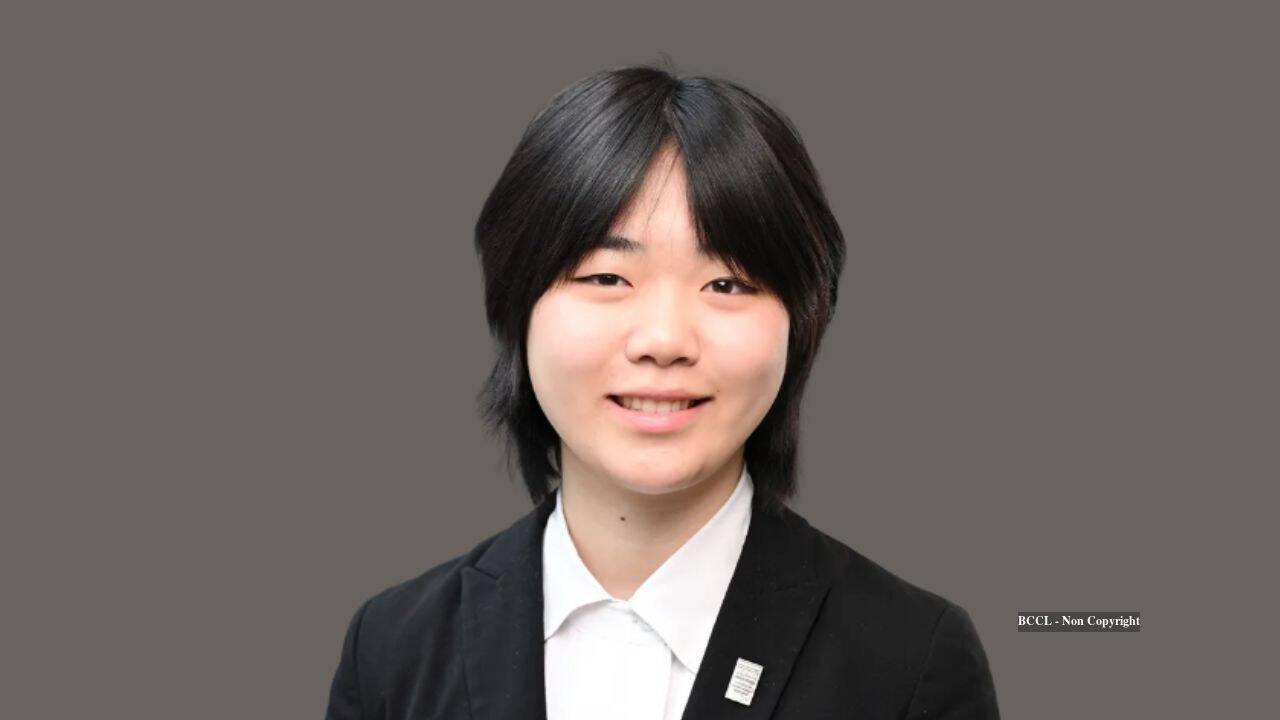
Breakthrough science doesn't always happen inside a multi-million-dollar pharmaceutical laboratory with expensive robotic screeners. Sometimes, it happens because a high school student looks at a common mollusk on the shoreline and asks a question nobody else bothered to ask.
Seventeen-year-old Iris Shen from The Woodlands, Texas, didn't use conventional mice or expensive lab-grown human cell lines for her award-winning blood-cancer research. She used clams. That unorthodox choice earned her third place and a $150,000 prize at the 2026 Regeneron Science Talent Search, proving that unconventional biological models can crack open doors that traditional systems leave shut.
The Problem With Traditional Cancer Models
If you've ever looked closely at how oncology drugs get tested, you know the pipeline is agonizingly slow, expensive, and bottlenecked by model availability. Researchers rely heavily on mammalian systems, particularly mice, alongside specialized cell cultures.
Blood cancers like leukemia and lymphoma present unique hurdles because they circulate through blood and bone marrow rather than forming neat, localized solid tumors. Testing drug efficacy on these systems takes massive resources.
Shen looked past standard laboratory protocols. Clams can contract a transmissible cancer known as disseminated neoplasia, where malignant cells spread directly through the animal's circulatory system. Biologically speaking, that circulatory spread mirrors certain mechanics of human leukemia. Instead of dismissing a marine animal as irrelevant to human oncology, Shen wondered if this natural disease model could serve as an efficient, living testbed for drug discovery.
Testing Drugs Where Nobody Expected
Shen's experiment wasn't just a quirky biology fair project; she ran genuine pharmacological evaluations. She tested a potential cancer drug on her clam models to see how they would react.
The results caught attention. The drug produced an observable biological effect in the clams that closely mirrored responses seen in human cellular tests. That early alignment proved that marine organisms might offer a viable, low-cost screening tool for specific blood cancer treatments before labs commit to complex animal or human trials.
She didn't stop at single-drug tests. Tumors are notorious for outsmarting monotherapies through drug resistance, which is why combination therapies remain the gold standard for long-term remission. Shen tested a cocktail of potential cancer drugs simultaneously on her clam models. The combination successfully slowed tumor growth in the subjects.
While this remains an early-stage proof of concept rather than a cure ready for clinical clinics, it highlights a massive efficiency gain. If researchers can use simple aquatic models to quickly screen which drug combinations show promise, the entire pharmaceutical discovery pipeline accelerates dramatically.
Why This Win Matters for the Future of STEM
The Regeneron Science Talent Search is the oldest and most prestigious high school science competition in the United States. Out of more than 2,600 elite student submissions, only 40 finalists made it to Washington, D.C., to present their work.
Shen’s success wasn't about luck. It came down to rigorous scientific questioning and the courage to stray from standard textbook pathways. Too many student researchers try to replicate what big labs are already doing with slightly better data. Shen picked an entirely different organism, validated its biological parallels, and produced actionable data on drug combinations.
The broader takeaway for aspiring researchers and tech innovators is simple. Stop waiting for the approved toolkit when the natural world is full of overlooked models. Whether you're working in biotechnology, software, or engineering, looking sideways at a problem often reveals solutions that staring straight ahead misses entirely.
Take a hard look at the tools you use in your own projects or research. Are you following standard protocols just because they are expected, or are you hunting for efficient alternatives that others dismiss? Innovation starts the moment you stop accepting standard limitations as permanent laws.