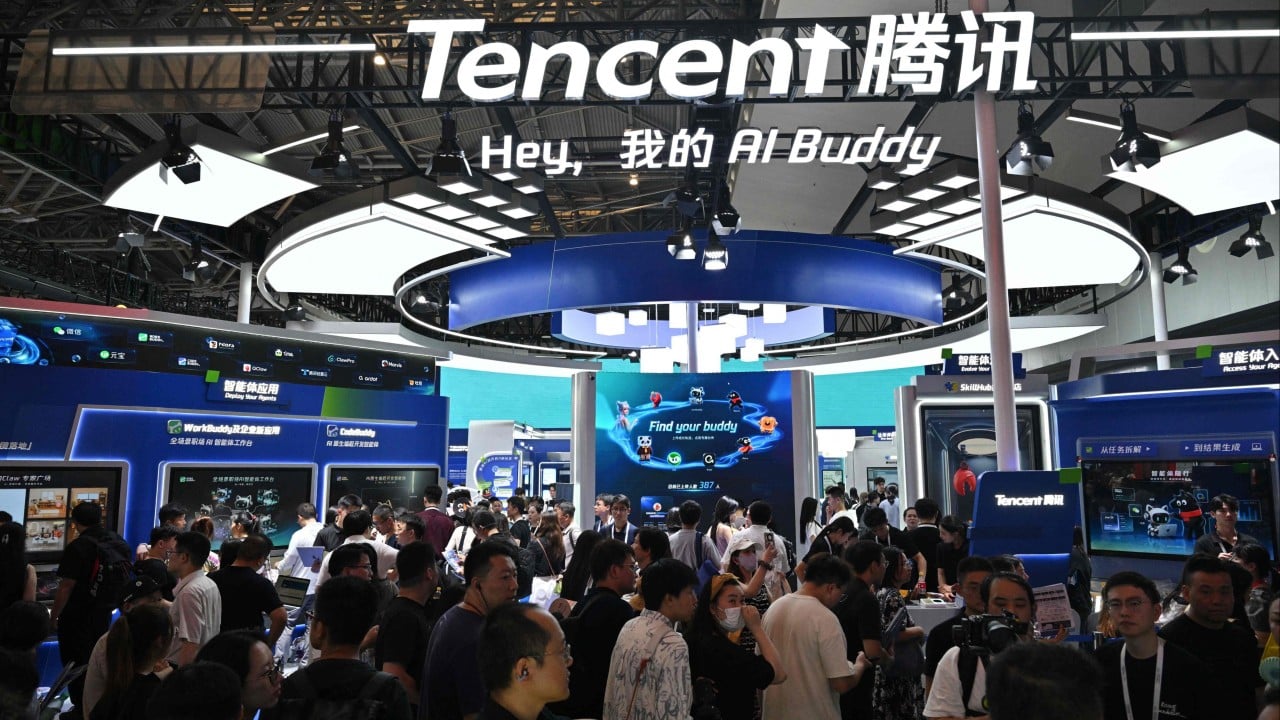
Big tech rivalry in China rarely stays polite for long. Right now, autonomous software entities powered by Tencent Cloud are probing the defenses of Alibaba's massive mapping service, Amap. Researchers caught this digital boundary-pushing in action. It sounds like a sci-fi movie plot, but it is standard practice in the hyper-competitive Asian cloud ecosystem.
Most people think automated programs just chat or write emails. They miss the bigger picture entirely. These autonomous digital workers navigate complex software environments, click buttons, query databases, and execute multi-step workflows without human intervention. When one tech giant points its bots at another giant's flagship application, things get messy.
The Core Battleground
Why Amap? Mapping applications are the ultimate digital tollbooths. They handle location data, payment gateways, user behavior metrics, and local merchant ecosystems. Whoever controls the map interface controls the local consumer traffic.
Tencent wants a bigger slice of that pie. By deploying sophisticated autonomous workflows, their systems test how well Alibaba's security layers handle non-human interaction. They look for rate-limiting flaws, interface weaknesses, and data extraction paths.
Think about how you interact with a map app. You type a destination, check traffic, order a ride, and maybe book a restaurant table. An autonomous program does that millions of times faster. If a cloud platform can programmatically interface with a competitor's mapping infrastructure, it changes the power dynamic of the entire digital marketplace.
Researchers tracking these events note that this isn't just about scraping data. It is about capability testing. Can an external cloud framework successfully orchestrate tasks inside a walled-garden application? The answer determines who wins the next era of software dominance.
Technical Realities Behind The Probe
People often overestimate what code can do on day one and underestimate what it achieves by year three. These cloud-backed bots aren't random scripts crashing a server. They use advanced reasoning loops to figure out user interfaces dynamically.
When facing a login wall, captcha, or dynamic layout change, the system evaluates the screen state, figures out a workaround, and keeps moving. This capability stems from deep integration with large-scale cloud infrastructure. Tencent Cloud provides the raw compute needed to run thousands of parallel reasoning threads.
Alibaba isn't sitting still, either. Security teams at major digital conglomerates spend millions building behavioral analysis tools. These tools look for the subtle tells of non-human traffic. They measure mouse movement entropy, request timing consistency, and device fingerprint signatures.
When an autonomous entity tries to blend in, it has to mimic human error, hesitation, and randomness. That dance between automated intrusion and behavioral defense drives rapid innovation in cybersecurity.
What This Means For The Rest Of Us
You might wonder why you should care about two tech titans fighting over mapping data in China. The fallout shapes global software development standards.
First, application programming interfaces are changing. Companies are building tighter walls around their proprietary services. They want to monetize every single API call. Open data access is dying. If you build software that relies on multiple third-party services, expect higher authentication hurdles.
Second, the definition of bot traffic is shifting. We are moving past simple web scrapers. Future digital security requires defending against goal-oriented software agents that can reason, adapt, and improvise.
If you manage digital products, audit your rate-limiting rules today. Do not assume standard bot-detection plugins will catch advanced reasoning frameworks. Look closely at your logs for unusual patterns of logical navigation rather than just high request volumes.
The boundaries between closed platforms are blurring. Autonomous systems will keep probing until they find open doors. Prepare your systems for smart traffic, because dumb walls won't hold them back.