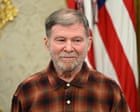
Stephen Hubbard didn't think he was making it out. When you spend over four years locked away in a foreign penal system, hope becomes a dangerous luxury. You stop planning for tomorrow. You just try to survive the next hour.
The 74-year-old retired teacher from Big Rapids, Michigan, found himself swept up in a geopolitical nightmare. Arrested after Russia's full-scale invasion of Ukraine, Hubbard faced accusations of acting as a mercenary. His legal team denied those claims entirely, pointing out the absurdity of pinning mercenary charges on an elderly ex-educator who had lived quietly abroad. Yet, courts move fast when they want to make a point. Hubbard was handed a nearly seven-year prison sentence in 2024.
Four years is a long time to think about home. For Hubbard, those years meant cold concrete, isolation, and the creeping certainty that he would die behind bars. Most prisoners in his position learn to disconnect. They build mental walls. If you expect freedom, disappointment crushes you. So, Hubbard simply didn't expect it. Not until the door actually opened.
The Diplomacy Behind the Release
His freedom didn't happen by accident. High-level diplomatic maneuvering set the wheels in motion. U.S. envoy Steve Witkoff traveled to St. Petersburg to meet with Russian leadership, while direct appeals from Washington pushed the Kremlin to reconsider. Russian officials eventually framed the release as a humanitarian gesture, pardoned by Vladimir Putin himself.
President Donald Trump welcomed Hubbard at the White House following his return, highlighting that the administration secured the release without having to trade high-profile prisoners in return. For a man who spent more than 1,400 days in detention, the Oval Office must have felt like another planet.
The Reality of Americans Detained Abroad
Hubbard's case highlights a brutal reality. Ordinary citizens caught in international flashpoints often become bargaining chips or collateral damage. While high-profile prisoner swaps grab headlines, elderly individuals like Hubbard face quiet, grinding isolation in foreign legal systems that operate under entirely different rules.
People often ask how someone manages to endure years of unjust captivity. The truth is stark. They don't do it with heroic resilience every single day. They do it by shrinking their world down to the bare minimum. Every sunrise is just another hurdle.
Coming Home to a Changed World
Stepping off the plane at Pulkovo airport into the custody of U.S. diplomats marked the end of the physical ordeal, but recovery takes time. Coming back to Michigan means readjusting to a life that moved on without you for half a decade. Family members who spent years fighting advocacy campaigns finally got the news they prayed for, but the psychological toll lingers.
Hubbard's story is a reminder of how fragile safety can be when borders close and political tensions boil over. He thought he was never getting out. Against the odds, he did. But the shadow of those four years stays behind.
Michigan teacher released from Russian prison after 4 years
This short video provides a quick overview of the 74-year-old retired teacher's release after spending over four years in Russian custody.