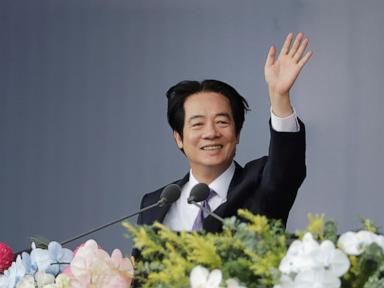
Geopolitical pressure cooker temperatures are rising across the Taiwan Strait, and Taipei isn't blinking. During his high-profile National Day address, Taiwan's President Lai Ching-te dropped a clear, unvarnished message for the global community. He didn't mince words. He called directly on Indo-Pacific democracies to lock arms and help maintain regional peace against a backdrop of escalating authoritarian coercion.
If you've been watching cross-strait relations, you know the stakes couldn't be higher. Beijing views self-governing Taiwan as its own territory, threatening annexation by force if necessary. Meanwhile, Taipei's leadership is pivoting toward a strategy of international coalition-building, treating regional stability not as a local issue, but as a collective security concern for every free market in Asia.
The Core Message Behind Lai's National Day Appeal
Standing outside the Presidential Office Building in Taipei, Lai framed Taiwan's survival as an acid test for the international order. He pointed straight at the creeping expansion of authoritarian regimes and the disruption of non-red supply chains.
You see, Taiwan isn't just asking for handouts or sympathy. Lai emphasized that the island's 23 million citizens are actively fortifying their democratic institutions, upgrading asymmetric defense capabilities, and cementing economic resilience. But defense alone isn't enough. Lai stressed that true deterrence requires a chorus of international voices making it clear that altering the status quo by force carries an unbearable cost.
Why does this matter right now? Because global supply chains run directly through the Taiwan Strait. If semiconductor manufacturing hubs like TSMC go offline due to conflict, the global economy crashes overnight. Lai's appeal to Indo-Pacific democracies is basically a wake-up call: protect Taiwan's freedom today, or watch your own economic security disintegrate tomorrow.
Balancing Domestic Realities and Global Pressures
Governing a front-line democracy isn't for the faint of heart. Lai has to manage intense domestic political friction, upcoming local elections, and a legislative branch frequently at war with the ruling Democratic Progressive Party. Yet, his National Day speech intentionally sidestepped partisan mudslinging.
Instead, he focused on actionable domestic reforms designed to prove that democracy delivers tangible results. From rolling out sweeping child-care allowances to tackling rampant financial fraud and upgrading national infrastructure, Lai wants to show that Taiwan's internal house is built on solid rock.
Critics often argue that talking tough on defense invites escalation. Lai counters that narrative by keeping the door open for parity-based dialogue with Beijing, provided it rests on mutual dignity and respect. He made it clear: Taiwan values peace, but it will never surrender its sovereignty or democratic identity just to appease an aggressor.
What Happens Next in the Indo Pacific
The regional ripple effects of Lai's address are already playing out across diplomatic channels in Tokyo, Washington, and Canberra. Democracies across the Indo-Pacific are quietly expanding intelligence sharing, joint maritime patrols, and technological decoupling strategies to insulate themselves from geopolitical shocks.
If you want to understand where global security is heading over the next decade, keep your eyes on Taipei. The battle lines aren't just military; they're economic, technological, and ideological. Taiwan is holding the line, but the rest of the free world has to decide how much skin they're willing to put in the game.
Stop waiting for a crisis to care about the Taiwan Strait. Support resilient supply chains, back democratic alliances, and pay attention to the front lines where freedom is actually being tested today.