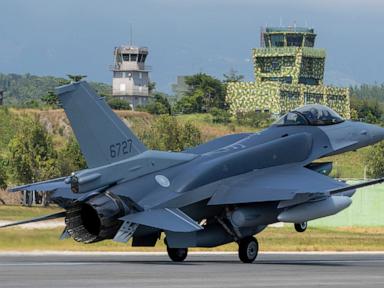
Taiwan just got its hands on the first two of its long-awaited F-16V fighter jets. It took years of delays, supply chain tangles, and diplomatic friction for these aircraft to finally touch down at Chihhang Air Base in Taitung. Sixty-three more are supposed to follow. Everyone is talking about how this shifts the balance of power across the strait. Honestly, they're missing the bigger picture.
Let's look at the cold reality behind the headlines. An $8 billion order placed back in 2019 shouldn't take this long to fulfill. Production snags and software bottlenecks dragged out the timeline. When those first two single-seat jets were spotted briefly turning back to Hawaii during transit, it became a quiet metaphor for the entire delayed procurement saga.
The Air Defense Gap
People look at modern fighter jets and assume they're magical shields. They aren't. Taiwan's air force operates in one of the most hostile surveillance and missile environments on the planet. The Chinese People's Liberation Army fields fifth-generation stealth fighters like the J-20, alongside massive early-warning systems and dense networks of surface-to-air missiles.
The F-16V Block 70 is a capable machine. It packs an Active Electronically Scanned Array radar and upgraded avionics. But putting a fourth-generation-plus platform up against an integrated system-of-systems adversary is an uphill climb.
If a conflict breaks out, runways are the primary target. Ballistic missiles and kamikaze drones can crater asphalt faster than any air force can patch it. Having advanced jets sitting on a vulnerable island base doesn't guarantee they'll ever get airborne. That is the operational nightmare defense planners face every single day.
Why Washington Keeps Sending Hardware
U.S. arms sales to Taiwan run on a very specific legal track. Under the 1979 Taiwan Relations Act, Washington must provide defensive arms. Yet, policymakers draw a hard line. You don't see the U.S. offering F-35 stealth fighters or high-end assets. Why? Because the Pentagon knows the risk of sensitive technology falling into Beijing's hands during an invasion is too high.
Instead, the focus stays on legacy upgrades and asymmetric capabilities. The F-16V fits right into that middle ground. It's familiar, upgradeable, and keeps the defense industrial base humming without crossing certain invisible red lines set by Beijing.
President Xi Jinping routinely demands that Washington halt all military support. Washington ignores the demand while keeping deliveries deliberately sluggish. It's a calculated diplomatic dance. Every batch of jets that arrives serves as a loud political signal rather than a decisive military game-changer.
What Happens Next
The remaining 63 jets are slated for delivery over the next couple of years. Pilots from the 7th Tactical Fighter Wing will shoulder the burden of integrating them into eastern Taiwan's subterranean hangars designed to weather initial strikes.
If you want to understand what actually deters conflict, look past the shiny new warplanes. Focus on stockpiles of precision munitions, redundant communications, and civil defense readiness. Hardware makes for great photos on arrival day. Survival requires a lot more than two jets touching down in Taitung.